Physical Therapy for Cervical Radiculopathy in NJ
Clifton Physical Therapy
What Is Cervical Radiculopathy?
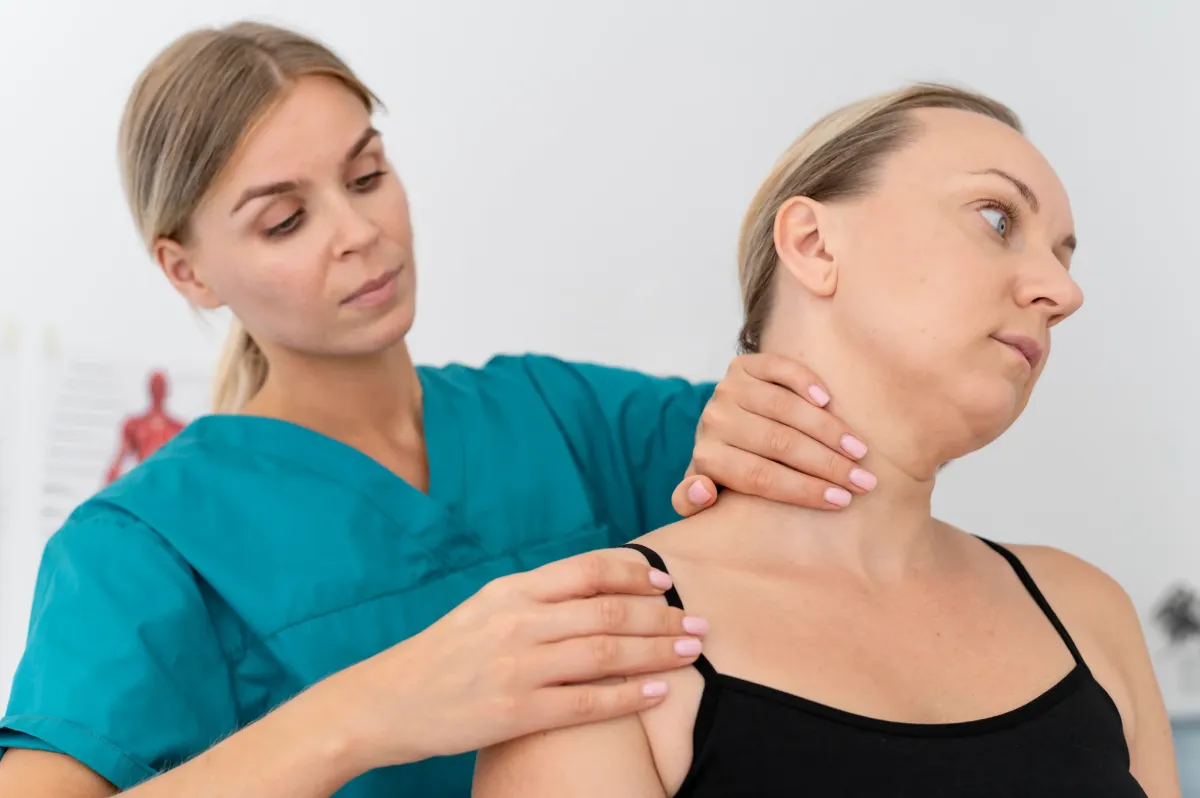
Cervical radiculopathy is commonly described as a “pinched nerve” in the neck. It occurs when a cervical nerve root becomes irritated or compressed as it leaves the spinal cord. Because these nerves travel into the shoulder, arm, hand, and fingers, the problem can cause symptoms well beyond the neck. You may notice sharp or burning pain, numbness, tingling, weakness, or an electrical sensation traveling from the neck into the arm or hand. Symptoms usually occur on one side and can become worse with certain neck movements.
The cervical spine contains seven vertebrae and eight pairs of cervical nerve roots. Common causes of nerve irritation include age-related changes such as cervical spondylosis, a bulging or herniated disc, and narrowing of the spaces where nerves pass through the spine. A sudden injury from a fall, car accident, sports activity, or awkward lifting can contribute to a disc problem, while repetitive physical demands can also irritate the neck over time. Poor posture and prolonged sitting may add stress to the neck, particularly for people who spend much of the day working at a computer or looking down at a phone.
Cervical radiculopathy affects about 85 people per 100,000 and is most common around the fifth decade of life. It can affect athletes, people performing heavy physical work, and those who regularly operate vibrating machinery, although it can occur in people with less physically demanding routines as well.
What Are the Symptoms of a Pinched Nerve in the Neck?
The symptoms depend on which nerve root is irritated and how much the nerve is affected. Neck pain may extend into the shoulder blade, shoulder, upper chest, arm, or fingers. Some people mainly notice pain, while others are more troubled by tingling, numbness, weakness, or changes in sensation. Neck movement, particularly looking upward or turning the head, may aggravate symptoms. In some cases, placing the affected arm over the head temporarily reduces discomfort.
The location of symptoms can also provide clues about the involved nerve root. C5 irritation may cause shoulder and upper-arm weakness or numbness. C6 problems can affect the biceps and wrist extensors and cause symptoms toward the thumb side of the hand. C7 involvement may produce triceps weakness and tingling toward the middle finger, while C8 irritation can affect grip strength and sensation along the inner forearm and little finger. C6 and C7 are among the most commonly involved levels.
These symptoms can interfere with everyday activities such as driving, sleeping, working at a desk, lifting, reaching overhead, exercising, or using the hand for prolonged periods. Persistent weakness or worsening numbness should not be ignored, particularly when symptoms are affecting normal function.
What Symptoms Suggest the Lower Back Is the Real Cause?
A physical therapy evaluation starts with your history rather than immediately jumping into exercises. Your therapist will ask when the symptoms began, whether there was an injury, what activities make them better or worse, how the symptoms have changed, and how they are affecting your normal routine. Previous imaging or medical evaluations are also relevant.
The physical examination may include checking neck and arm movement, muscle strength, tendon reflexes, sensation, and specific tests designed to identify possible nerve-root involvement. Your therapist may also examine the shoulder, upper back, and other nearby areas because symptoms in these regions can overlap with cervical radiculopathy.
Imaging is not automatically required for every person. When additional investigation is appropriate, a physician may order an X-ray or MRI. MRI can provide information about discs, nerve roots, and other soft tissues, while electromyography (EMG) can assess how well nerves communicate with muscles. A physical therapist may coordinate with your physician when the findings suggest that further medical assessment is needed.
How Can Physical Therapy Help Cervical Radiculopathy?
Physical therapy for cervical radiculopathy is individualized. The goal is not simply to stretch the neck or strengthen it as quickly as possible. Treatment is based on your symptoms, examination findings, irritability of the nerve, strength and mobility limitations, work or sports demands, and functional goals.
Treatment may combine manual therapy, therapeutic exercise, posture and ergonomic education, and activity modification. Manual techniques can include gentle cervical traction, joint mobilization, soft-tissue work, and treatment of tight or sensitive muscles around the neck and shoulder blade. Some patients may also receive other techniques, such as dry needling or cupping, when appropriate. Research summarized in the provided material supports combining manual therapy with therapeutic exercise to improve pain, function, and active range of motion.
Exercise is progressed according to how the nerve responds. Early treatment may emphasize comfortable neck movement and mobility rather than aggressive strengthening. As arm symptoms settle, exercises can target the neck, shoulders, upper back, and core to improve strength and movement control. A home program can help maintain the gains made during treatment and support a gradual return to normal activities.
Posture and daily habits are also addressed. If prolonged computer work, driving, phone use, repetitive lifting, or overhead activity contributes to your symptoms, your therapist can help modify these activities rather than simply telling you to stop them. Workstation adjustments may include changing monitor height, chair position, or how you use your phone.
What Treatments Are Used for Cervical Radiculopathy?
Treatment for cervical radiculopathy depends on your symptoms, examination findings, activity level, and recovery goals. Physical therapy commonly combines several approaches instead of relying on one technique. During the more painful stage, treatment may focus on reducing irritation and making everyday movement more comfortable. As symptoms improve, the emphasis can shift toward restoring strength, mobility, and tolerance for work or exercise.
Manual therapy may be used to address stiffness, muscle tightness, and restricted movement around the neck and upper back. Depending on the evaluation, this can include gentle cervical traction, joint mobilization, soft-tissue techniques, or trigger-point work. Traction is intended to reduce pressure around irritated structures and may provide short-term relief for some patients. The specific technique and intensity should be based on how your symptoms respond rather than applied routinely to everyone.
Therapeutic exercise is another important part of rehabilitation. Early exercises may include comfortable neck range-of-motion movements and gentle mobility work. Once radiating arm pain is settling, your therapist may gradually introduce strengthening for the neck, shoulders, upper back, and surrounding muscles. Improving strength and movement control can make it easier to return to lifting, reaching, sports, and other activities without repeatedly stressing the neck.
What Exercises May Help Cervical Radiculopathy?
There is no single exercise routine that is appropriate for everyone with cervical radiculopathy. An exercise that feels helpful for one person may increase arm symptoms in another. Your physical therapist should determine which movements are appropriate based on your examination.
Gentle neck mobility exercises may help maintain or improve range of motion when stiffness is limiting normal movement. Chin tucks, sometimes called cervical retractions, may be used to improve control of the head and neck. Strengthening can later progress to the muscles of the neck, shoulders, upper back, and core. The goal is to build capacity gradually without provoking or spreading nerve-related symptoms.
If an exercise causes your pain to travel farther down the arm, increases numbness or tingling, or produces new weakness, stop and discuss it with your therapist. The response of your symptoms provides useful information about whether the exercise is appropriate at that stage of recovery.
How Long Does Physical Therapy for Cervical Radiculopathy Take?
Recovery time varies considerably. Some people improve relatively quickly with conservative treatment, while others need a longer period of rehabilitation, particularly when symptoms have been present for a long time or there is significant weakness, restricted movement, or an underlying disc or degenerative problem.
The number of visits should therefore not be determined by a fixed schedule alone. Your therapist can monitor changes in pain, arm symptoms, strength, range of motion, and daily function and adjust treatment as you progress. A home exercise program can also help maintain progress between appointments.
When Should You Seek Medical Attention?
Neck pain with occasional stiffness does not necessarily mean you have cervical radiculopathy. However, symptoms such as persistent numbness, noticeable weakness, loss of hand function, or worsening symptoms deserve professional evaluation.
A physical therapist can assess your movement, strength, sensation, and reflexes and determine whether your presentation is appropriate for conservative care. If the findings suggest that you need additional medical assessment, the therapist can coordinate with a physician or recommend further evaluation. MRI or EMG testing may sometimes be considered when clinically appropriate.
Don’t let a pinched nerve keep you from work, exercise, or everyday activities. Schedule a physical therapy evaluation to find the right treatment approach for your symptoms.
Call Clifton Physical Therapy at (973) 241-1338 to schedule your appointment today.
What patients are saying
"I recently had ankle surgery and Clifton PT has been nothing short of amazing! My goal was to get back to playing soccer as quick as possible before the college season started and so far I'm right on track. Izzy, Bianca, Tiff, and John have gone above and beyond to make sure I'm back to 100%. Couldn't be more grateful to be treated by the best team ever!." - Nat Rufino

All the therapists at Clifton Physical Therapy are awesome, but I spend most of my time with Izzy and Bianca—and they’ve been amazing. They’re enthusiastic, knowledgeable, and always take the time to explain what I’m doing and what my issues are. Their positive energy and clear communication make a big difference in my recovery." - Bryan Tompkins
"Going Clifton physical therapy was one of the best thing that came out of my back pain! Every single staff member is amazing and cares for your recovery! I have been with them for the past couple of months and now continuing their workout program! I can’t recommend them enough! Tiffany, Izzy, Bianca and everyone else I have worked with there! Can’t rave about them enough!!." - Monica Mehta
"Clifton Physical Therapy has been a great place for me to heal my meniscus tear. The staff is very knowledgeable and friendly, and has been extremely helpful in guiding me through my recovery. I highly recommend their services.." - Kelly Bevando
Clifton Physical Therapy
✆ Phone (appointments): (973)-241-1338
Address: 1059 Bloomfield Ave, Clifton, NJ 07012


