
Acupuncture for Hip Pain in Clifton, NJ
Reviewed by John Miller, LAc, Licensed Acupuncturist
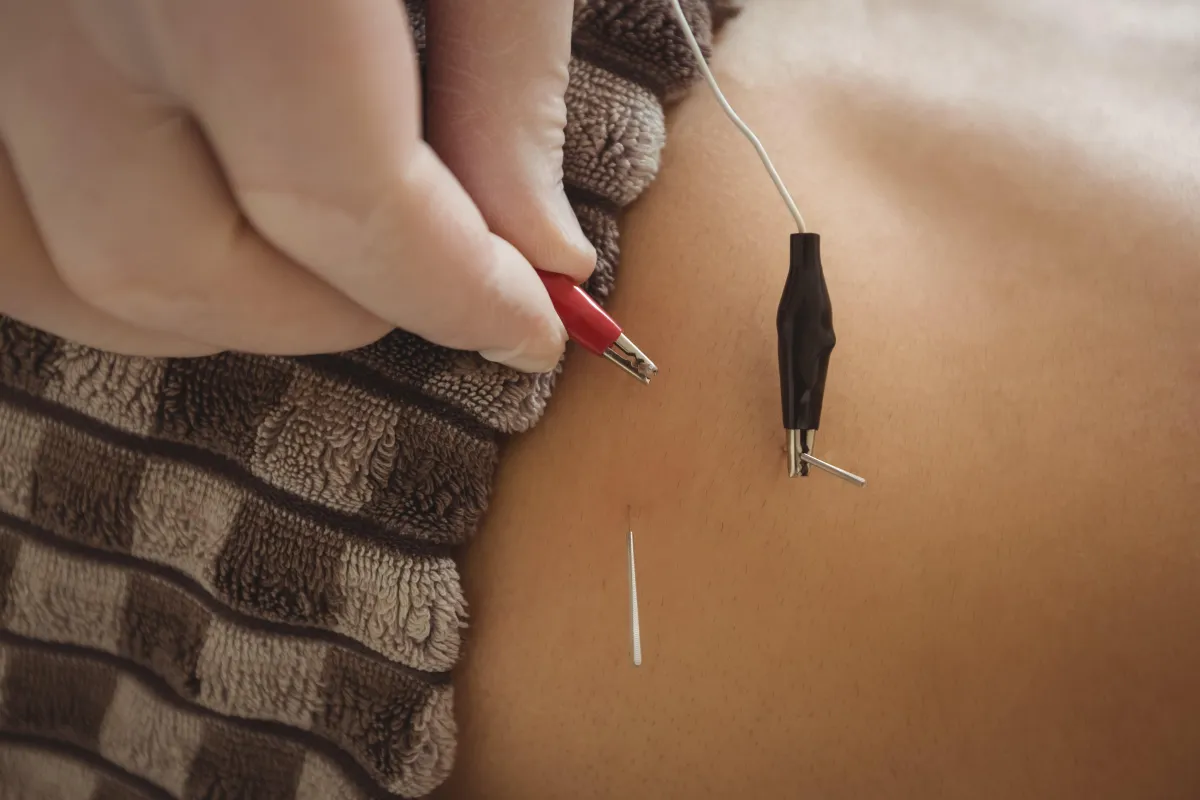
If you’ve ever stood in a parking lot in Clifton, one hand on the car door, working out how to get your leg out without wincing, you already know what hip pain does to ordinary days. It’s rarely just a sore joint. It decides where you park, whether you take the stairs, and which side you sleep on.
At Clifton Physical Therapy, a lot of people tell us the same thing at the first visit: someone said “let’s wait and see,” and months went by. This guide covers what’s usually behind hip pain and where acupuncture realistically fits, including what the research does and doesn’t show.
Who is Behind This Advice
John Miller, LAc, is the licensed acupuncturist at our clinic in Clifton, New Jersey. He earned his Master of Acupuncture and Oriental Medicine at the New England School of Acupuncture, where he trained in orthopedic acupuncture and trigger point therapy under department chair Stephen Cina. His practice centers on orthopedic and trigger-point work for neck, shoulder, back, and hip pain, nerve-related pain, headaches, and sports injuries. Since 2006 he has also studied Tong Ren healing with Tom Tam, and he draws on Tai Chi, Qigong, and yoga when he talks with patients about movement. That orthopedic training matters for the hip, because so much “hip” pain comes from the gluteal muscles, the piriformis, and the hip flexors rather than the joint.
What Is Hip Pain?
Hip pain is discomfort coming from the joint itself or from the muscles, tendons, bursae, and nerves around it. People often point to the “hip” when the real trouble is in the buttock, outer thigh, or groin, and sorting that out is half the diagnostic puzzle.
The hip is a ball-and-socket joint that carries your upper body with every step. It’s built for both stability and a wide range of motion, which is a hard job, and when something’s off the strain shows fast.
Typical medical care starts with pain relievers and physical therapy, moves to injections, and ends with hip replacement when nothing else is enough. Replacement works very well for the right person. The hard part is the stretch before it, when the pain is too much to ignore but you’re not “bad enough” for an operation. That in-between period is where many people start looking into acupuncture, and it’s a fair place to look.
Types of Hip Pain
Where it hurts tells you a lot.
Hip osteoarthritis usually shows up as a deep ache in the groin, stiffness when you stand after sitting, and trouble rotating the leg inward. It can spread into the buttock, thigh, or knee, so plenty of people assume they pulled a muscle.
Greater trochanteric pain syndrome, better known as hip bursitis, causes pain on the outer hip. Lying on that side hurts, and so do stairs, uphill walks, and crossing your legs. We now know the gluteal tendons are usually the main culprit rather than the bursa. It’s especially common in women over 40.
Piriformis syndrome happens when a small, deep buttock muscle tightens and irritates the sciatic nerve. You feel it in the buttock and sometimes down the leg, so it often gets mistaken for a back problem.
Femoroacetabular impingement (FAI) comes from the shape of the hip bones pinching soft tissue during movement. It causes groin pain when you bend or twist the hip and is common in athletes. Left alone, it may raise the odds of arthritis later.
Hip flexor tendinopathy hits the front of the hip or groin, especially when you lift your knee against resistance. Runners, dancers, and desk workers get it a lot.
Referred pain is the sneaky one. The lower back or sacroiliac joint can send pain into the hip, so a careful first exam matters. Treating the wrong spot just wastes your time.
What Causes Hip Pain?
Usually several small causes pile up.
Age plays a part. Cartilage thins over the years, and hip osteoarthritis becomes much more common after about 45. But age alone doesn’t explain most of the people we see.
Weak muscles matter more than people expect. When the gluteus medius and deep stabilizers aren’t pulling their weight, the joint and tendons take loads they weren’t built for. That sits behind a lot of bursitis, tendon pain, and arthritis flare-ups.
Overuse is next. Running, cycling, and repeated-impact sports add up, particularly when recovery is short. Extra body weight raises the load through the hip with every step, and some people are simply born with a hip shape that makes impingement more likely.
Then there’s sitting. Hours in a chair shorten the hip flexors and let the glutes go quiet. For New Jersey commuters and office workers, this is often the most fixable cause, and the one nobody considers until the hip complains.
Weather deserves a mention too. Plenty of patients swear their hips ache more through a Northeast winter. The science on weather and joint pain is mixed, but what you feel is real, and it happens to match how Chinese medicine has described joint pain for centuries.
Hip Pain in Chinese Medicine
Traditional Chinese medicine (TCM) looks at the hip differently than an X-ray does, though the two views overlap more than skeptics expect. TCM says four channels run through the hip region: Gallbladder, Bladder, Stomach, and Kidney. The Kidney is said to govern bone, and the Liver the tendons.
Most hip pain falls under what TCM calls Bi syndrome, or “painful obstruction.” The idea is that Wind, Cold, and Damp settle into the joint and block the flow of Qi and blood. A heavy, aching hip that’s worse in cold, damp weather and after rest, and better with gentle movement and warmth, is called Cold-Damp Bi, the pattern most often linked with hip arthritis.
Long-standing degenerative trouble with low back ache, weak legs, and fatigue is read as Kidney and Liver deficiency. Outer hip pain is seen as stagnation in the Gallbladder channel, which runs right over the bony bump on the side of the hip. A sharp, warm, restricted hip in a younger, active person may be called Liver Qi stagnation with Damp-Heat. Someone worn down by chronic pain, or recovering from hip surgery, may be described as having Qi and blood deficiency.
What the Research Actually Shows
Hip-specific studies are thinner than the knee research, so here’s an honest read.
The 2022 review found that some trials showed acupuncture beating conventional medicine alone or no treatment on pain scores. Others found that adding real acupuncture to surgical care meant patients needed less anesthetic and had fewer pain-medication side effects than with sham acupuncture. The authors still rated the overall evidence as weak.
A larger analysis by Vickers and colleagues in 2018 pooled 39 trials and more than 20,000 patients with chronic pain. Acupuncture beat both sham and no acupuncture, including for osteoarthritis, and the benefit was still visible a year later. Most of the arthritis data came from knees, so it supports the case for hips without proving it.
A Cochrane review of acupuncture for joint osteoarthritis (Manheimer, 2010) also found gains in pain and function, but the edge over sham was small, which is why researchers still argue about how much is placebo.
So acupuncture is low-risk and may bring real relief, but I wouldn’t make it your only plan. People tend to do best when it’s paired with strengthening work, movement, and a proper diagnosis.
Call Clifton Physical Therapy at (973)-241-1338 to book your visit, or request an appointment online.
What patients are saying
"I recently had ankle surgery and Clifton PT has been nothing short of amazing! My goal was to get back to playing soccer as quick as possible before the college season started and so far I'm right on track. Izzy, Bianca, Tiff, and John have gone above and beyond to make sure I'm back to 100%. Couldn't be more grateful to be treated by the best team ever!." - Nat Rufino

All the therapists at Clifton Physical Therapy are awesome, but I spend most of my time with Izzy and Bianca—and they’ve been amazing. They’re enthusiastic, knowledgeable, and always take the time to explain what I’m doing and what my issues are. Their positive energy and clear communication make a big difference in my recovery." - Bryan Tompkins
"Going Clifton physical therapy was one of the best thing that came out of my back pain! Every single staff member is amazing and cares for your recovery! I have been with them for the past couple of months and now continuing their workout program! I can’t recommend them enough! Tiffany, Izzy, Bianca and everyone else I have worked with there! Can’t rave about them enough!!." - Monica Mehta
"Clifton Physical Therapy has been a great place for me to heal my meniscus tear. The staff is very knowledgeable and friendly, and has been extremely helpful in guiding me through my recovery. I highly recommend their services.." - Kelly Bevando
Clifton Physical Therapy
✆ Phone (appointments): (973)-241-1338
Address: 1059 Bloomfield Ave, Clifton, NJ 07012
Clifton Physical Therapy | cliftonphysio.com


