
Foot Fracture Treatment in NJ
Clifton Physical Therapy
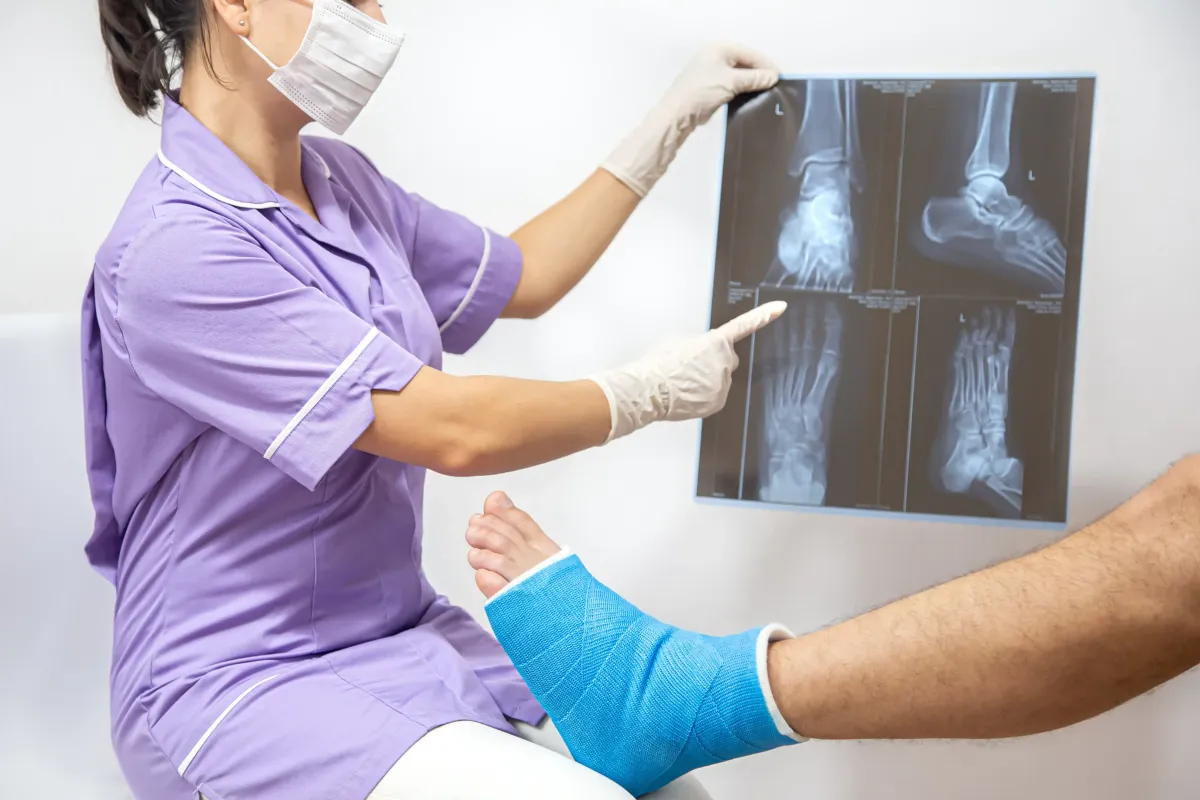
A foot fracture can make even simple daily activities painful. Whether your injury happened during sports, a fall, a workplace accident, or a car crash, proper treatment and rehabilitation are essential for restoring normal movement and preventing long-term complications. At Clifton Physical Therapy, we help patients throughout New Jersey recover safely through personalized rehabilitation programs designed to reduce pain, improve mobility, and restore strength after a foot fracture.
What Is a Foot Fracture?
A foot fracture is a break in one or more of the 26 bones that make up the foot. Some fractures are small stress cracks caused by repetitive impact, while others involve complete breaks that may require surgery.
Because the foot supports your entire body weight with every step, even a minor fracture can affect your ability to walk, work, exercise, or perform everyday activities. Without proper treatment, a fractured foot can heal incorrectly, leading to chronic pain, stiffness, arthritis, or difficulty bearing weight. Foot fractures vary widely in severity and may include:
Stress fractures caused by repetitive overuse
Metatarsal fractures
Toe fractures
Heel (calcaneus) fractures
Midfoot fractures
Cuboid and cuneiform fractures
Lisfranc injuries involving the midfoot joints
What Causes Foot Fractures?
Foot fractures occur when the force placed on the bones exceeds their strength. While traumatic injuries are common, repetitive stress can also weaken the bones over time. Some of the most common causes include:
Falls
A slip on stairs, falling from a ladder, or landing awkwardly after jumping can generate enough force to break one or more foot bones.
Sports Injuries
High-impact sports such as basketball, soccer, football, tennis, and gymnastics frequently involve sudden twisting, jumping, and direct contact that increase fracture risk.
Motor Vehicle Accidents
Crushing injuries during car or motorcycle accidents often result in complex fractures involving multiple bones. These injuries may require surgery followed by several months of rehabilitation.
Heavy Objects Falling on the Foot
Dropping construction materials, gym equipment, furniture, or other heavy objects can fracture the metatarsals or toes.
Repetitive Overuse
Running, military training, dancing, and occupations that require prolonged standing can cause stress fractures. Research suggests stress fractures account for approximately 15% to 20% of all sports medicine injuries, particularly among runners and military recruits.
Bone Weakness
Conditions that reduce bone strength, including osteoporosis, vitamin D deficiency, and certain metabolic disorders, increase the likelihood of fractures from relatively minor trauma. Additional risk factors include:
Sudden increases in exercise intensity
Wearing worn-out or poorly fitting footwear
Smoking, which may delay bone healing
Previous foot injuries
Working in physically demanding occupations
Poor balance or frequent falls
What Are the Symptoms of a Foot Fracture?
The symptoms depend on the location and severity of the injury, but many people experience immediate pain that worsens when standing or walking. Common signs include:
Sudden, sharp, or throbbing pain
Swelling around the injured area
Bruising or discoloration
Tenderness when touching the foot
Difficulty putting weight on the foot
Pain that increases with walking
Reduced range of motion
Visible deformity in severe fractures
A popping sensation at the time of injury
How Is a Foot Fracture Diagnosed?
An accurate diagnosis is the foundation of effective treatment. Since several foot injuries can produce symptoms similar to fractures, a thorough examination helps determine exactly which structures are involved. Your healthcare provider will usually begin by discussing:
How the injury occurred
Where the pain is located
Whether you're able to bear weight
Previous foot injuries or medical conditions
Your daily activity level and goals
A physical examination typically follows to assess:
Swelling and bruising
Areas of tenderness
Joint stability
Foot alignment
Blood circulation
Nerve function
Walking pattern, when appropriate
Imaging studies are often necessary to confirm the diagnosis.
X-rays are usually the first step and can identify most fractures. If the fracture is complex or difficult to see, your physician may recommend a CT scan, which provides a more detailed view of the bones and joint surfaces. An MRI is especially helpful for detecting stress fractures, ligament injuries, tendon damage, and fractures that may not yet appear on standard X-rays.
Once the fracture is identified, your medical team will determine whether it can heal with immobilization alone or whether surgical stabilization is necessary. After the bone has healed sufficiently, physical therapy becomes an essential part of restoring flexibility, strength, balance, and normal walking mechanics.
How Is a Foot Fracture Treated?
The right treatment depends on the type of fracture, its location, whether the bone has shifted out of place, and your overall health. The primary goal is to allow the bone to heal in the correct position while preserving foot function.
Rest, Ice, Compression, and Elevation (RICE)
For many uncomplicated fractures, doctors recommend limiting activity immediately after the injury. Elevating the foot above heart level and applying ice for 15 to 20 minutes several times a day can help reduce swelling and pain during the early stages.
Immobilization
Most stable fractures heal with a walking boot, cast, splint, or stiff-soled shoe. Immobilization protects the injured bone while it naturally repairs itself.
Depending on the fracture, patients may need to avoid putting weight on the foot for several weeks. Following these restrictions is essential because walking too soon can delay healing or cause the fracture to shift.
Medications
Your physician may recommend over-the-counter pain relievers or prescribe medication to manage pain after the injury or surgery.
Surgery
Not every foot fracture requires surgery, but it may be necessary when:
The bones are significantly displaced.
Multiple bones are broken.
The fracture extends into a joint.
There is an open fracture.
The injury causes instability in the foot.
Physical Therapy
Once the bone has healed enough to tolerate movement, physical therapy becomes one of the most important parts of recovery. While X-rays may show that the fracture has healed, the muscles, joints, tendons, and ligaments often remain weak after weeks of immobilization.
A structured rehabilitation program helps restore normal movement and prepares the foot for everyday activities.
Why Is Physical Therapy Important After a Foot Fracture?
Healing the bone is only one part of recovery. Spending four to eight weeks in a cast or walking boot often leads to muscle weakness, stiff joints, reduced flexibility, poor balance, and changes in walking mechanics.
Studies have shown that muscles can lose a significant amount of strength during prolonged immobilization, making rehabilitation essential for returning to normal activity. Physical therapy helps patients:
Reduce pain and swelling
Restore ankle and foot mobility
Improve muscle strength
Correct limping or altered walking patterns
Improve balance and coordination
Restore confidence during weight-bearing
Reduce the risk of future injuries
Return safely to work, exercise, and sports
Without rehabilitation, many people continue to compensate for the injured foot long after the fracture heals. These movement changes can eventually contribute to knee, hip, or lower back pain.
What Does Foot Fracture Rehabilitation Include?
Every recovery plan is tailored to the individual because no two fractures heal exactly the same way. Your physical therapist adjusts your treatment based on your healing progress, pain levels, and personal goals. Your rehabilitation program may include:
Manual Therapy
Hands-on techniques improve joint mobility, reduce stiffness, decrease scar tissue restrictions, and restore normal movement throughout the foot and ankle.
Range of Motion Exercises
Gentle stretching and mobility exercises help restore flexibility after weeks of immobilization while reducing stiffness that often develops inside the joints.
Strengthening Exercises
Recovery focuses on rebuilding the muscles that support the foot and ankle, including the calf muscles, intrinsic foot muscles, and lower leg.
Exercises may progress from:
Ankle movements with resistance bands
Heel raises
Toe strengthening exercises
Balance drills
Functional strengthening exercises
Gait Training
Many patients develop a limp without realizing it. Physical therapists analyze your walking pattern and teach you how to distribute weight evenly across the foot again.
Correcting gait early helps prevent unnecessary stress on other joints throughout the body.
Balance and Proprioception Training
Balance often declines after weeks of limited weight-bearing. Specific exercises retrain the body's awareness of foot position, improving stability during walking, climbing stairs, and sports.
Functional Training
As healing progresses, therapy becomes more activity-specific.
Treatment may include:
Stair climbing
Squatting
Single-leg balance
Step training
Light jogging progression
Agility drills for athletes
Job-specific movement training
What Happens If a Foot Fracture Is Left Untreated?
Ignoring a fractured foot or delaying treatment can increase the risk of long-term complications. Potential problems include:
Chronic foot pain
Bone healing in the wrong position (malunion)
Failure of the bone to heal (nonunion)
Persistent swelling
Reduced foot mobility
Joint stiffness
Early arthritis
Difficulty walking
Changes in balance
Increased risk of future injuries
When Should You Seek Medical Care?
You should seek prompt medical evaluation if:
You cannot bear weight on your foot.
Pain continues to worsen despite rest.
Swelling becomes severe.
Your foot appears misshapen.
Part of the bone is visible through the skin.
You experience numbness, tingling, or changes in skin color.
If you're recovering from a foot fracture, don't let pain, stiffness, or weakness keep you from getting back to the activities you enjoy. Contact Clifton Physical Therapy today to schedule your evaluation and receive a personalized treatment plan designed to help you heal safely and regain your mobility. Call us at (973)-241-1338 to book your appointment today.
What patients are saying
"I recently had ankle surgery and Clifton PT has been nothing short of amazing! My goal was to get back to playing soccer as quick as possible before the college season started and so far I'm right on track. Izzy, Bianca, Tiff, and John have gone above and beyond to make sure I'm back to 100%. Couldn't be more grateful to be treated by the best team ever!." - Nat Rufino

All the therapists at Clifton Physical Therapy are awesome, but I spend most of my time with Izzy and Bianca—and they’ve been amazing. They’re enthusiastic, knowledgeable, and always take the time to explain what I’m doing and what my issues are. Their positive energy and clear communication make a big difference in my recovery." - Bryan Tompkins
"Going Clifton physical therapy was one of the best thing that came out of my back pain! Every single staff member is amazing and cares for your recovery! I have been with them for the past couple of months and now continuing their workout program! I can’t recommend them enough! Tiffany, Izzy, Bianca and everyone else I have worked with there! Can’t rave about them enough!!." - Monica Mehta
"Clifton Physical Therapy has been a great place for me to heal my meniscus tear. The staff is very knowledgeable and friendly, and has been extremely helpful in guiding me through my recovery. I highly recommend their services.." - Kelly Bevando
Clifton Physical Therapy
✆ Phone (appointments): (973)-241-1338
Address: 1059 Bloomfield Ave, Clifton, NJ 07012


