
Physical Therapy for Foot Pain in NJ
Clifton Physical Therapy
What Causes Foot Pain in Everyday Life?
Foot pain doesn’t usually come out of nowhere. For many people in New Jersey, it builds over time from daily routines like long commutes, standing at work, or walking on hard surfaces. Others notice it after increasing activity too quickly or recovering from an injury.
Your foot is a complex structure. It has 26 bones, multiple joints, and a network of muscles, tendons, and ligaments working together to absorb impact and support movement. When even one part isn’t functioning well, the stress shifts elsewhere—and that’s when pain starts. Some of the most common reasons include:
Repetitive strain from walking, running, or standing for long hours
Shoes that lack proper support or don’t fit well
Limited ankle mobility or tight calf muscles
Weak foot stabilizers affecting balance and alignment
Sudden increases in physical activity
Where Your Foot Hurts and What It Usually Means
The location of your pain often gives a clear hint about the underlying issue. While a proper evaluation is key, here’s how it commonly breaks down:
Heel discomfort
Pain under or behind the heel is one of the most frequent complaints. It’s often linked to irritation of the plantar fascia, strain in the Achilles tendon, or pressure-related inflammation. Many people feel it most during their first steps in the morning.
Arch-related pain
The arch helps distribute weight and absorb shock. When it’s under stress, pain can develop due to flat feet, overuse, or repetitive impact. This is common among runners and people who stand for extended periods.
Pain in the ball of the foot or toes
This area takes on a lot of load during walking and running. Conditions like nerve irritation, joint stress, or toe deformities often show up here. Tight footwear can make symptoms worse.
Pain along the top or sides of the foot
This type of discomfort is often related to tendon irritation, joint stiffness, or early stress injuries. It’s frequently seen when activity levels change or footwear isn’t supportive enough.
Understanding these patterns helps guide treatment instead of just masking symptoms.
How Footwear and Daily Routines Influence Pain
What you wear on your feet every day matters more than most people think. In New Jersey, where walking on pavement is constant, the wrong shoes can slowly change how your body moves. Shoes that lack structure or proper cushioning can:
Increase pressure on sensitive areas
Change your walking pattern
Limit natural toe movement
Contribute to long-term issues like bunions or nerve irritation
High heels shift your weight forward, overloading the front of the foot. On the other hand, completely flat shoes often don’t provide enough arch support. Your daily habits also play a role:
Standing for long periods without breaks
Wearing worn-out sneakers
Skipping warm-ups before activity
Ignoring early signs of discomfort
Even small adjustments—like rotating footwear, improving fit, or adding support—can reduce stress on your feet and prevent symptoms from getting worse.
How Physical Therapy Targets the Root Cause
Physical therapy focuses on fixing why your foot hurts, not just reducing the pain temporarily. Instead of relying only on rest or medication, it works to improve how your foot and lower body function together. At Clifton Physical Therapy, care starts with a detailed evaluation that looks at:
How you walk and move throughout the day
Joint mobility in your foot and ankle
Strength and flexibility in key muscle groups
Overall alignment and weight distribution
From there, treatment is tailored to your specific condition. It may include:
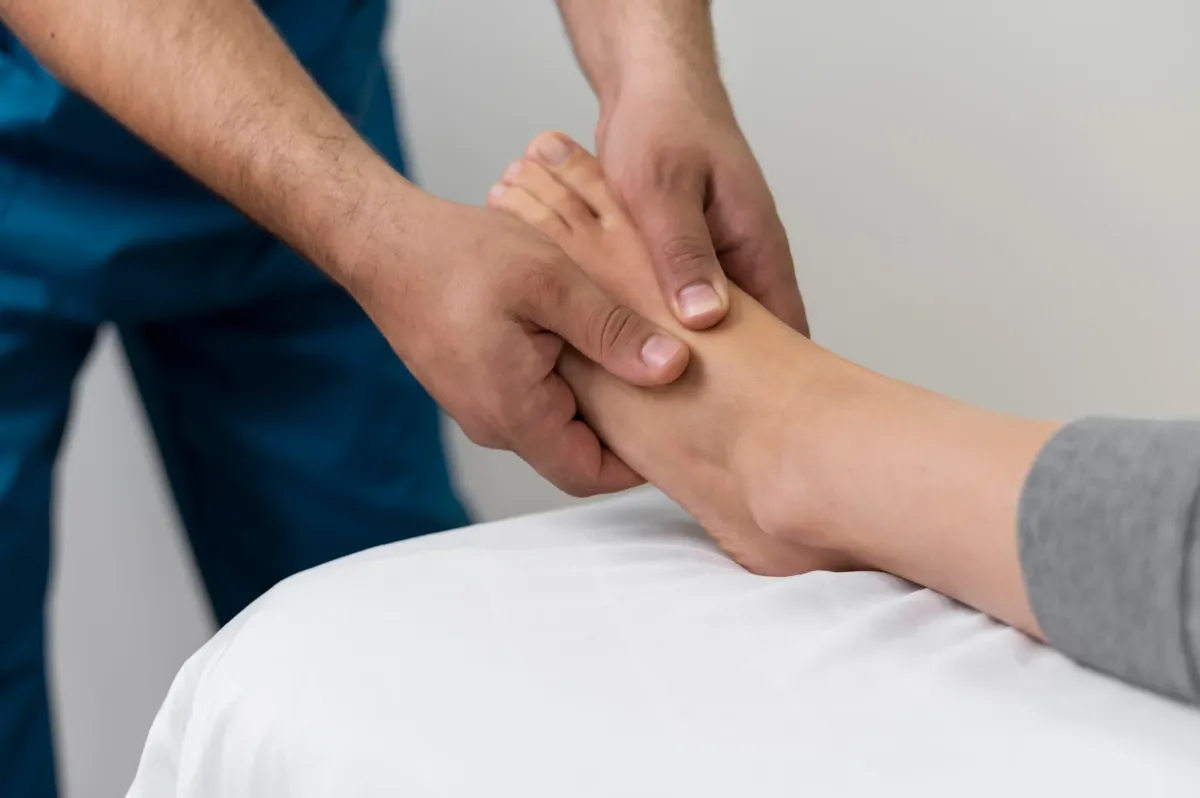
Hands-on techniques to improve joint movement and reduce stiffness
Strengthening exercises for the foot, ankle, and lower leg
Mobility work to restore proper range of motion
Guidance on footwear or orthotics when needed
Which Exercises Actually Help Foot Pain?
Exercise plays a big role in both recovery and prevention. The goal isn’t just to “stretch it out,” but to improve strength, control, and how your foot handles load during daily activity. Here are some effective movements often used in physical therapy:
Toe control and arch activation
Lifting and spreading your toes, then pressing the big toe down, helps engage the small muscles that support your arch. This improves stability and reduces strain on the bottom of the foot.
Calf raises with proper push-off
Slow heel raises—focusing on pushing through the big toe—build strength in the calf and improve how your foot functions during walking.
Ankle mobility drills
Simple movements like tracing the alphabet in the air with your foot can loosen stiffness and improve joint control, especially if your ankle feels tight.
Balance-based movements
Standing on one leg and reaching in different directions challenges stability and strengthens the foot in a more functional way.
Bent-knee heel raises
This variation targets deeper calf muscles and the Achilles tendon, helping your body tolerate repeated impact.
Resistance band work
Using a band to move your foot side-to-side strengthens stabilizing muscles that protect against injury.
Progressive impact work
For more active individuals, controlled single-leg hops can help rebuild strength and confidence once pain improves.
What Treatments Are Used Beyond Exercise?
A well-rounded plan goes beyond just strengthening. Physical therapy combines different methods to address both symptoms and underlying issues.
Hands-on treatment
Manual techniques help improve joint motion, reduce stiffness, and ease tension in surrounding tissues.
Mobility and flexibility work
Tight calves, stiff ankles, and restricted toe movement are common contributors to foot pain. Improving mobility often brings noticeable relief.
Strength progression
Weak muscles in the foot and lower leg can’t absorb force properly. Gradual strengthening restores balance and reduces overload on sensitive areas.
Walking and movement retraining
Small changes in how you walk or run can take pressure off painful structures and prevent the issue from coming back.
Support strategies
Depending on your needs, this may include:
Footwear recommendations based on your daily routine
Temporary taping for added support
Orthotics when necessary
Pain-relief techniques
In some cases, methods like ultrasound or shockwave therapy may be used to support healing.
What You Can Do at Home to Manage Symptoms
If your pain is mild or just starting, early action can make a big difference. Some practical steps include:
Wearing supportive shoes with enough room for your toes
Avoiding long periods in unsupportive footwear
Stretching your calves and feet regularly
Using ice if there’s irritation or swelling
Reducing activity when pain starts increasing
You can also roll the bottom of your foot over a tennis ball to relieve tension. These small habits help control symptoms before they turn into bigger problems.
How to Exercise Safely Without Making Pain Worse
A common mistake is pushing through pain or doing too much too quickly. Recovery works better when you build up gradually.
A simple way to guide yourself is by monitoring discomfort:
0–3 out of 10: manageable, safe to continue
4–5 out of 10: acceptable but stay cautious
Above 5: scale back intensity or volume
If an exercise increases pain significantly, you can adjust by:
Reducing repetitions
Slowing the movement
Taking longer rest breaks
Some mild soreness is normal when starting new exercises, but it should settle quickly and not feel worse the next day.
Start small—just a few repetitions—and build over time. As your strength improves, you can increase volume or group exercises into sets.
For stretching, aim to hold positions for about 20–30 seconds without forcing the movement. You should feel a gentle pull, not sharp pain.
When Is It Time to See a Physical Therapist?
Not all foot pain resolves on its own. Waiting too long can turn a manageable issue into something more limiting. You should consider getting checked if:
Pain lasts more than a couple of weeks
Symptoms keep coming back
You notice sharp pain, weakness, or instability
Walking or daily activity becomes uncomfortable
You’ve recently had an injury
At Clifton Physical Therapy, the focus is on identifying the exact cause of your pain and building a plan that fits your lifestyle. Whether your symptoms come from overuse, poor footwear, or movement issues, the right approach can help you move comfortably again.
If foot pain is starting to limit your routine, call (973)-241-1338 to schedule an evaluation.
What patients are saying
"I recently had ankle surgery and Clifton PT has been nothing short of amazing! My goal was to get back to playing soccer as quick as possible before the college season started and so far I'm right on track. Izzy, Bianca, Tiff, and John have gone above and beyond to make sure I'm back to 100%. Couldn't be more grateful to be treated by the best team ever!." - Nat Rufino

All the therapists at Clifton Physical Therapy are awesome, but I spend most of my time with Izzy and Bianca—and they’ve been amazing. They’re enthusiastic, knowledgeable, and always take the time to explain what I’m doing and what my issues are. Their positive energy and clear communication make a big difference in my recovery." - Bryan Tompkins
"Going Clifton physical therapy was one of the best thing that came out of my back pain! Every single staff member is amazing and cares for your recovery! I have been with them for the past couple of months and now continuing their workout program! I can’t recommend them enough! Tiffany, Izzy, Bianca and everyone else I have worked with there! Can’t rave about them enough!!." - Monica Mehta
"Clifton Physical Therapy has been a great place for me to heal my meniscus tear. The staff is very knowledgeable and friendly, and has been extremely helpful in guiding me through my recovery. I highly recommend their services.." - Kelly Bevando
Clifton Physical Therapy
✆ Phone (appointments): (973)-241-1338
Address: 1059 Bloomfield Ave, Clifton, NJ 07012
Clifton Physical Therapy | cliftonphysio.com


