
Dry Needling for Trapezius Pain in NJ
Clifton Physical Therapy
Why Does Trapezius Pain Keep Coming Back?
If you spend hours at a desk, look down at your phone often, or deal with ongoing stress, there’s a good chance your trapezius muscle is under constant strain. This large muscle runs from the base of your skull down to your shoulders and mid-back. It plays a key role in posture and shoulder movement, which makes it especially vulnerable to overload.
One of the main reasons trapezius pain keeps returning is the development of myofascial trigger points. These are tight, sensitive spots within the muscle that people often describe as “knots.” They don’t just stay local either. A trigger point in your upper traps can send pain into your neck, head, or even behind your eyes, which is why tension headaches are so common.
Research on office workers has shown that these trigger points can significantly increase pain levels, reduce neck mobility, and weaken muscle performance. Without targeted treatment, the cycle tends to repeat: tension builds, pain increases, movement becomes restricted, and the muscle never fully relaxes.
What Exactly Is Dry Needling?
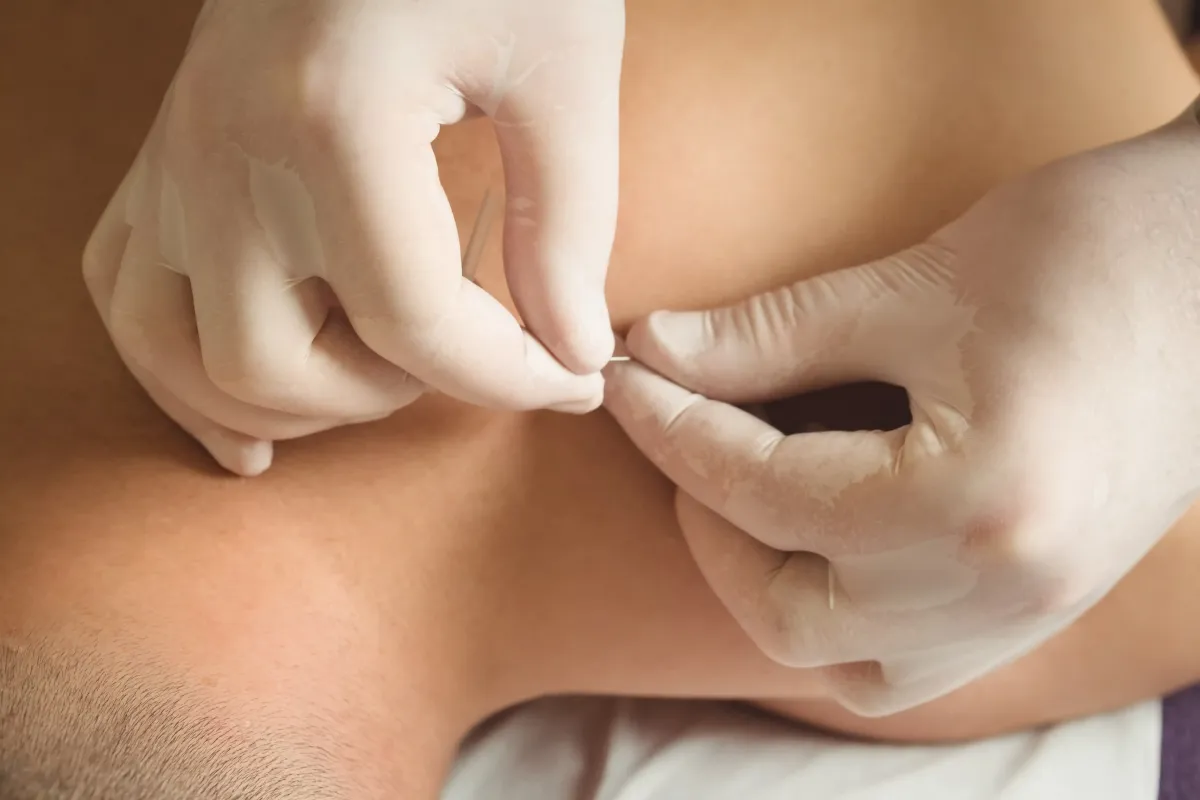
Dry needling is a technique used by trained physical therapists to treat muscle pain at its source. It involves inserting a very thin, sterile needle directly into a trigger point within the muscle.
The goal isn’t just to “poke” the muscle. When done correctly, the needle creates what’s called a local twitch response. This quick contraction helps reset the muscle, reducing tightness and calming the pain signals being sent to your brain.
It’s important to clear up a common confusion. Dry needling is not the same as acupuncture. While acupuncture is based on traditional Chinese medicine, dry needling is grounded in modern anatomy and neuroscience. It focuses specifically on muscle dysfunction and trigger points. Patients often notice a few key changes after treatment:
The muscle feels less tight
Pain intensity drops
Movement becomes easier
The area feels more “loose” or responsive
Clinical studies have found that dry needling, especially when combined with stretching or physical therapy, can improve pain levels, range of motion, and muscle strength more effectively than stretching alone.
How Dry Needling Helps Relieve Trapezius Muscle Knots
Trigger points don’t just cause pain. They also create a feedback loop where the muscle stays tight, blood flow is reduced, and irritation builds up. Dry needling works by interrupting that loop. Here’s what’s happening beneath the surface:
It relaxes tight muscle fibers
The needle triggers a brief contraction, followed by relaxation. This helps release the knot and reduce muscle stiffness.
It improves circulation
Tight muscles often have poor blood flow. Needling increases circulation in the area, which helps remove inflammatory chemicals and brings in oxygen for healing.
It reduces pain sensitivity
Trigger points can make your nervous system more reactive. Dry needling helps “turn down” that sensitivity, so everyday movements feel less painful.
It restores normal movement
Once the muscle relaxes, your neck and shoulders can move more freely. Many patients notice immediate improvements in range of motion.
When Should You Consider Dry Needling?
Not every case of shoulder or neck pain needs dry needling. But it becomes a strong option when symptoms are persistent and not improving with basic care. You might be a good candidate if you have:
Ongoing tightness in the upper shoulders
Chronic neck pain linked to muscle knots
Frequent tension headaches
Pain that spreads from the shoulder into the neck or head
Limited neck or shoulder movement
Symptoms that haven’t improved with massage or stretching alone
In clinics across New Jersey, it’s common to see patients who have tried multiple approaches without lasting relief. Dry needling is often introduced at that point as part of a more targeted treatment plan.
What Happens During a Dry Needling Session?
If you’ve never had dry needling before, the idea of needles can sound intimidating. In reality, the process is quick, controlled, and usually well tolerated.
Your session typically starts with a focused evaluation. The therapist will identify active trigger points in your trapezius by feeling for tight bands and tender spots. They may also assess your posture and neck movement to understand what’s driving the issue. Once the target areas are confirmed:
You’ll be positioned comfortably, usually lying face down or sitting
The skin is cleaned using sterile technique
A very thin, single-use needle is inserted into the trigger point
You may feel a brief twitch, ache, or pressure sensation
That twitch response is actually what the therapist is aiming for. It’s a sign that the muscle is reacting and beginning to release.
The entire needling portion usually takes just a few minutes. Afterward, your therapist may guide you through light stretching or corrective exercises to reinforce the results.
It’s common to feel mild soreness for 24–48 hours, similar to what you’d feel after a workout. Many patients start noticing relief within that same window.
Is Dry Needling Safe?
When performed by a trained and licensed professional, dry needling is considered very safe.
Therapists who use this technique are trained in anatomy and proper needle handling, which reduces the risk of complications. Clinics follow strict hygiene protocols, including sterile, single-use needles. The most common side effects are mild and temporary:
Soreness at the treatment site
Slight bruising
A feeling of muscle fatigue
Serious complications are rare. That said, dry needling may not be suitable for everyone. If you have a bleeding disorder, are pregnant, or have a strong fear of needles, your therapist will discuss alternative options.
What Results Can You Expect?
Dry needling isn’t a magic fix after one session, but it can produce noticeable changes quickly, especially for trapezius-related pain.
Many patients report:
Reduced pain within 1–2 days
Easier neck and shoulder movement
Less tension during daily activities
Fewer headaches linked to muscle tightness
Research supports these outcomes. Studies on individuals with trapezius trigger points have shown improvements in pain intensity, range of motion, and even muscle strength after dry needling. In some cases, these benefits were still present at short-term follow-ups. However, the best results usually come from combining dry needling with a broader plan. That may include:
Postural correction
Strengthening exercises
Ergonomic adjustments for desk work
Stress management strategies
How Many Sessions Do You Need?
The number of sessions depends on how long you’ve had symptoms and how severe they are.
For mild to moderate cases, some patients feel significant relief after 1–3 sessions. Chronic or recurring pain may require a few more visits spaced over several weeks.
Your therapist will typically reassess your progress after each session and adjust the plan as needed. The goal is not just short-term relief but long-term control of your symptoms.
If trapezius pain or shoulder tension is holding you back, a targeted treatment plan can make a real difference. Call (973)-241-1338 to schedule your evaluation and find out if dry needling is right for you.
What patients are saying
"I recently had ankle surgery and Clifton PT has been nothing short of amazing! My goal was to get back to playing soccer as quick as possible before the college season started and so far I'm right on track. Izzy, Bianca, Tiff, and John have gone above and beyond to make sure I'm back to 100%. Couldn't be more grateful to be treated by the best team ever!." - Nat Rufino

All the therapists at Clifton Physical Therapy are awesome, but I spend most of my time with Izzy and Bianca—and they’ve been amazing. They’re enthusiastic, knowledgeable, and always take the time to explain what I’m doing and what my issues are. Their positive energy and clear communication make a big difference in my recovery." - Bryan Tompkins
"Going Clifton physical therapy was one of the best thing that came out of my back pain! Every single staff member is amazing and cares for your recovery! I have been with them for the past couple of months and now continuing their workout program! I can’t recommend them enough! Tiffany, Izzy, Bianca and everyone else I have worked with there! Can’t rave about them enough!!." - Monica Mehta
"Clifton Physical Therapy has been a great place for me to heal my meniscus tear. The staff is very knowledgeable and friendly, and has been extremely helpful in guiding me through my recovery. I highly recommend their services.." - Kelly Bevando
Clifton Physical Therapy
✆ Phone (appointments): (973)-241-1338
Address: 1059 Bloomfield Ave, Clifton, NJ 07012


