Physical Therapy for Trapezius Muscle Strain in NJ
Clifton Physical Therapy
What Is the Trapezius Muscle and Why Does It Matter?
The trapezius is a large, paired muscle that spans the back of your neck and upper back. It plays a key role in shoulder and neck movement, helping you lift your arms, shrug, turn your head, and stabilize your shoulder blades. Because it supports the shoulder girdle, trapezius issues often feel like shoulder, neck, or upper back pain rather than a “back” problem. The trapezius is divided into three parts, each with a different job:
Upper trapezius: Helps lift the shoulder and supports neck movement. This is the area that tightens when you shrug or stress out.
Middle trapezius: Stabilizes the shoulder blades during arm movement, especially when reaching backward or lifting.
Lower trapezius: Helps lower the shoulders and stabilizes the spine during twisting or bending.
When any part of the trapezius is overloaded, it can become strained. A strain means the muscle fibers have been stretched or torn, usually from sudden force or repeated stress.
What Causes a Trapezius Muscle Strain?
Trapezius strains can happen suddenly or develop over time through repetitive movement. The most common causes include:
1. Sudden trauma or injury
A fall, collision, heavy lifting, or sudden jerking movement can tear the muscle fibers. This type of strain often produces immediate pain and swelling.
2. Overuse and repetitive stress
Carrying a heavy backpack, lifting boxes, or working long hours at a desk with poor posture can slowly irritate the trapezius. This is a common cause for people in jobs that require heavy lifting or repetitive arm movement.
3. Poor posture and prolonged positions
Hunching forward while working, texting, or driving can overload the upper trapezius. Over time, this can lead to tightness, weakness, and eventually a strain.
4. Sports or fitness activities
Sports that involve overhead movements—like volleyball, basketball, or weightlifting—can strain the trapezius if the muscles are not properly warmed up or strengthened.
What Are the Symptoms of a Trapezius Muscle Strain?
Symptoms depend on the severity of the strain, but common signs include:
Pain in the upper back, neck, or shoulder area
Pain that worsens with movement and improves with rest
Tenderness when touching the muscle
Muscle tightness or spasms
Swelling or bruising in severe cases
Loss of strength or difficulty lifting the arm
A popping sensation at the time of injury
A visible dent or gap in the muscle (in severe tears)
How Is a Trapezius Muscle Strain Diagnosed?
A physical therapist or doctor can usually identify a trapezius strain through a detailed exam and patient history. During the exam, they will check:
Range of motion
Muscle strength
Pain with specific movements
Posture and shoulder blade position
Areas of tenderness or swelling
In mild strains, imaging is often not needed. But if the pain is severe or there is suspicion of a major tear, an MRI may be recommended. This helps confirm the extent of injury and rule out other conditions such as shoulder joint problems or nerve irritation.
What Does Physical Therapy Do for a Trapezius Muscle Strain?
Physical therapy is one of the most effective ways to recover from a trapezius strain because it treats the cause, not just the symptoms. The goal is to reduce pain, restore normal movement, and prevent the strain from returning. A physical therapy plan typically includes:
Pain management and inflammation control
Gentle mobility exercises to restore range of motion
Strengthening exercises for the trapezius and surrounding muscles
Posture correction and ergonomic guidance
Functional training to help you return to work, sports, or daily activities safely
The key difference between self-treatment and physical therapy is that therapy targets the root cause of the strain. This helps prevent recurring pain and weakness.
What You Can Expect in the Early Phase of Treatment
In the first few days after a trapezius strain, the goal is to reduce pain, control inflammation, and protect the injured muscle from further damage. Physical therapy focuses on gentle care and safe movement so the muscle can begin healing without being overstressed.
A physical therapist will typically use a combination of the following approaches:
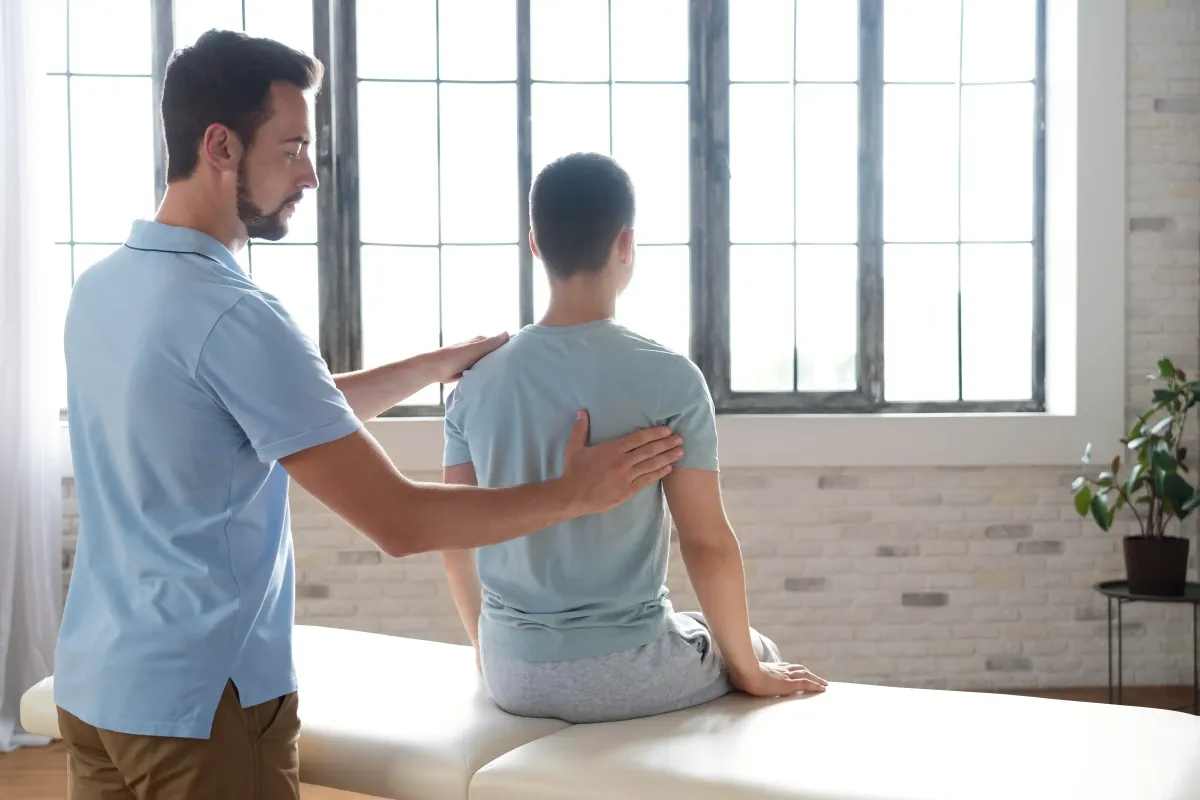
1. Manual Therapy (Hands-On Treatment)
Manual therapy involves skilled, hands-on techniques that help reduce muscle tightness, improve tissue mobility, and restore normal movement patterns. Your therapist may use:
Gentle soft tissue massage
Trigger point release
Joint mobilization
2. Ice or Heat Therapy
Cold and heat are both useful tools, but they are used at different stages of healing:
Ice therapy (first 24–72 hours):
Ice helps reduce swelling and inflammation by decreasing blood flow to the injured area. It can also reduce sharp pain after activity or strain.Heat therapy (after inflammation decreases):
Heat helps relax tight muscles and improves blood flow, which supports healing. Heat is often used before stretching or exercise to make movement easier and more comfortable.
3. Electrical Stimulation (E-Stim)
Electrical stimulation is a safe, non-invasive tool used to reduce pain and improve muscle activation. A therapist may use e-stim if your trapezius is too painful to contract normally or if you are having trouble activating the muscle. The device sends gentle electrical pulses to the muscle, which can:
Decrease pain signals
Reduce muscle spasms
Encourage muscle contraction when strength is reduced
Help improve circulation in the injured area
This treatment is often combined with exercises to support recovery.
4. Gentle Range-of-Motion Exercises
Early movement is important because complete rest can lead to stiffness and weakness. However, these exercises are gentle and controlled to prevent further strain. Your therapist may guide you through:
Neck rotations and tilts
Shoulder circles and shoulder blade movements
Light stretching of the neck and upper back
What Exercises Help Heal a Trapezius Strain?
Rehabilitation usually follows a progression from gentle movement to strengthening. Here are the most effective exercises that physical therapists use for trapezius strain recovery:
1. Neck Retractions (Chin Tucks)
How to do it:
Sit upright
Gently pull your head back as if making a double chin
Hold for 5 seconds
Repeat 10 times
This strengthens the deep neck muscles and reduces strain on the upper trapezius.
2. Scapular Squeezes
How to do it:
Sit or stand tall
Pull your shoulder blades together
Hold for 5 seconds
Repeat 10–15 times
This strengthens the middle trapezius and improves shoulder stability.
3. Shoulder Shrugs
How to do it:
Stand with arms relaxed
Lift shoulders toward ears
Hold for 2–3 seconds
Slowly release
Repeat 10–15 times
This builds endurance in the upper trapezius while improving control and reducing tightness.
4. Foam Roller Thoracic Extension
How to do it:
Lie on a foam roller placed under the upper back
Support your head with hands
Gently arch backward over the roller
Hold 5 seconds
Repeat 8–10 times
This improves mobility in the upper back, which reduces stress on the trapezius.
5. Doorway Stretch
How to do it:
Stand in a doorway with arms at 90°
Place hands on the door frame
Step forward slowly until you feel a stretch
Hold 20–30 seconds
Repeat 2–3 times
This reduces tightness in the chest muscles, allowing the shoulders to move correctly.
How Long Does a Trapezius Strain Take to Heal?
Recovery time depends on the severity of the strain:
Grade I (mild): 1–3 weeks
Grade II (moderate): 3–6 weeks
Grade III (severe tear): 2–3 months or longer
If you live in New Jersey and you’re dealing with neck, shoulder, or upper back pain from a trapezius strain, physical therapy can help you recover faster and prevent future injury. Call Clifton Physical Therapy today at (973) 241-1338 to schedule your evaluation and start a personalized treatment plan.
What patients are saying
"I recently had ankle surgery and Clifton PT has been nothing short of amazing! My goal was to get back to playing soccer as quick as possible before the college season started and so far I'm right on track. Izzy, Bianca, Tiff, and John have gone above and beyond to make sure I'm back to 100%. Couldn't be more grateful to be treated by the best team ever!." - Nat Rufino

All the therapists at Clifton Physical Therapy are awesome, but I spend most of my time with Izzy and Bianca—and they’ve been amazing. They’re enthusiastic, knowledgeable, and always take the time to explain what I’m doing and what my issues are. Their positive energy and clear communication make a big difference in my recovery." - Bryan Tompkins
"Going Clifton physical therapy was one of the best thing that came out of my back pain! Every single staff member is amazing and cares for your recovery! I have been with them for the past couple of months and now continuing their workout program! I can’t recommend them enough! Tiffany, Izzy, Bianca and everyone else I have worked with there! Can’t rave about them enough!!." - Monica Mehta
"Clifton Physical Therapy has been a great place for me to heal my meniscus tear. The staff is very knowledgeable and friendly, and has been extremely helpful in guiding me through my recovery. I highly recommend their services.." - Kelly Bevando
Clifton Physical Therapy
✆ Phone (appointments): (973)-241-1338
Address: 1059 Bloomfield Ave, Clifton, NJ 07012
Clifton Physical Therapy | cliftonphysio.com


