Cupping Therapy for Sports Injury Recovery in NJ
Clifton Physical Therapy
What Is Cupping Therapy for Sports Injuries?
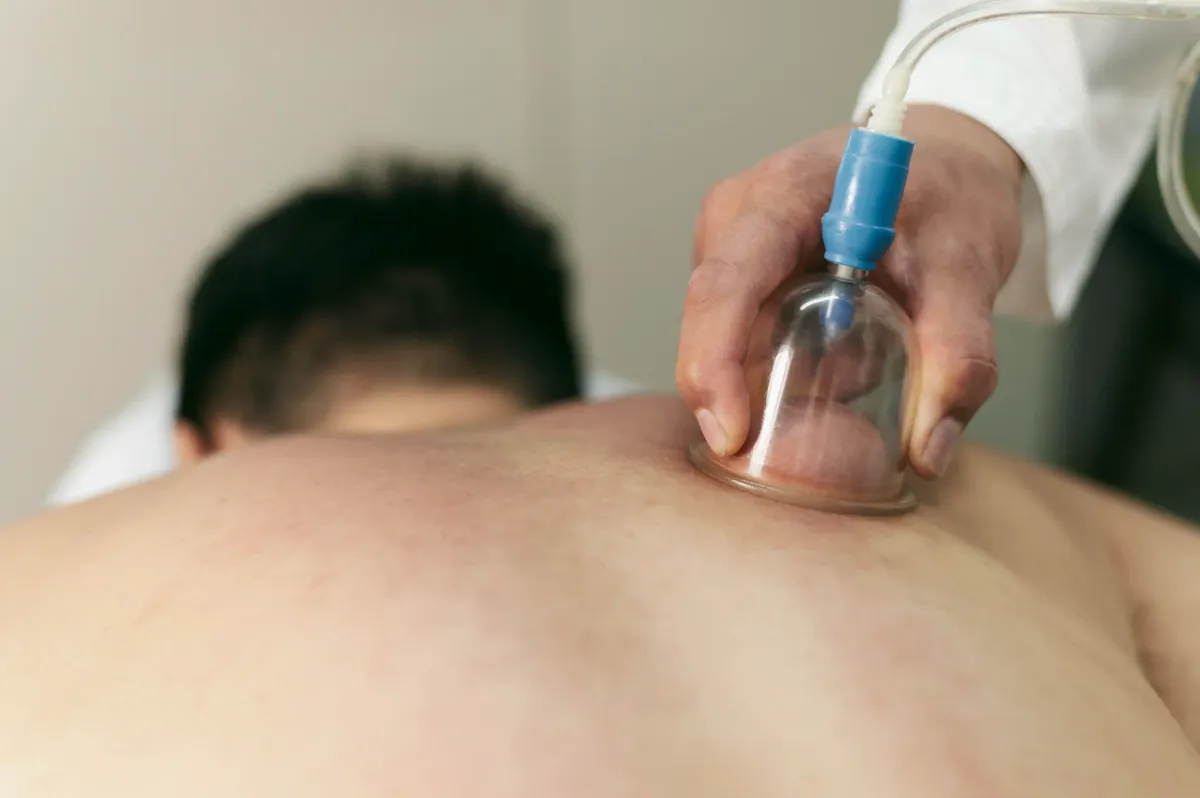
Cupping is a hands-on technique that uses specially designed cups to create negative pressure against the skin. The suction gently lifts the skin and underlying soft tissue rather than compressing it. In sports rehabilitation, therapists most commonly use dry cupping, which does not involve breaking the skin.
Depending on the problem being treated, a therapist may leave the cups stationary over a targeted area or move them across the skin using a gliding technique. Treatment is generally intended to complement other rehabilitation methods rather than replace exercise-based therapy.
For example, an athlete recovering from a hamstring strain may still need progressive strengthening, mobility work, balance exercises, and a gradual return-to-running program. Cupping may be considered when muscle tightness or discomfort is making those activities more difficult.
That distinction matters. Research on cupping in athletes is promising in some areas, but it is not strong enough to claim that cupping alone heals sports injuries or consistently gets athletes back to competition faster. A systematic review of 11 randomized trials involving 498 amateur and professional athletes found potential improvements in pain, disability, and range of motion, but also noted that many of the studies had unclear or high risk of bias.
Why Do Athletes Use Cupping During Recovery?
Athletes place unusual demands on their muscles and joints. A recreational runner may train several times a week, while a competitive athlete may repeat the same high-load movements almost every day. When pain, stiffness, or muscle tension develops, even a relatively small limitation can affect running mechanics, lifting technique, throwing, jumping, or other sport-specific movements.
Muscle Tightness and Restricted Movement
A sports injury can leave surrounding muscles feeling tight or guarded. This may make certain movements uncomfortable and limit how freely an athlete can train.
Cupping may temporarily reduce the sensation of tightness and make movement more comfortable. Research examining musculoskeletal conditions has found some evidence that dry cupping can improve range of motion, although the overall certainty of the evidence remains limited.
That potential short-term improvement can be useful when it allows an athlete to perform prescribed mobility or strengthening exercises with better comfort.
Pain During Rehabilitation
Pain can interfere with rehabilitation even when an injury is progressing normally. If an athlete cannot comfortably perform an exercise, the therapist may need to modify the activity, reduce its intensity, or temporarily choose another movement.
Cupping may be used as an adjunct to help manage musculoskeletal pain. A 2025 systematic review and meta-analysis found a significant reduction in chronic musculoskeletal pain among people receiving cupping, although the studies included different conditions and treatment approaches, so the findings should not be interpreted as proof that cupping will relieve every sports injury.
Recovery After Muscle Fatigue
Cupping has also been investigated specifically for exercise-related muscle fatigue.
In one small randomized study, 12 healthy participants performed repeated biceps curls to induce fatigue. Five minutes of cupping did not produce a significant immediate reduction in muscle fatigue, but measurements taken 24 hours later suggested better recovery compared with the sham treatment.
This is interesting, but the study was small and involved healthy, untrained participants rather than athletes recovering from an actual injury. It should therefore be viewed as preliminary evidence rather than a guarantee of faster recovery.
What Can Cupping Therapy Help With During Sports Rehabilitation?
Cupping may be considered when an athlete has soft-tissue discomfort, muscle tightness, or movement restrictions that are interfering with rehabilitation. Common examples include:
Hamstring and other muscle strains
Sports-related back or neck pain
Shoulder muscle tightness
Knee-related muscle tightness
Overuse-related muscle soreness
It is important to separate symptom management from injury repair. Cupping does not rebuild a torn ligament, repair a fracture, or replace the progressive loading required after many sports injuries. Its potential value is in helping manage certain symptoms so that the athlete can continue with the parts of rehabilitation that address strength, mobility, coordination, and sport-specific function.
A 2022 evidence review concluded that research in sports and musculoskeletal rehabilitation generally provides low to moderate evidence for cupping, with stronger support in some areas such as soft-tissue flexibility and pain than for other conditions.
How Does Cupping Therapy Work?
During dry cupping, a physical therapist places cups over selected areas of the skin and creates suction. The negative pressure gently lifts the skin and superficial tissues into the cup. Depending on the treatment goal, the cups may remain in one position for several minutes or be moved across the skin.
The exact biological effects of cupping are still being studied. It may influence local blood flow and the way the nervous system responds to painful or tight areas. However, claims that cupping "removes toxins" or directly eliminates inflammation are not well established by clinical research.
For sports rehabilitation, the more practical question is whether the treatment helps an athlete move more comfortably or tolerate other parts of rehabilitation.
For example, imagine a soccer player recovering from a hamstring strain who has regained strength but still experiences considerable tightness during stretching and running drills. A therapist may use cupping around appropriate soft-tissue areas and then reassess movement. If the athlete demonstrates better comfort or mobility, the therapist can use that window to progress exercises. There are two common approaches:
Stationary cupping: The cups remain in place over selected areas for a period of time.
Gliding cupping: The therapist applies lubricant to the skin and gently moves the cup across a larger area.
Dry cupping is generally the approach used in physical therapy settings. Wet cupping, which involves making small skin incisions after suction is applied, is a different procedure and is not necessary for sports rehabilitation.
What Happens During a Sports Cupping Therapy Session?
Your session should begin with an assessment rather than immediately placing cups on the painful area.
Your physical therapist may ask how the injury happened, when your symptoms started, what activities make them worse, and what you need to return to. They may also assess strength, flexibility, joint movement, balance, and sport-specific movements.
This information helps determine whether cupping is appropriate and where it may fit within your rehabilitation. If cupping is selected, the therapist will typically:
Prepare the treatment area and explain what you should expect.
Position the cups over the selected soft-tissue region.
Create gentle suction according to your tolerance and treatment needs.
Leave the cups stationary or use a gliding technique.
Remove the cups and reassess your movement or symptoms.
Continue with appropriate rehabilitation exercises or manual therapy.
You may feel a pulling or stretching sensation while the cup is attached. The treatment should not cause sharp or worsening pain.
Round marks are also common after cupping. These marks are caused by the suction and can vary in appearance depending on factors such as the amount of suction, treatment duration, and individual skin response. They generally fade with time.
Most importantly, the marks themselves are not a measurement of how effective the treatment was. A darker mark does not mean that more healing occurred.
Cupping Therapy vs. Exercise-Based Sports Rehabilitation
One of the most important things to understand about cupping is that it should not become the entire treatment plan.
An athlete returning from an injury usually needs to rebuild the physical qualities required for their sport. Depending on the injury, this may include:
Progressive resistance exercises
Flexibility and mobility training
Balance and coordination exercises
Core or joint stabilization
Running or jumping progression
Sport-specific movement drills
Gradual increases in training volume and intensity
Cupping may be used alongside these methods when it provides a useful short-term reduction in discomfort or tightness.
Consider a basketball player recovering from a lower-extremity injury. Being able to touch the floor with less discomfort after treatment is helpful, but it does not mean the athlete is ready to sprint, cut, jump, and land at full intensity. Those abilities need to be tested and rebuilt progressively.
The same principle applies to runners, football players, baseball players, tennis players, and recreational athletes. The final goal is not simply feeling better on the treatment table. It is being able to perform the activities required by the sport safely and confidently.
Are There Risks or Side Effects?
Cupping is generally considered a low-risk technique when performed appropriately, but it is not completely risk-free.
The most common response is temporary circular discoloration where the cups were placed. Some people may also experience mild soreness or skin sensitivity afterward.
Less common complications can include skin irritation, blistering, burns, or infection. The risk of infection is particularly relevant when skin is broken, which is one reason dry cupping is generally more straightforward for sports rehabilitation.
Cupping may also not be appropriate for everyone. Your therapist should consider your medical history, medications, skin condition, circulation, and the nature of your injury before treatment.
Do not use cupping as a substitute for medical evaluation when an injury may involve a fracture, significant ligament damage, a serious muscle tear, or another condition requiring specific medical treatment.
When Should an Athlete Consider Cupping Therapy?
There is no universal point in the recovery process when every athlete should receive cupping.
Some athletes may benefit from it during the early management of muscle tightness, while others may find it more useful later when they are increasing their training load. The decision should depend on the injury and the athlete's response to treatment. Cupping may be worth considering when:
Muscle tightness is limiting movement
Pain is interfering with prescribed exercises
Soft-tissue discomfort is making training progression difficult
You are experiencing exercise-related muscle soreness
Your therapist believes it can complement your current rehabilitation plan
Don’t let pain or stiffness keep you on the sidelines. Get a personalized sports injury recovery plan and find out whether cupping therapy can support your recovery.
Call (973) 241-1338 to schedule your physical therapy evaluation in Clifton, NJ.
Clifton Physical Therapy
✆ Phone (appointments): (973)-241-1338
Address: 1059 Bloomfield Ave, Clifton, NJ 07012


