What Are Vestibular Rehabilitation Exercises?
Clifton Physical Therapy
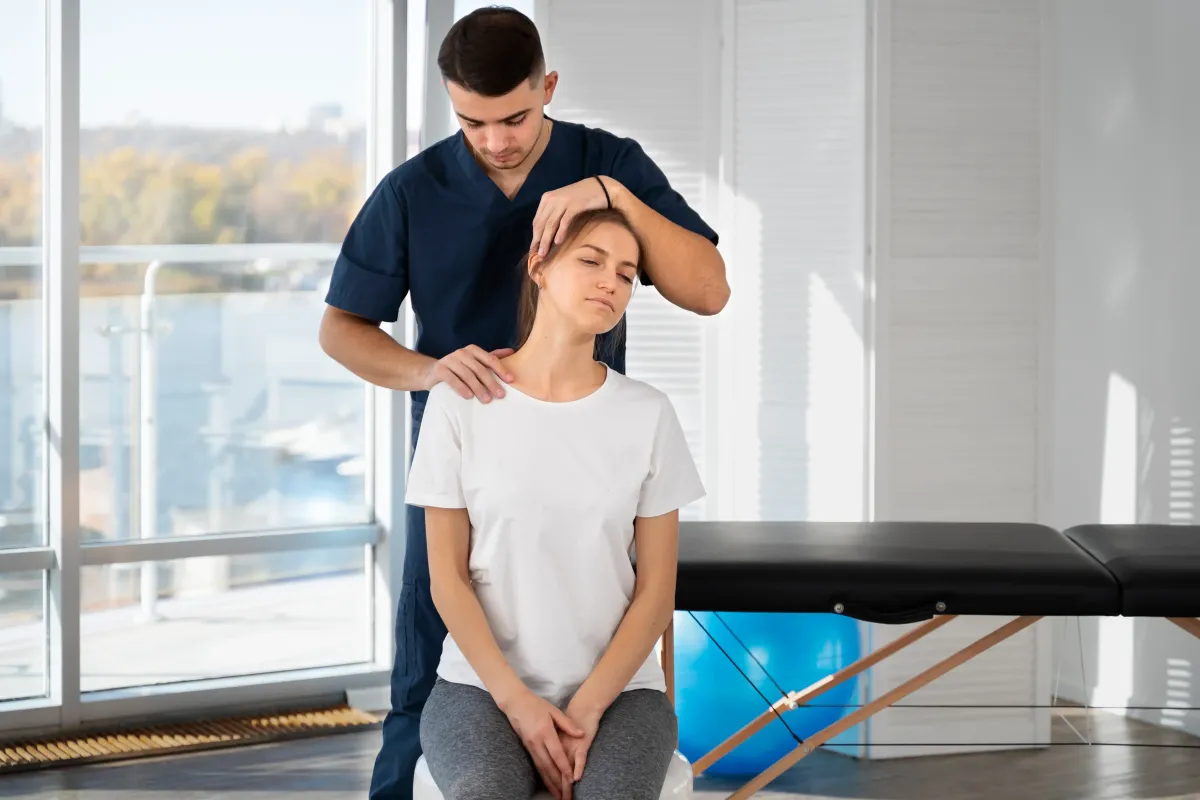
Vestibular rehabilitation exercises are specific movements used to help people with dizziness, vertigo, and balance problems retrain the brain and improve how the eyes, inner ears, and body work together. Rather than simply avoiding movements that make you dizzy, vestibular rehabilitation gradually exposes you to controlled movements so your brain can learn to respond more normally.
These exercises are commonly used for problems involving the vestibular system, the balance system located in the inner ear. They may be recommended for people with vestibular weakness, certain types of vertigo, balance difficulties, or lingering dizziness after a vestibular disorder.
A vestibular rehabilitation program is not the same for everyone. After an evaluation, a physical therapist or other qualified clinician can select exercises based on what is causing your symptoms and how well you tolerate different movements. The goal is to challenge your balance system without pushing you to the point of severe symptoms or creating an unnecessary risk of falling.
How Do Vestibular Rehabilitation Exercises Work?
Your brain uses information from the inner ears, eyes, muscles, and joints to maintain balance. When these signals become mismatched, you may feel dizzy, unsteady, or as if your surroundings are moving.
Vestibular rehabilitation uses specific movements to encourage vestibular compensation, helping the brain adapt to changes in balance signals and rely more effectively on other sensory information.
Movement is an important part of this process, but exercises should not leave you severely dizzy. A typical program starts with simple movements, such as turning your head while keeping your eyes focused on a target, and gradually progresses to faster movements, standing, or walking as your tolerance improves.
Exercises should generally produce mild to moderate symptoms that settle relatively quickly, rather than severe dizziness. Progress should be gradual and based on how you respond, not simply on completing more repetitions.
Common Vestibular Rehabilitation Exercises
There are several types of exercises used in vestibular rehabilitation. Your specific program may contain only a few of these, depending on your diagnosis and evaluation.
1. Gaze Stabilization Exercises
Gaze stabilization exercises train you to keep your vision focused on a stationary object while your head moves. This can be particularly useful when head movement causes blurred vision or dizziness.
A common version involves focusing on a letter or another small target positioned at eye level. While keeping your eyes on the target, you slowly turn your head from side to side. As your control improves, you can gradually increase the speed while making sure the target remains in focus.
You may begin seated and eventually progress to standing or using a more visually distracting background. Another variation involves moving your head up and down while maintaining your focus on the target.
If the exercise is initially too difficult, you might start with only 10 seconds and gradually work toward longer periods. The provided guidance describes building toward approximately one minute and repeating the exercise several times per day, according to your clinician's instructions.
2. Head Turning Exercises
Simple head-turning exercises can help your brain become more comfortable with movements that previously triggered dizziness.
One basic exercise involves sitting upright and slowly turning your head and eyes to one side, holding the position for about 2 to 3 seconds, and then turning to the other side. You can repeat this 5 to 10 times as tolerated.
As balance improves, a therapist may progress the exercise to standing or incorporate head turns while walking. One example involves walking down a clear hallway while turning your head to the right for several steps and then to the left for several steps.
3. Head Nods
Head nodding exercises use the same basic principle but involve looking up and down.
You can begin seated, looking at a target in front of you. Keeping your eyes on the target, move your head up and down at a comfortable speed. The movement should be large enough to provide a challenge but should not cause neck pain.
With progression, the exercise can be performed faster, while standing, or eventually while walking. These progressions should be attempted only when you can perform the earlier version safely.
4. Head and Body Rotation
Another exercise involves keeping your eyes focused on your thumbs while turning your head and body together from side to side.
The exercise starts in a seated position with your arms extended and hands clasped. As you rotate your head and body together, the goal is for your thumbs to remain visually stable while the background moves. You may begin with about 10 repetitions and progress gradually as the movement becomes easier.
5. Cawthorne-Cooksey Exercises
Cawthorne-Cooksey exercises are a broader series of movements designed to improve tolerance to head movement, eye movement, changes in position, coordination, and everyday balance activities.
The exercises can progress from simple eye movements while sitting or lying down to head and body movements, standing activities, and eventually walking or navigating steps. Examples include looking up and down, turning the head from side to side, shoulder movements, bending to pick up objects, changing from sitting to standing, and walking on slopes or stairs.
6. Balance and Gait Exercises
Vestibular problems do not only affect how you feel when your head moves. They can also make standing and walking feel less stable. Balance and gait exercises are therefore an important part of many vestibular rehabilitation programs.
A therapist may start with simple activities such as standing with your feet together, shifting your weight from one side to another, or changing your foot position to make your base of support smaller. As your balance improves, the exercises can become more challenging by adding head movements, reducing visual input, standing on a softer surface, or walking while performing another task.
Walking exercises may also include turning your head from side to side while walking, changing direction, or walking while completing a simple mental task. These activities are designed to make balance training more similar to what you encounter in everyday life.
7. Habituation Exercises
Habituation exercises are used when particular movements or visual situations repeatedly trigger dizziness. The basic idea is controlled, repeated exposure.
For example, if turning your head quickly or repeatedly looking up and down makes you dizzy, a therapist may include carefully selected versions of those movements in your program. Repeating an appropriate movement can gradually reduce the intensity of the response.
This does not mean you should repeatedly force yourself into severe dizziness. The exercises are selected according to your symptoms and progressed as your tolerance improves. The clinical practice guideline describes habituation as systematic exposure to a provocative movement or visual stimulus that can lead to reduced symptoms with repeated exposure.
Can Vestibular Rehabilitation Exercises Help Vertigo?
They can, but the answer depends on why you have vertigo.
Vestibular rehabilitation is strongly supported for people with peripheral vestibular hypofunction, a condition in which one or both inner-ear balance systems are not providing normal information to the brain. Research shows that vestibular physical therapy can reduce dizziness and improve gaze stability, postural stability, and function in these patients.
However, not every cause of vertigo should be treated with the same exercise program. For example, benign paroxysmal positional vertigo (BPPV) is usually associated with displaced crystals in the inner ear. Treatment commonly involves a canalith repositioning maneuver, such as the Epley maneuver, rather than simply performing a general vestibular exercise routine.
How Often Should You Do Vestibular Rehabilitation Exercises?
There is no single schedule that works for everyone. The frequency and duration depend on the diagnosis, whether the problem affects one or both vestibular systems, how long you have had symptoms, and how you respond to treatment.
For peripheral vestibular hypofunction, the 2022 clinical practice guideline provides specific minimum exercise doses for certain groups. For example, people with acute or subacute unilateral vestibular hypofunction may be prescribed gaze stabilization exercises at least three times a day, totaling at least 12 minutes daily. For chronic unilateral hypofunction, the guideline suggests at least 20 minutes per day, divided into three to five sessions, for approximately 4 to 6 weeks. For bilateral vestibular hypofunction, the suggested total is 20 to 40 minutes per day, three to five times daily, for roughly 5 to 7 weeks.
These are clinical guideline recommendations, not a universal home program. Your physical therapist may prescribe a different amount based on your examination and goals.
How Long Does Vestibular Rehabilitation Take to Work?
Some people notice changes within a few weeks, while others need several weeks or longer. Recovery depends on factors such as the type and severity of vestibular dysfunction, whether one or both ears are affected, how long symptoms have been present, age, general health, vision, medications, and other health conditions.
For chronic unilateral vestibular hypofunction, the 2022 APTA clinical practice guideline supports progressively challenging balance and gait exercises for at least 4 to 6 weeks. For bilateral vestibular hypofunction, balance training may be needed for approximately 6 to 9 weeks.
Improvement is not necessarily measured by whether you never feel dizzy again. A patient may notice that they can walk more confidently, turn their head without losing balance, focus on objects while moving, or perform daily activities that previously triggered symptoms.
Is It Normal to Feel Dizzy During Vestibular Exercises?
Mild dizziness during some vestibular exercises can be expected. In fact, certain exercises are intentionally designed to expose the vestibular system to movements that produce manageable symptoms.
The goal, however, is controlled challenge, not overwhelming symptoms. The material provided for these exercises recommends using a symptom scale and starting at a level that causes mild to moderate symptoms that settle after stopping. Exercises that produce severe symptoms may be too difficult at that stage.
If an exercise consistently causes severe dizziness, significant imbalance, pain, or other concerning symptoms, stop and speak with your healthcare professional rather than simply pushing through it.
Safety Tips Before Starting Vestibular Exercises
Vestibular exercises can temporarily increase dizziness or imbalance, which means safety needs to be part of the program. Keep these points in mind:
Start with exercises that match your current balance ability.
Perform standing exercises near a stable chair, countertop, or other appropriate support when advised.
Keep the area free of rugs, clutter, stairs, and other fall hazards.
Have someone nearby the first time you perform an exercise if your therapist recommends it.
Do not progress to standing or walking exercises simply because a written program lists them as the next level.
Avoid exercises that cause significant neck or back pain.
If you have a substantial risk of falling, do not perform challenging balance exercises without appropriate supervision or safety measures.
Who Can Benefit From Vestibular Rehabilitation?
Vestibular rehabilitation may be appropriate for adults with certain vestibular disorders who have problems such as:
Dizziness or motion-provoked symptoms
Imbalance while standing or walking
Difficulty focusing while the head is moving
Gait instability
Reduced confidence with everyday activities
Vestibular hypofunction affecting one or both ears
Persistent symptoms following certain vestibular disorders
The strongest evidence applies to peripheral vestibular hypofunction. The APTA's 2022 clinical practice guideline reviewed 67 relevant studies and found strong evidence supporting vestibular rehabilitation for adults with unilateral and bilateral vestibular hypofunction who have related impairments or activity limitations.
Vestibular Rehabilitation Exercises vs. Epley Maneuver
These treatments are sometimes confused, but they serve different purposes.
Vestibular rehabilitation exercises are an exercise-based program that may address gaze stability, balance, gait, habituation, and endurance.
The Epley maneuver is a canalith repositioning procedure used primarily for certain cases of BPPV. It uses a sequence of head and body positions intended to move displaced inner-ear crystals back toward their normal location.
If you have BPPV, you may not need a long vestibular rehabilitation program. If you have vestibular hypofunction with persistent imbalance or difficulty stabilizing your vision during head movement, a broader rehabilitation program may be more appropriate.
When Should You See a Physical Therapist for Dizziness or Balance Problems?
Consider an evaluation if dizziness, vertigo, or imbalance is affecting walking, exercising, working, driving, sleeping, or daily activities.
A vestibular physical therapist can assess gaze stability, balance, walking, head movement tolerance, and other vestibular functions to identify what may be contributing to your symptoms. Treatment is then tailored to your specific findings rather than using generic exercises.
The APTA clinical practice guideline strongly recommends supervised vestibular rehabilitation for people with unilateral or bilateral peripheral vestibular hypofunction.
However, not all dizziness comes from the inner ear. New, severe, or unexplained dizziness should be medically evaluated to rule out other causes. Ready to address your dizziness or balance problems? Contact Clifton Physical Therapy for a vestibular physical therapy evaluation. Call (971) 241-1338 to get started.
References
Hall CD, Herdman SJ, Whitney SL, et al. Vestibular Rehabilitation for Peripheral Vestibular Hypofunction: An Updated Clinical Practice Guideline From the Academy of Neurologic Physical Therapy of the American Physical Therapy Association. Journal of Neurologic Physical Therapy, 2022. PubMed article
Academy of Neurologic Physical Therapy, American Physical Therapy Association. Vestibular Rehabilitation for Peripheral Vestibular Hypofunction: An Evidence-Based Clinical Practice Guideline. APTA Clinical Practice Guideline
Clifton Physical Therapy
✆ Phone (appointments): (973)-241-1338
Address: 1059 Bloomfield Ave, Clifton, NJ 07012
Clifton Physical Therapy | cliftonphysio.com


