
Ultrasound Physical Therapy in NJ
Clifton Physical Therapy
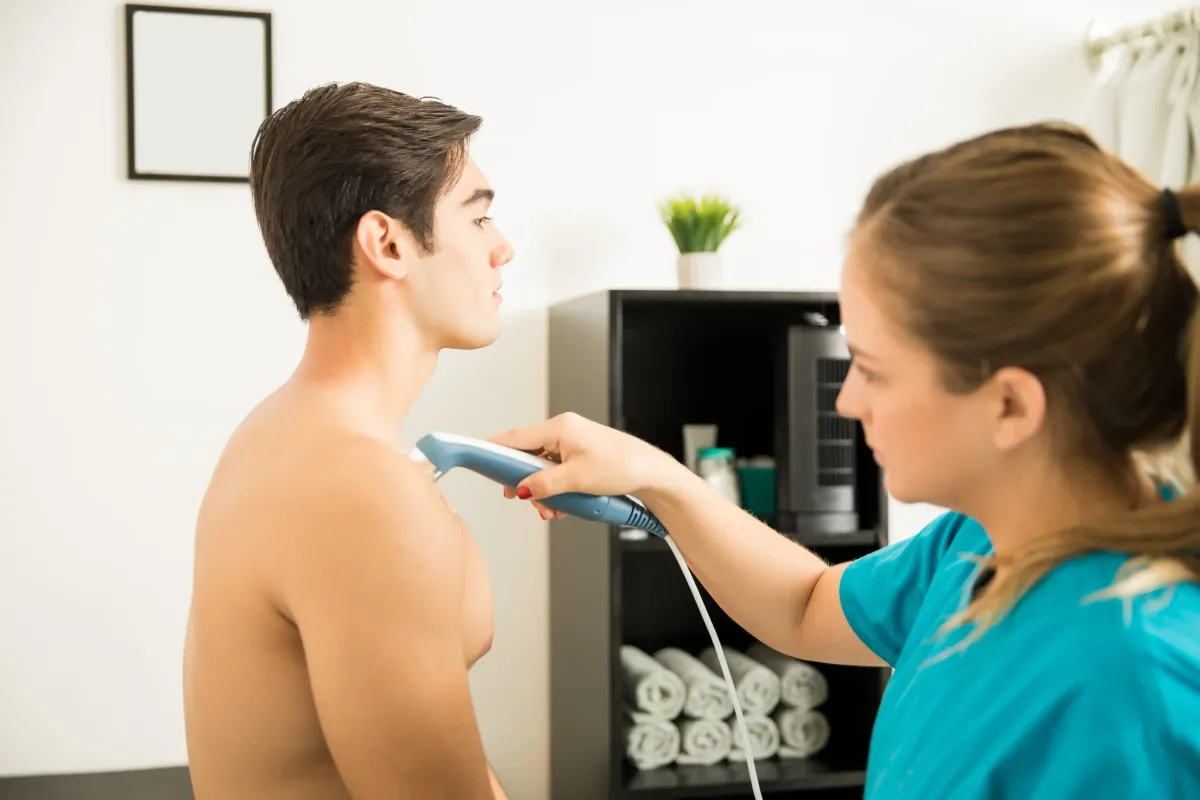
If you have ever had a stubborn tendon injury, painful joint, or muscle problem that seems to improve for a few days and then flare up again, you may have heard of therapeutic ultrasound.
Despite the name, this treatment does not produce images like the ultrasound used during pregnancy or diagnostic testing. Instead, a physical therapist uses a handheld device to deliver high-frequency sound-wave energy into targeted tissues. Depending on the settings and the condition being treated, the energy can create a gentle heating effect or produce non-thermal effects within the tissue.
What Is Ultrasound Physical Therapy?
Therapeutic ultrasound is a noninvasive physical therapy modality that uses sound waves to affect tissues beneath the skin. A therapist applies a water-based gel to the treatment area and moves a small device called a transducer over the skin.
Inside the transducer are crystals that vibrate when an electrical current passes through them. Those vibrations produce ultrasound waves that travel into the underlying tissue. The therapist adjusts factors such as frequency, intensity, treatment mode, and duration according to the tissue being treated and the stage of recovery.
This is different from diagnostic ultrasound. Diagnostic ultrasound creates real-time images of structures inside the body, while therapeutic ultrasound delivers energy to the tissues without producing an image.
It is also different from an “ultrasound massage.” The transducer glides over the skin, but there is no deep massage or pressure from the device itself. The intended effect comes from the sound-wave energy.
How Does Therapeutic Ultrasound Work?
There are two main ways therapeutic ultrasound can be applied: thermal and pulsed or non-thermal ultrasound.
Thermal ultrasound
Continuous ultrasound can raise the temperature of deeper tissues. This mild heating effect may increase tissue extensibility and blood flow, which can be useful when a therapist is preparing an area for stretching, manual therapy, or movement.
For example, if a patient has restricted soft tissue around a joint, a therapist may use thermal ultrasound before mobility exercises. The goal is not simply to make the area feel warm. It is to prepare the tissue for the active part of rehabilitation.
Pulsed or non-thermal ultrasound
Pulsed ultrasound delivers energy intermittently rather than continuously. It is intended to produce mechanical effects without substantially increasing tissue temperature.
One proposed mechanism involves microscopic bubbles in tissue fluids expanding and contracting in response to the sound waves. These effects may influence cellular activity and tissue repair, although the clinical importance of these mechanisms depends on the condition and treatment parameters.
The settings matter. A 1 MHz frequency generally penetrates deeper than 3 MHz, while 3 MHz is absorbed more superficially. Your therapist therefore chooses the frequency and intensity based on the tissue being targeted rather than using the same settings for every patient.
What Conditions Can Ultrasound Therapy Help Treat?
Therapeutic ultrasound has been used as part of rehabilitation for several musculoskeletal conditions, including:
Tendinopathy and tendon-related pain
Bursitis
Muscle strains and spasms
Ligament sprains
Certain joint problems
Scar tissue and restricted range of motion
Knee osteoarthritis
However, the important question is not simply whether ultrasound can be used for a condition. The better question is whether it is likely to add something useful to the patient's rehabilitation plan.
Research illustrates why that distinction matters. A 2024 systematic review and meta-analysis included 21 randomized controlled trials involving 1,315 people with knee osteoarthritis. Therapeutic ultrasound was associated with statistically significant improvements in pain and overall WOMAC function scores, although the studies varied considerably in their methods and treatment parameters.
Evidence is less convincing for some other problems. A systematic review of ultrasound for shoulder soft-tissue conditions included 8 randomized trials involving 586 patients and found inconsistent results overall. For carpal tunnel syndrome, a Cochrane review included 11 studies involving more than 400 participants, but concluded that the evidence was not strong enough to establish clear, lasting benefits from therapeutic ultrasound.
What Does an Ultrasound Therapy Session Feel Like?
A typical session is simple. The therapist first examines the treatment area and checks the skin for problems such as an open wound, active infection, or other conditions that may make ultrasound inappropriate.
A layer of ultrasound gel is placed on the skin so the transducer can move smoothly and sound energy can pass into the tissues. The therapist then moves the transducer continuously over the treatment area, often for about 5 to 10 minutes per area, depending on the treatment plan.
You may notice mild warmth during continuous ultrasound. With pulsed treatment, you may feel little or nothing.
Therapeutic ultrasound should not be painful. If you experience sharp heat, burning, or significant discomfort, tell your therapist immediately so the settings or technique can be changed. Keeping the transducer moving is also important because excessive exposure to ultrasound energy in one spot can increase the risk of superficial tissue heating.
What Are the Benefits of Ultrasound Physical Therapy?
The main appeal of therapeutic ultrasound is that it is gentle, targeted, and easy to combine with other forms of rehabilitation. But the benefit depends heavily on the condition being treated and how the treatment fits into the overall plan. Potential benefits include:
Reducing pain
Improving tissue flexibility
Supporting movement
Providing a noninvasive treatment option
Supporting a larger rehabilitation program
Ultrasound Therapy vs. Diagnostic Ultrasound
The two treatments sound similar because both use ultrasound waves, but their purposes are very different.
Diagnostic ultrasound creates images. A healthcare professional can use it to look at structures such as muscles, tendons, ligaments, and other soft tissues in real time.
Therapeutic ultrasound does not create diagnostic images. Instead, the transducer delivers ultrasound energy into the treatment area with the goal of producing a thermal or mechanical effect.
This distinction matters because seeing the word “ultrasound” on a physical therapy treatment plan does not necessarily mean that someone is scanning the inside of your body.
Musculoskeletal ultrasound can also be used as a separate imaging tool in physical therapy settings. It can provide real-time information about soft tissues and movement, but that is different from therapeutic ultrasound used to deliver energy to the tissue.
Who Should Not Have Therapeutic Ultrasound?
Therapeutic ultrasound is not suitable for everyone. Before treatment, your physical therapist should review your medical history and examine the area being treated. Ultrasound is generally avoided over or near certain areas, including:
An active infection
Open wounds or damaged skin
Certain active cancers
The pregnant uterus
Certain implanted electronic devices
Areas where sensation is significantly impaired
Certain areas involving recent surgery or specific implanted materials
What Happens After Ultrasound Therapy?
Ultrasound usually takes only a small portion of a physical therapy appointment. That is intentional.
After the treatment, your therapist may move into the part of rehabilitation that addresses the reason you are having pain in the first place. Depending on your condition, this could include:
Strengthening exercises
Stretching and mobility work
Balance and coordination exercises
Manual therapy
Movement retraining
Activity modification
Home exercises
For example, someone with a painful shoulder may receive ultrasound before working on shoulder mobility and strengthening. Someone recovering from a tendon injury may need progressive loading rather than repeated passive treatments.
This is where a good treatment plan differs from simply using a machine. Ultrasound can prepare or support an area, but it does not build muscle strength, restore coordination, or teach your body how to move normally.
Why the Treatment Settings Matter
Ultrasound is not simply a matter of turning on a machine and moving it over a painful area.
Frequency, intensity, treatment mode, and duration all influence how ultrasound energy interacts with tissue. For example, the supplied material notes that 1 MHz is generally used for deeper targets, while 3 MHz is absorbed more superficially. Continuous treatment produces more of a heating effect, while pulsed treatment is designed to limit thermal effects.
That is why treatment parameters should be selected by a trained professional based on the individual patient rather than copied from another person's treatment.
Consumer ultrasound devices are also available online, but having a machine does not mean knowing when or how to use it. Incorrect settings or application can create unnecessary risk, while the device itself cannot determine whether ultrasound is actually appropriate for your injury.
If you are looking for ultrasound physical therapy, contact us to schedule an evaluation and discuss whether therapeutic ultrasound belongs in your treatment plan. Call (973) 241-1338 to schedule an evaluation and learn whether ultrasound physical therapy could be appropriate for your condition.
Clifton Physical Therapy
✆ Phone (appointments): (973)-241-1338
Address: 1059 Bloomfield Ave, Clifton, NJ 07012


