Torn Calf Muscle Treatment in NJ
Clifton Physical Therapy
What Is a Torn Calf Muscle?
A torn calf muscle happens when the muscle fibers in the back of your lower leg overstretch or rip. This injury usually affects the gastrocnemius or soleus muscles, which run from behind your knee to your heel. Many people describe the pain as a sudden snap or the feeling of being kicked in the calf. Tears can range from small partial injuries to a complete rupture.
Because these muscles cross both the knee and ankle joints, they work hard during running, jumping, and quick directional changes. That constant demand makes them more vulnerable to overstretching. If you suddenly feel sharp pain in your calf or lose strength, it’s important to get evaluated early to avoid further damage.
What Causes a Torn Calf Muscle?
A torn calf muscle often happens during activities that require sudden acceleration, abrupt stops, or quick pivots. Sports like basketball, soccer, and tennis commonly trigger this injury. Returning to intense movement too soon after a previous strain also increases the risk.
Over time, tight calf muscles, lack of conditioning, or age-related changes can make the muscle fibers less flexible. When these already-tight muscles are pushed suddenly, they may tear. Even everyday movements—like missing a step or suddenly pushing off to catch your balance—can lead to a tear if the muscle is already stressed.
What Symptoms Should You Look For?
Recognizing the early signs of a calf tear helps patients know when to seek treatment. Common symptoms include:
Sharp, sudden pain in the back of the lower leg
Feeling or hearing a pop at the moment of injury
Trouble balancing or standing on your toes
Visible swelling or bruising
Difficulty walking or bearing weight
A tender or sunken area where the muscle fibers tore
If you feel a sudden snapping sensation or immediate weakness, avoid pushing through the pain. Stabilizing the injury early helps reduce swelling and prevents complications.
How Torn Calf Muscles Are Diagnosed
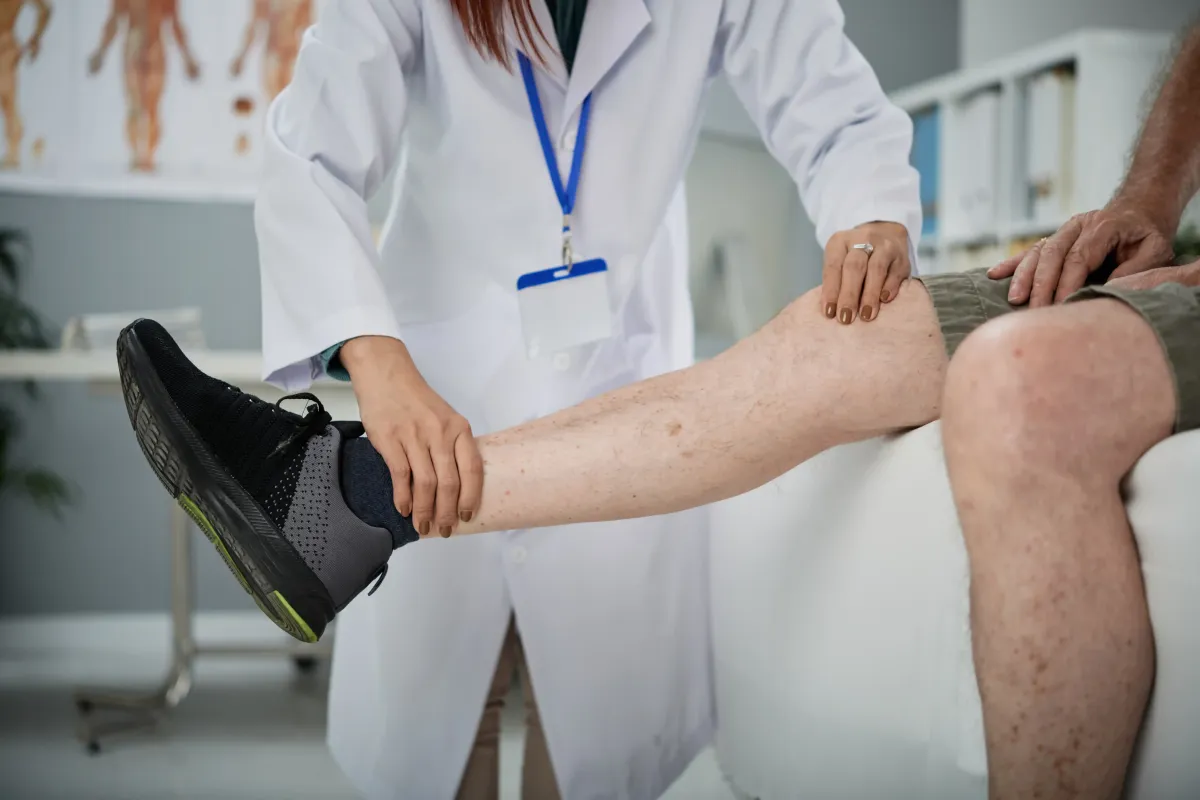
Clinicians begin with a hands-on evaluation to pinpoint the injured area and assess muscle function. Your provider may gently press along the calf to identify tenderness, swelling, or a gap in the muscle.
Because calf tears can resemble other conditions—such as Achilles tendon ruptures, Baker’s cysts, or even blood clots—additional testing may be recommended when symptoms overlap. Imaging tools like Doppler ultrasound or MRI can provide a clear picture of the soft tissues and help determine the severity of the tear. This ensures you receive the right treatment plan from the start.
What Exercises Help a Torn Calf Muscle Heal?
A structured exercise program plays a critical role in recovery. These movements should always stay pain-free and progress gradually.
Gentle Calf Massage
Lightly massaging around the injured area can improve circulation and reduce tightness. Start farther from the painful spot and slowly work closer as comfort improves.
Frequency: 3–5 minutes, 1–2 times per day.
Calf Stretch With Strap
Wrap a strap around your foot and pull your toes toward you until you feel a mild stretch in the calf. Never force the motion or push into sharp pain.
Hold: 30 seconds
Sets: 2–3
Frequency: Twice daily
Isometric Press With Strap
Using a rigid strap, press your foot downward without allowing movement at the ankle. This activates the calf without stressing the muscle fibers.
Hold: 10 seconds
Reps: 10
Frequency: 2–3 times per day
Ankle Pumps
Pull your toes up, pause, then point them down. This helps maintain ankle mobility and increases blood flow.
Reps: 15
Sets: 2
Frequency: 3 times per day
Ankle Circles
Rotate your foot in both directions within a comfortable range.
Reps: 15 each way
Sets: 2
Frequency: 3 times per day
Resistance Band Strengthening
Strengthening begins once pain decreases.
Plantarflexion: Push the foot downward against a resistance band
Dorsiflexion: Pull the foot upward using the band
Sets: 2–3
Reps: 10
Frequency: Once daily
Dual Heel Raises
Raise both heels off the ground while pressing through the balls of your feet. Only move through a pain-free range.
Sets: 2–3
Reps: 10
Frequency: Once daily
These exercises help rebuild calf strength safely and support a smooth return to normal activities.
Which Physical Therapy Methods Help Torn Calf Muscles Heal?
Recovering from a torn calf muscle takes more than rest and a few home stretches. A structured rehab plan helps the muscle fibers heal in the right direction, lowers the risk of a second injury, and restores the strength needed for walking, climbing stairs, commuting, and returning to sports. Below is a breakdown of the techniques commonly used to support a full and safe recovery.
Manual Therapy
Hands-on care is often introduced early in the healing process. Your therapist may use soft-tissue mobilization, trigger point work, or gentle myofascial techniques to:
Reduce tightness and muscle guarding
Improve circulation to promote tissue repair
Break up adhesions that restrict movement
Help the calf relax so stretching becomes more comfortable
Manual therapy also relieves stiffness around the ankle and knee—two areas that frequently tighten up after a calf tear.
Stretching and Flexibility Work
As a torn muscle heals, it naturally shortens and stiffens. Restoring flexibility is essential to regaining a normal stride and preventing future strains. Your therapist will introduce stretches gradually, beginning with light mobility and progressing to deeper calf work.
You may work on:
Gastrocnemius stretches (knee straight) for upper-calf flexibility
Soleus stretches (knee bent) to target deeper tissues
Incline or elevated stretches to lengthen the full calf complex
These stretches help reduce discomfort while walking, improve overall mobility, and restore healthy movement patterns.
Strengthening Exercises
Strengthening is one of the most important components of calf rehabilitation. Weak calf muscles can affect balance, alter walking mechanics, and lead to repeated injuries. At Clifton Physical Therapy, strengthening begins with light activation exercises and slowly progresses to weight-bearing and functional movements. You may work on:
Ankle plantarflexion
Ankle dorsiflexion
Controlled heel raises (flat or elevated)
Your therapist will adjust resistance and volume as your muscle heals, ensuring every step of the program is safe and productive.
Neuromuscular Training
A torn calf doesn’t just weaken the muscle—it also interferes with the communication between your brain, nerves, and leg muscles. Neuromuscular retraining helps restore coordination and control.
Depending on your healing stage, this may include:
Light hopping or bounding drills
Direction-change movements
Single-leg balance tasks
Foot-placement and reaction training
These exercises prepare your calf for real-world demands, including sports, quick movements, and uneven surfaces.
Gait and Balance Training
A calf tear often causes limping, overloading of the opposite leg, or compensation at the hip or knee. Without retraining, these habits can create new problems down the line.
Your therapist will analyze your walking pattern and work with you to:
Restore smooth heel-to-toe motion
Improve push-off power
Correct compensations
Ensure balanced movement between both legs
What Is the Recovery Timeline?
Healing times vary depending on the tear’s severity:
Mild tears: A few weeks
Moderate tears: 6–8 weeks
Severe tears or complete ruptures: Several months
What Complications Should You Watch For?
Complications are uncommon, but awareness is important. In rare cases, untreated or severe tears may lead to:
Compartment syndrome
Deep vein thrombosis (DVT)
Superficial thrombophlebitis
When Should You Seek Treatment?
You should see a healthcare provider if you notice:
Trouble walking or bearing weight
Inability to rise onto your toes
Sudden or severe calf pain
Visible swelling or bruising
Difficulty moving your ankle or knee
Call us at (973)-241-1338 or book your appointment online to find relief.
What patients are saying
"I recently had ankle surgery and Clifton PT has been nothing short of amazing! My goal was to get back to playing soccer as quick as possible before the college season started and so far I'm right on track. Izzy, Bianca, Tiff, and John have gone above and beyond to make sure I'm back to 100%. Couldn't be more grateful to be treated by the best team ever!." - Nat Rufino
All the therapists at Clifton Physical Therapy are awesome, but I spend most of my time with Izzy and Bianca—and they’ve been amazing. They’re enthusiastic, knowledgeable, and always take the time to explain what I’m doing and what my issues are. Their positive energy and clear communication make a big difference in my recovery." - Bryan Tompkins
"Going Clifton physical therapy was one of the best thing that came out of my back pain! Every single staff member is amazing and cares for your recovery! I have been with them for the past couple of months and now continuing their workout program! I can’t recommend them enough! Tiffany, Izzy, Bianca and everyone else I have worked with there! Can’t rave about them enough!!." - Monica Mehta
"Clifton Physical Therapy has been a great place for me to heal my meniscus tear. The staff is very knowledgeable and friendly, and has been extremely helpful in guiding me through my recovery. I highly recommend their services.." - Kelly Bevando
Clifton Physical Therapy
✆ Phone (appointments): (973)-241-1338
Address: 1059 Bloomfield Ave, Clifton, NJ 07012
Clifton Physical Therapy | cliftonphysio.com


