
Patellar Fracture Treatment in NJ
Clifton Physical Therapy
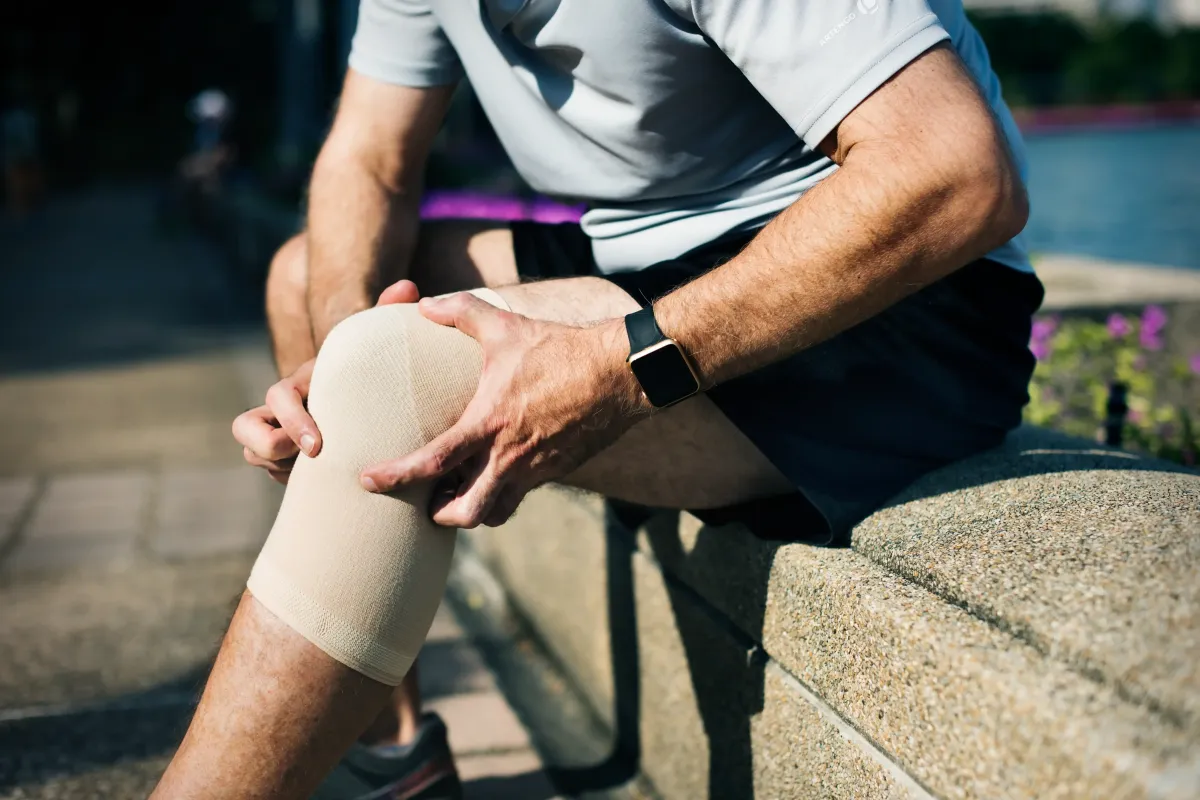
A patellar fracture, commonly known as a broken kneecap, is a serious knee injury that can make walking, standing, and even straightening the leg difficult. Because the kneecap plays a critical role in knee movement and stability, prompt diagnosis and appropriate treatment are essential for restoring function and preventing long-term complications.
What Is a Patellar Fracture?
The patella, or kneecap, is a small triangular bone located at the front of the knee. It sits within the quadriceps tendon and acts as a protective shield for the knee joint while improving the efficiency of the quadriceps muscles during walking, climbing stairs, running, and jumping.
A patellar fracture occurs when this bone breaks due to a significant force or trauma. Although patellar fractures account for only about 1% of all skeletal fractures, they can have a major impact on mobility because they may disrupt the knee's extensor mechanism. This system includes the quadriceps muscles, tendons, ligaments, and the patella itself, allowing you to straighten your leg.
When the kneecap fractures, patients may lose the ability to actively extend the knee, making everyday activities extremely challenging.
What Causes a Patellar Fracture?
Most patellar fractures occur as a result of direct trauma to the front of the knee. The injury can happen suddenly and often involves significant force. Common causes include:
Falling directly onto the knee
Sports-related collisions or impacts
Motor vehicle accidents, especially dashboard injuries
Workplace accidents
Bicycle or motorcycle crashes
Slips and falls on hard surfaces
In some cases, the fracture may occur indirectly. A sudden and powerful contraction of the quadriceps muscle can place excessive stress on the kneecap, causing it to break. This mechanism is less common but can occur during jumping, landing awkwardly, or attempting to prevent a fall.
Older adults face a higher risk of patellar fractures due to decreased bone density and an increased likelihood of falls. Research has shown that low-energy falls account for approximately 70% of patellar fractures in individuals over 65 years of age.
What Are the Different Types of Patellar Fractures?
Patellar fractures are classified according to the pattern of the break and the degree of displacement. Understanding the fracture type helps determine whether conservative care or surgery is necessary.
Stable (Nondisplaced) Fracture
In a stable fracture, the bone fragments remain properly aligned despite the break. The extensor mechanism usually remains intact, allowing the fracture to heal without surgery in many cases.
These injuries often respond well to immobilization and physical therapy.
Displaced Fracture
A displaced fracture occurs when the broken bone fragments separate and no longer line up correctly. Because the kneecap is unable to function normally, surgery is often recommended to restore proper alignment and knee mechanics.
Transverse Fracture
This is the most common type of patellar fracture. The kneecap breaks horizontally into two separate pieces, often due to a sudden forceful contraction of the quadriceps muscle or a direct impact.
Comminuted Fracture
A comminuted fracture occurs when the kneecap breaks into three or more fragments. These injuries are often caused by high-energy trauma such as motor vehicle accidents or severe falls. Treatment depends on the size and position of the fragments.
Open Fracture
An open fracture occurs when the broken bone penetrates the skin or when a wound exposes the fracture site. This is considered a medical emergency because of the increased risk of infection and soft tissue damage. Prompt surgical intervention is typically required.
Vertical Fracture
A vertical fracture runs from the top to the bottom of the kneecap. Many vertical fractures remain stable and can often be managed without surgery if alignment is maintained.
What Are the Symptoms of a Patellar Fracture?
Symptoms can vary depending on the severity of the injury, but most patients experience immediate pain and difficulty using the affected leg.
Common signs and symptoms include:
Severe pain at the front of the knee
Rapid swelling around the kneecap
Bruising or discoloration
Tenderness when touching the knee
Difficulty bending or straightening the leg
Inability to perform a straight-leg raise
Difficulty standing or walking
A noticeable gap or deformity in the kneecap
Grinding sensations during movement
Reduced knee strength
How Is a Patellar Fracture Diagnosed?
Accurate diagnosis is essential because treatment decisions depend on the fracture pattern, displacement, and whether the knee's extensor mechanism remains intact.
During your evaluation, a healthcare provider will review how the injury occurred and assess your symptoms. A physical examination typically includes checking for swelling, bruising, tenderness, deformity, and your ability to straighten the knee.
Patients with a significant patellar fracture often cannot perform a straight-leg raise, which may indicate disruption of the extensor mechanism. Diagnostic imaging usually includes:
X-Rays
Standard X-rays are the primary imaging tool used to confirm a patellar fracture. They help determine:
The location of the fracture
The number of bone fragments
The degree of displacement
Joint involvement
CT Scan
A CT scan may be recommended when the fracture pattern is complex or when surgical planning is required. CT imaging provides a more detailed view of the bone and surrounding structures.
MRI
Although not routinely required, MRI may be used when associated injuries to ligaments, tendons, cartilage, or other soft tissues are suspected.
What Are the Non-Surgical Treatment Options for a Patellar Fracture?
Not every patellar fracture requires surgery. Stable fractures with minimal displacement and an intact extensor mechanism can often heal successfully through conservative treatment.
Research has shown that properly selected patients with nondisplaced fractures achieve good to excellent outcomes in approximately 90% of cases when managed non-operatively. Non-surgical treatment may include:
Knee Immobilization
The knee is typically immobilized in full extension using:
A knee immobilizer
A hinged knee brace locked in extension
A cast
Protected Weight Bearing
Many patients are allowed to bear weight while wearing the brace or cast, provided the knee remains fully extended. Crutches may be recommended during the initial recovery period to improve comfort and safety.
Pain and Swelling Management
Pain and inflammation are commonly managed through:
Ice therapy
Elevation
Compression
Physician-recommended medications
Gradual Return of Motion
Once imaging confirms adequate healing, controlled knee motion is introduced. Regaining movement too early may disrupt healing, while waiting too long can contribute to stiffness. This is where structured rehabilitation becomes particularly important.
When Is Surgery Necessary for a Patellar Fracture?
Surgery is often recommended when the fracture fragments have shifted out of position or when the extensor mechanism can no longer function properly. Your orthopedic surgeon may recommend surgery if:
The fracture is displaced
The kneecap has broken into multiple unstable fragments
The joint surface is significantly disrupted
An open fracture is present
The extensor mechanism is damaged
The fracture fails to heal appropriately with conservative care
The primary goals of surgery are to:
Restore normal alignment
Preserve knee function
Reconstruct the joint surface
Allow safe movement during recovery
Reduce the risk of long-term arthritis
Why Is Physical Therapy Important After a Patellar Fracture?
Whether treatment is surgical or non-surgical, physical therapy plays a crucial role in restoring knee function. After weeks of immobilization, many patients experience:
Muscle weakness
Joint stiffness
Reduced flexibility
Balance deficits
Difficulty walking
Limited endurance
Without rehabilitation, these problems may persist long after the fracture has healed.
Early Rehabilitation Phase
The initial focus is on:
Managing pain and swelling
Protecting the healing fracture
Maintaining circulation
Preventing excessive muscle loss
Exercises may include:
Quadriceps activation exercises
Straight-leg raises when appropriate
Gentle hip strengthening
Ankle pumps
Patellar mobility techniques
Intermediate Rehabilitation Phase
As healing progresses, treatment shifts toward restoring motion and functional strength.
Therapy may include:
Stationary cycling
Range-of-motion exercises
Step-ups
Mini squats
Balance training
Gait retraining
Advanced Rehabilitation Phase
The final stage focuses on returning patients to their desired activities.
Treatment may involve:
Functional strengthening
Stair training
Sport-specific drills
Agility exercises
Proprioception training
What Complications Can Occur After a Patellar Fracture?
Most patients recover well when treatment is started promptly. However, complications can occur, particularly after severe injuries. Potential complications include:
Knee stiffness
Chronic pain
Muscle weakness
Delayed union
Nonunion
Malunion
Post-traumatic arthritis
Cartilage damage
Reduced knee mobility
Difficulty climbing stairs
Persistent swelling
Research suggests that post-traumatic patellofemoral arthritis is one of the most common long-term complications following significant patellar fractures.
When Should You Seek Treatment for a Knee Injury?
You should seek medical attention immediately if you experience:
Severe knee pain after trauma
Rapid swelling
Inability to bear weight
Inability to straighten the leg
Visible knee deformity
An open wound near the kneecap
Persistent pain that does not improve
At Clifton Physical Therapy, our team develops individualized rehabilitation programs designed to support each stage of recovery. To schedule an evaluation or learn more about patellar fracture treatment in NJ, call (973) 241-1338 today.
References
Khatri K, Sharma V, Gupta A, et al. Comprehensive Rehabilitation of a Patient With Patellar Fracture: A Case Report. Cureus. 2024. Available at: https://pmc.ncbi.nlm.nih.gov/articles/PMC10822036/
Physiopedia. Patellar Fractures. Available at: https://www.physio-pedia.com/Patellar_Fractures
Cleveland Clinic. Patella Fracture (Broken Kneecap). Available at: https://my.clevelandclinic.org/health/diseases/22081-patella-fracture
What patients are saying
"I recently had ankle surgery and Clifton PT has been nothing short of amazing! My goal was to get back to playing soccer as quick as possible before the college season started and so far I'm right on track. Izzy, Bianca, Tiff, and John have gone above and beyond to make sure I'm back to 100%. Couldn't be more grateful to be treated by the best team ever!." - Nat Rufino

All the therapists at Clifton Physical Therapy are awesome, but I spend most of my time with Izzy and Bianca—and they’ve been amazing. They’re enthusiastic, knowledgeable, and always take the time to explain what I’m doing and what my issues are. Their positive energy and clear communication make a big difference in my recovery." - Bryan Tompkins
"Going Clifton physical therapy was one of the best thing that came out of my back pain! Every single staff member is amazing and cares for your recovery! I have been with them for the past couple of months and now continuing their workout program! I can’t recommend them enough! Tiffany, Izzy, Bianca and everyone else I have worked with there! Can’t rave about them enough!!." - Monica Mehta
"Clifton Physical Therapy has been a great place for me to heal my meniscus tear. The staff is very knowledgeable and friendly, and has been extremely helpful in guiding me through my recovery. I highly recommend their services.." - Kelly Bevando
Clifton Physical Therapy
✆ Phone (appointments): (973)-241-1338
Address: 1059 Bloomfield Ave, Clifton, NJ 07012


