
Non-Surgical Options to Avoid Shoulder Replacement in NJ
Clifton Physical Therapy
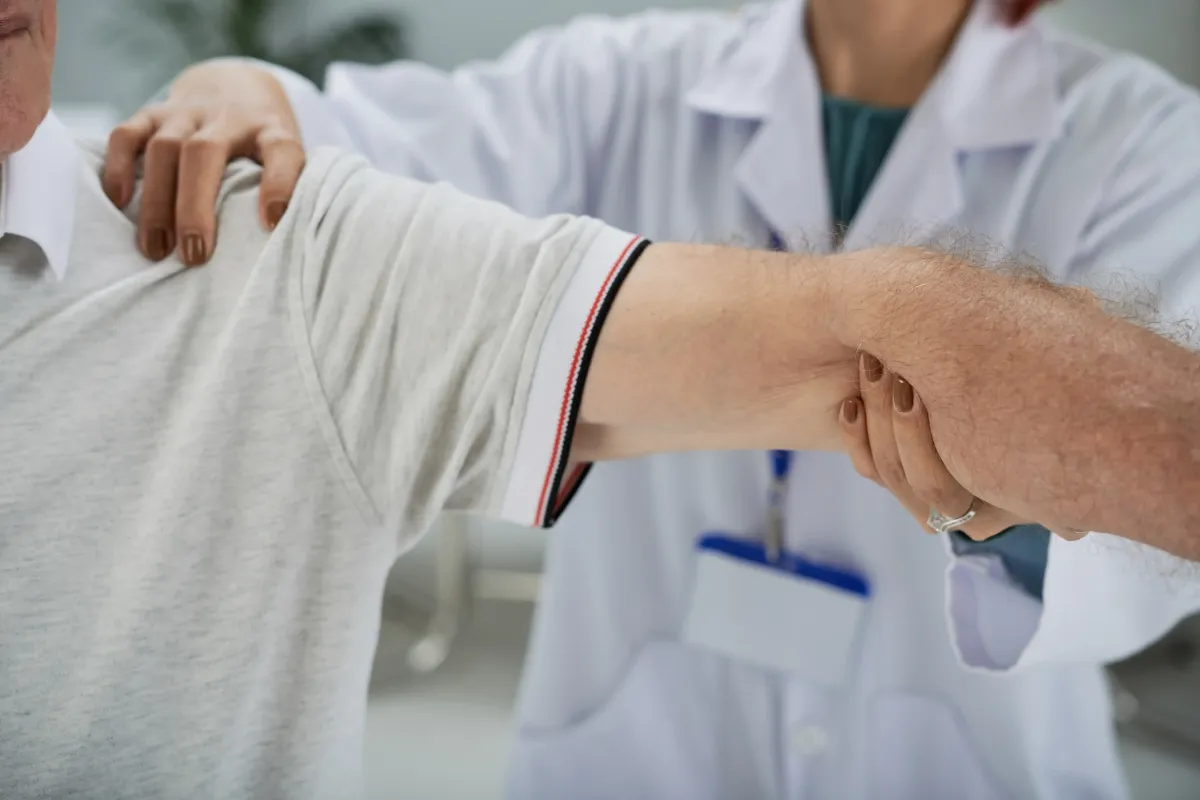
Why Many New Jersey Patients Want to Avoid Shoulder Replacement
Shoulder replacement can be life-changing for severe cases, but it’s also a major surgery with long recovery timelines. For many patients in New Jersey, the real concern isn’t just pain—it’s time away from work, loss of independence during recovery, and uncertainty about outcomes.
Clinical data shows that 3–4 months is the minimum functional recovery window after shoulder replacement, while full recovery may take up to a year, especially in adults over 65. Because of this, orthopedic guidelines consistently recommend exhausting non-surgical care first unless imaging confirms advanced bone-on-bone arthritis or catastrophic joint damage.
The good news: a large percentage of patients who initially think they need surgery experience meaningful improvement with structured conservative care—particularly when pain is driven by stiffness, weakness, or tendon overload rather than complete joint failure.
Common Shoulder Conditions That Often Lead Patients to Consider Surgery
Many shoulder diagnoses sound surgical on paper, but don’t automatically require an operation. The most common conditions we see include:
Rotator Cuff Tears
Partial and even some full-thickness tears can often be managed without surgery. Research published in The Journal of Shoulder and Elbow Surgery found that over 70% of patients with atraumatic rotator cuff tears improved with non-operative treatment alone at one-year follow-up.
Frozen Shoulder (Adhesive Capsulitis)
This condition causes progressive stiffness and pain that can last months if untreated. Studies show that supervised physical therapy combined with guided mobility work significantly shortens recovery time, often avoiding surgical manipulation altogether.
Shoulder Impingement Syndrome
Often caused by poor shoulder mechanics rather than structural damage. Clinical trials have shown no long-term difference in outcomes between surgery and exercise-based care for many impingement cases.
Shoulder Arthritis (Early to Moderate Stages)
When cartilage loss is present but not yet bone-on-bone, conservative care can reduce pain and maintain function for years.
Shoulder Instability
Recurrent “slipping” or fear of dislocation is frequently tied to muscle weakness and poor neuromuscular control—both highly responsive to rehabilitation.
When Surgery Is Truly Necessary—and When It’s Not
Surgery is usually considered when imaging confirms advanced arthritis with bone-on-bone contact, severe fractures, or irreparable rotator cuff damage paired with loss of function. Outside of these cases, most orthopedic specialists recommend starting with non-operative care.
Multiple large reviews have shown that physical therapy reduces shoulder pain and improves function in 60–80% of patients with degenerative shoulder conditions. Importantly, conservative care carries lower risk, no surgical downtime, and preserves future surgical options if they’re ever needed.
Physical Therapy: The Foundation of Non-Surgical Shoulder Care
Physical therapy is not generic exercise—it’s targeted, progressive treatment designed around how your shoulder actually moves. A structured therapy program focuses on:
Restoring joint mobility
Strengthening the rotator cuff and scapular stabilizers
Correcting movement patterns that overload the joint
Gradually reintroducing functional activities
Clinical evidence consistently shows that patients who complete 6–12 weeks of supervised physical therapy report significant pain reduction and measurable strength gains, often eliminating the need for injections or surgery.
Injection Therapies
For some patients, pain levels make it difficult to fully participate in physical therapy early on. In these cases, injection-based treatments may be used strategically—not as a cure, but as a window to allow movement and strengthening.
Corticosteroid injections are the most commonly used option for shoulder pain. Research published in The American Journal of Sports Medicine shows that steroid injections can provide short- to medium-term pain relief (6–12 weeks) for conditions such as bursitis, tendinitis, and early arthritis. When paired with physical therapy, outcomes are significantly better than injections alone.
More recently, biologic injections, such as platelet-rich plasma (PRP), have gained attention. While results vary by condition, systematic reviews suggest PRP may offer modest improvements in pain and function for rotator cuff tendinopathy when conservative care has plateaued. These treatments are typically considered after standard therapy, not as a first step.
Activity Modification That Protects the Shoulder Without Stopping Life
One of the most overlooked tools in avoiding shoulder surgery is intelligent activity modification. This doesn’t mean complete rest—prolonged inactivity often worsens stiffness and weakness—but rather adjusting how and how often the shoulder is loaded. Examples include:
Reducing repetitive overhead movements
Altering gym routines to limit joint compression
Adjusting work techniques or tools to reduce strain
Temporarily shifting sports volume rather than quitting entirely
Studies show that patients who modify aggravating activities while continuing guided movement recover faster than those who rely on rest alone.
Medications and Supplements
Anti-inflammatory medications can be helpful for short-term symptom control, particularly during flare-ups. Nonsteroidal anti-inflammatory drugs (NSAIDs) have been shown to reduce pain and swelling in shoulder arthritis and tendinopathy, but they do not repair tissue damage and should be used cautiously, especially in older adults.
Some patients ask about supplements such as glucosamine or omega-3s. While evidence is mixed, mild symptom improvement has been reported in arthritis-related pain. These should be viewed as supportive tools, not primary treatments. Any medication strategy should support movement and rehabilitation—not replace it.
How Long Should Non-Surgical Treatment Be Tried?
This is one of the most common questions patients ask. In most cases, orthopedic and rehabilitation guidelines recommend 8–12 weeks of consistent, structured conservative care before considering surgery—unless imaging shows advanced joint destruction or symptoms are worsening despite treatment.
Research tracking patients with shoulder arthritis and rotator cuff disease shows that those who improve within the first three months of non-operative care often maintain gains long-term, delaying or completely avoiding surgery.
If pain remains severe, sleep is consistently disrupted, and daily function continues to decline despite appropriate care, surgical consultation may then be appropriate.
When Shoulder Replacement Becomes the Right Option
Shoulder replacement is typically recommended when:
Imaging confirms bone-on-bone arthritis
Pain persists at rest and at night
Conservative care no longer improves function
Daily activities are significantly limited
There are two main surgical options:
Anatomic shoulder replacement, usually for patients with intact rotator cuffs
Reverse shoulder replacement, often used when rotator cuff function is severely compromised
Both procedures have high satisfaction rates when used appropriately, but they are best viewed as last-line solutions, not first responses to pain.
Avoiding Surgery Starts With the Right Care Path
Many patients across New Jersey live with shoulder pain longer than they need to, assuming surgery is inevitable. In reality, a large percentage regain comfort and function through conservative treatment that addresses movement quality, strength, and joint mechanics.
At Clifton Physical Therapy, the focus is on helping patients understand their condition, track measurable progress, and make informed decisions—whether that means continuing non-surgical care or knowing when it’s time to explore other options. Call (973) 241-1338 today to schedule an appointment and get clear answers about your shoulder pain.
What patients are saying
"I recently had ankle surgery and Clifton PT has been nothing short of amazing! My goal was to get back to playing soccer as quick as possible before the college season started and so far I'm right on track. Izzy, Bianca, Tiff, and John have gone above and beyond to make sure I'm back to 100%. Couldn't be more grateful to be treated by the best team ever!." - Nat Rufino

All the therapists at Clifton Physical Therapy are awesome, but I spend most of my time with Izzy and Bianca—and they’ve been amazing. They’re enthusiastic, knowledgeable, and always take the time to explain what I’m doing and what my issues are. Their positive energy and clear communication make a big difference in my recovery." - Bryan Tompkins
"Going Clifton physical therapy was one of the best thing that came out of my back pain! Every single staff member is amazing and cares for your recovery! I have been with them for the past couple of months and now continuing their workout program! I can’t recommend them enough! Tiffany, Izzy, Bianca and everyone else I have worked with there! Can’t rave about them enough!!." - Monica Mehta
"Clifton Physical Therapy has been a great place for me to heal my meniscus tear. The staff is very knowledgeable and friendly, and has been extremely helpful in guiding me through my recovery. I highly recommend their services.." - Kelly Bevando
Clifton Physical Therapy
✆ Phone (appointments): (973)-241-1338
Address: 1059 Bloomfield Ave, Clifton, NJ 07012
Clifton Physical Therapy | cliftonphysio.com


