
Knee Cartilage Injury Treatment in NJ
Clifton Physical Therapy
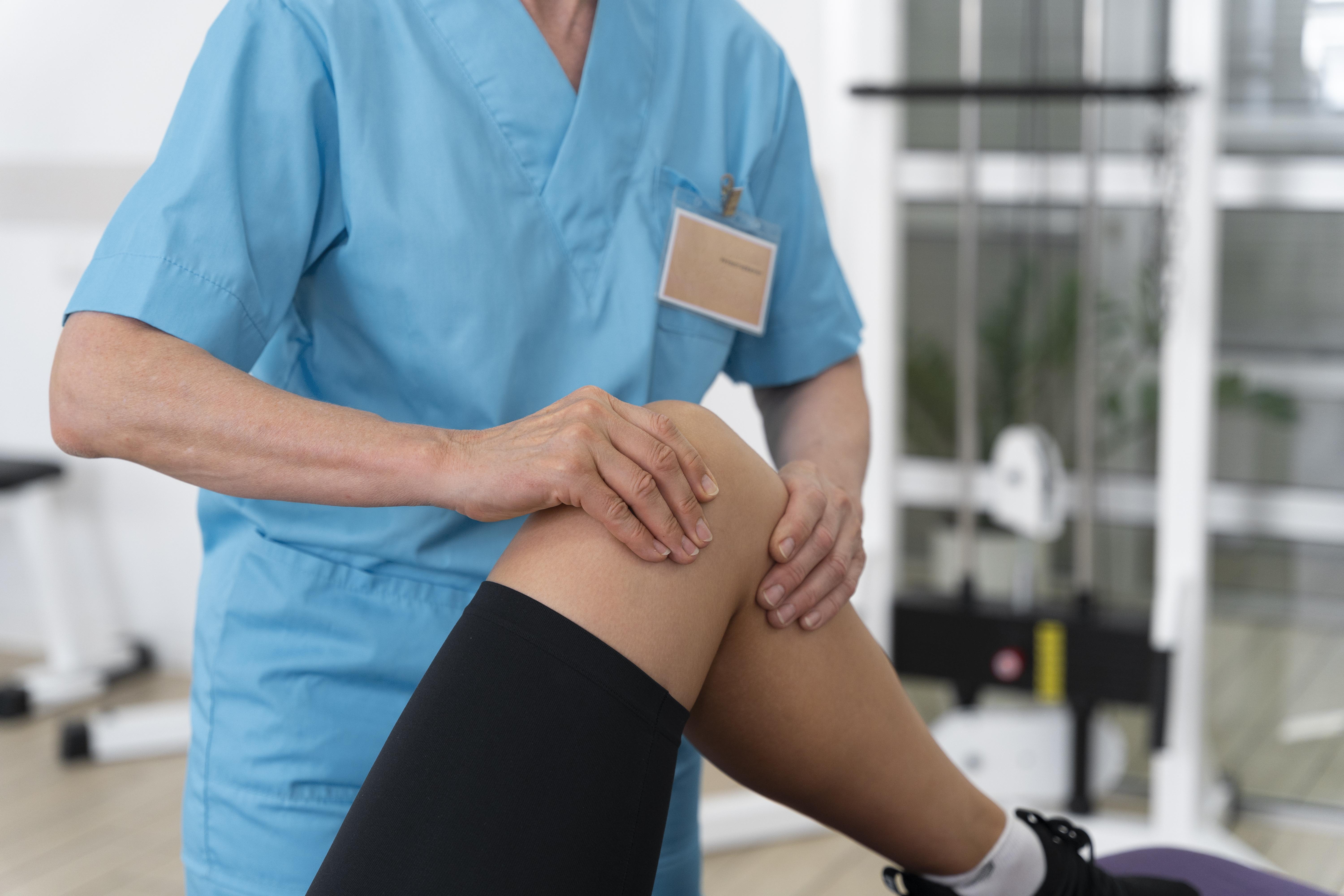
What Is a Knee Cartilage Injury?
Cartilage helps your knee move smoothly, absorb impact, and handle the repeated stress of walking, climbing stairs, exercising, and sports. When this tissue is damaged, even simple movements can become uncomfortable.
The knee has two important types of cartilage: articular cartilage and the menisci. Articular cartilage covers the ends of the femur and tibia and the underside of the kneecap. It creates a smooth surface that allows the bones to glide with very little friction. The medial and lateral menisci sit between the thighbone and shinbone and help distribute load while providing cushioning and stability.
A cartilage injury can range from a small area of irritation or a meniscus tear to a larger defect involving the articular cartilage. Some injuries happen suddenly, while others develop gradually as cartilage becomes worn or damaged.
One important point for patients is that “knee cartilage injury” does not describe just one condition. A traumatic meniscus tear in a young athlete is different from gradual cartilage loss associated with osteoarthritis. The symptoms may overlap, but the appropriate treatment can be very different.
What Causes Knee Cartilage Damage?
Knee cartilage can be damaged by a sudden injury or by repeated stress over time.
A common cause is a twisting movement while the foot is planted. This can happen during basketball, soccer, football, skiing, or other activities that require quick changes in direction. A direct blow to the knee or an awkward landing can also injure the meniscus or other structures inside the joint. Other possible causes include:
Sudden twisting or pivoting
A hard impact or fall
Repetitive high-impact activity
Sports-related injuries
Meniscus tears associated with other knee injuries
Gradual cartilage wear and osteoarthritis
Previous knee injuries
Osteochondritis dissecans, particularly in younger patients
Age can also influence cartilage health. Over time, repeated loading and degenerative changes can make cartilage less resilient. However, cartilage problems are not limited to older adults. Runners, recreational athletes, gym-goers, and people whose jobs require prolonged standing or repeated squatting can also develop knee symptoms.
A previous injury may further increase the risk of ongoing problems. For example, a knee injury that changes how you walk or place weight through the joint can affect the surrounding muscles and movement patterns.
Another common mistake is assuming that every cartilage injury needs surgery. That is not always the case. The treatment decision depends on the type and location of the injury, the person's age and activity level, the presence of arthritis or other damage, and how the knee responds to conservative treatment.
What Are the Symptoms of Knee Cartilage Damage?
Knee cartilage damage does not always feel the same from one person to another. Some people notice pain immediately after an injury. Others experience symptoms gradually, particularly when cartilage changes are related to repetitive stress or degeneration. Common symptoms include:
Swelling that develops after activity or returns repeatedly
Stiffness or difficulty fully bending or straightening the knee
Catching or locking during movement
Clicking, popping, or grinding
A feeling that the knee is unstable or may give way
Reduced ability to walk, run, squat, or participate in sports
How Is a Knee Cartilage Injury Diagnosed?
Diagnosis usually begins with a detailed history and physical examination. Your provider may ask how the injury occurred, where you feel pain, whether the knee swells, what movements aggravate your symptoms, and whether you have experienced previous knee injuries. The physical examination may include checking:
Knee swelling and tenderness
Range of motion
Muscle strength
Joint stability
Walking and movement patterns
Pain during specific movements
Imaging may be recommended when the clinical findings suggest internal joint damage or when symptoms do not improve as expected.
An X-ray does not directly show cartilage, but it can show bone alignment, fractures, joint-space changes, and signs associated with arthritis. An MRI provides much more information about soft tissues, including the menisci, articular cartilage, ligaments, and surrounding structures.
Knee Cartilage Injury Treatment Options
Treatment depends on what is damaged, how severe the injury is, your symptoms, and how the knee functions. A small meniscus injury may be managed very differently from a large articular cartilage defect. For many patients, treatment begins without surgery. Common options include:
Activity modification
Physical therapy
Strengthening and mobility exercises
Ice or other methods of managing swelling
Bracing when appropriate
Medication for pain or inflammation when recommended by a healthcare professional
Injections in selected cases
Surgery when conservative treatment is not enough or when the injury requires it
The goal is not simply to make the knee hurt less. A good treatment plan should help you move better, regain strength, return to your normal activities, and reduce the chance of repeatedly aggravating the knee.
For people with knee osteoarthritis and cartilage degeneration, exercise is a central part of treatment. The NICE guideline for osteoarthritis recommends therapeutic exercise for all people with osteoarthritis, including muscle strengthening and aerobic activity. It also notes that exercise may initially increase discomfort but can improve pain and physical function over time.
Can Physical Therapy Help a Knee Cartilage Injury?
Yes. Physical therapy can be an important part of treatment for many cartilage and meniscal problems, particularly when surgery is not immediately necessary. The focus is usually on improving the way the knee and the surrounding muscles handle load. Depending on your condition, treatment may include:
Strengthening the quadriceps and hamstrings
Hip and core strengthening
Mobility exercises
Balance and neuromuscular training
Manual therapy
Gradual return to activity
This last part is often overlooked. A knee may feel considerably better before it is ready for full activity. Someone who returns to basketball because the pain has disappeared, for example, may still lack the strength or movement control needed for repeated cutting and landing.
What Exercises Are Usually Used for Knee Cartilage Problems?
There is no single exercise program that works for every cartilage injury. Exercises need to match the injury, symptoms, strength level, and stage of recovery. Depending on the patient, a program may progress through exercises such as:
Straight-leg raises
Bridges
Controlled mini-squats
Step-ups
Hamstring strengthening
Hip abductor exercises
Calf raises
Stationary cycling
Balance exercises
Gradual walking or sport-specific drills
The important part is progression. An exercise that is appropriate during the early stages may become too easy later, while a high-load exercise may be inappropriate immediately after an acute injury.
How Long Does Knee Cartilage Injury Take to Heal?
There is no single recovery time for a knee cartilage injury.
A mild injury that responds well to conservative treatment may improve over several weeks. A more significant meniscal or articular cartilage injury can take several months, particularly when surgery is involved. Your recovery can depend on:
The type and size of the cartilage injury
Whether the meniscus or articular cartilage is involved
Your age and general physical condition
Whether there is arthritis or another knee injury
Your activity level
How consistently you follow your rehabilitation program
Whether surgery is required
It is also important to understand the difference between symptom improvement and tissue healing. Your pain may improve before the knee has regained normal strength and movement control.
For some people, returning to normal walking is relatively quick, while returning to running or competitive sports takes considerably longer.
If surgery is performed, recovery can be substantially longer. Meniscus procedures and cartilage-restoration procedures have different rehabilitation protocols, and the surgeon's instructions should determine when weight-bearing, strengthening, running, and sports can resume.
When Is Surgery Needed for Knee Cartilage Damage?
Surgery is not automatically required just because an MRI shows cartilage damage.
For some meniscal injuries, a period of structured non-surgical treatment may be appropriate. The American Academy of Orthopaedic Surgeons notes that many meniscus tears do not require immediate surgery and that physical therapy can be used with or without surgery.
Surgery may become a consideration when:
Symptoms remain significant despite appropriate conservative treatment
The knee repeatedly locks or has substantial mechanical symptoms
A repairable meniscus tear is identified
There is a larger focal cartilage defect
The injury is associated with other damage that requires surgical treatment
Pain and loss of function continue to interfere substantially with daily life
The type of surgery depends on the injury. Meniscal procedures may involve repairing the torn tissue or removing a small damaged portion when repair is not possible. Articular cartilage defects may be treated with different cartilage-restoration techniques depending on their size, location, and the patient's circumstances.
For degenerative knee osteoarthritis, surgery is generally considered only after non-surgical approaches have been tried or are unsuitable. NICE recommends considering joint replacement when symptoms substantially affect quality of life and non-surgical management is ineffective or unsuitable.
How Can You Protect Your Knee After a Cartilage Injury?
Once pain starts improving, it can be tempting to immediately return to everything you were doing before the injury. A gradual approach is usually more sensible. Helpful habits include:
Build leg strength consistently
Warm up before demanding activity
Increase running, jumping, or lifting gradually
Pay attention to recurring swelling
Avoid repeatedly pushing through sharp or worsening pain
Maintain a healthy level of physical activity
Follow your rehabilitation plan
Give the knee time to adapt when returning to sports
If you have knee osteoarthritis and are overweight, weight management may also be part of treatment. NICE reports that weight loss can improve pain, physical function, and quality of life, with a 10% reduction in body weight generally providing greater benefit than a 5% reduction.
You do not have to wait until knee pain starts interfering with every part of your day before seeking help. Call (973)-241-1338 to schedule an appointment and discuss your knee pain with a physical therapist.
What patients are saying
"I recently had ankle surgery and Clifton PT has been nothing short of amazing! My goal was to get back to playing soccer as quick as possible before the college season started and so far I'm right on track. Izzy, Bianca, Tiff, and John have gone above and beyond to make sure I'm back to 100%. Couldn't be more grateful to be treated by the best team ever!." - Nat Rufino

All the therapists at Clifton Physical Therapy are awesome, but I spend most of my time with Izzy and Bianca—and they’ve been amazing. They’re enthusiastic, knowledgeable, and always take the time to explain what I’m doing and what my issues are. Their positive energy and clear communication make a big difference in my recovery." - Bryan Tompkins
"Going Clifton physical therapy was one of the best thing that came out of my back pain! Every single staff member is amazing and cares for your recovery! I have been with them for the past couple of months and now continuing their workout program! I can’t recommend them enough! Tiffany, Izzy, Bianca and everyone else I have worked with there! Can’t rave about them enough!!." - Monica Mehta
"Clifton Physical Therapy has been a great place for me to heal my meniscus tear. The staff is very knowledgeable and friendly, and has been extremely helpful in guiding me through my recovery. I highly recommend their services.." - Kelly Bevando
Clifton Physical Therapy
✆ Phone (appointments): (973)-241-1338
Address: 1059 Bloomfield Ave, Clifton, NJ 07012
Clifton Physical Therapy | cliftonphysio.com


