
Hip Labral Tear Exercises Physical Therapists Recommend
Clifton Physical Therapy
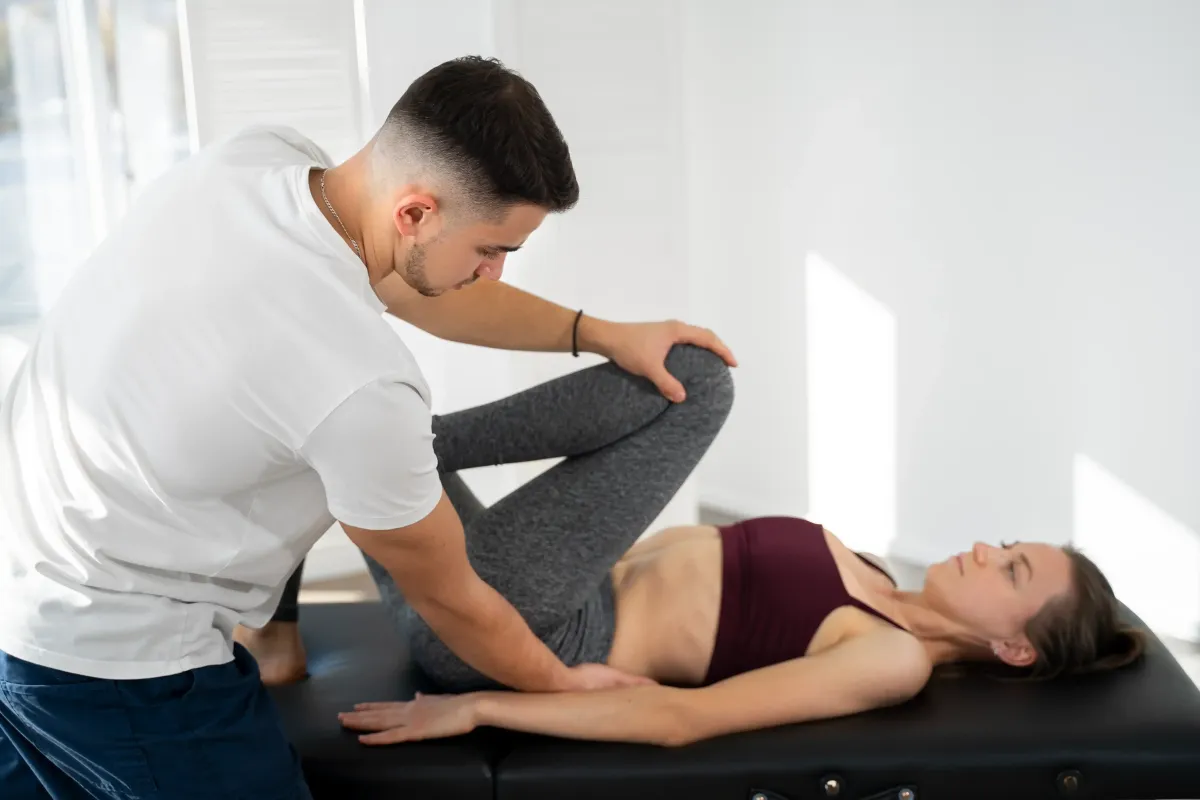
A hip labral tear can make ordinary movements surprisingly frustrating. Sitting through a long workday, getting out of a car, climbing stairs, or turning quickly during sports may bring on a deep ache, pinching, or a painful click in the groin.
The encouraging part is that an MRI finding does not automatically mean you need surgery. Labral changes are also found in people who have no hip pain. One study of 70 young adults without hip symptoms found labral tears in 38.6% of participants, while a systematic review found labral tears in about 54% of asymptomatic individuals across the included studies.
That is why physical therapists generally focus less on "fixing the MRI" and more on improving how the hip handles movement and load. The right exercises can strengthen the muscles around the hip, improve pelvic control, and help you return to daily activities with less irritation.
What Is a Hip Labral Tear?
The hip labrum is a ring of tough fibrocartilage around the edge of the acetabulum, or hip socket. It helps deepen the socket and contributes to hip stability as the thigh moves.
A labral tear can happen after a fall, collision, forceful pivot, or another traumatic movement. It can also develop gradually with repeated hip flexion and rotation during activities such as running, dancing, cycling, weightlifting, or sports. Certain hip shapes, including femoroacetabular impingement (FAI), can also increase stress within the joint. Common symptoms include:
Deep pain in the front of the hip or groin
Pinching when bringing the knee toward the chest
Clicking, catching, or a feeling that the hip briefly sticks
Pain when pivoting or changing direction
Discomfort during squats, lunges, or running
Stiffness after prolonged sitting
Difficulty getting out of a car or a low chair
Importantly, these symptoms are not specific to a labral tear. Hip flexor problems, tendon irritation, back-related pain, and other hip conditions can feel similar. A physical therapy evaluation can help determine what is actually contributing to your symptoms rather than assuming every painful hip is caused by the labrum.
Can Exercise Help a Hip Labral Tear?
Yes. Exercise is commonly used as part of conservative treatment for people with symptomatic hip labral tears and other forms of nonarthritic hip pain.
The goal is not necessarily to make a torn labrum look normal on a future MRI. Instead, rehabilitation aims to improve the hip's ability to tolerate movement and load. Physical therapists may work on the gluteus maximus, gluteus medius, deep hip rotators, core muscles, balance, and movement mechanics.
Research supports giving nonoperative care a reasonable trial. A 2023 systematic review and meta-analysis involving 1,153 patients with hip-related pain found that the overall response rate to nonoperative treatment was about 54%. The authors also reported an average improvement of 11.3 points on 100-point hip symptom measures following physical therapy, although the certainty of evidence varied and the most effective combination of treatments remains unclear.
6 Hip Labral Tear Exercises Physical Therapists May Recommend
The best exercise program depends on the person's symptoms, strength, mobility, and activity goals. A movement that feels comfortable for one person may aggravate another. Start with a range of motion that feels controlled rather than forcing your hip into a painful pinch.
1. Glute Bridges
Glute bridges strengthen the gluteal muscles while keeping the hip away from deep flexion.
How to do it:
Lie on your back with your knees bent and feet flat.
Tighten your abdominal muscles and squeeze your glutes.
Lift your hips slowly until your body forms a comfortable line from your shoulders to your knees.
Hold briefly, then lower with control.
A common starting point is 2–3 sets of 10–12 repetitions.
2. Side-Lying Clamshells
Clamshells target the hip abductors and external rotators, which help control the position of the thigh and pelvis.
Lie on your side with your knees bent and feet together. Keeping your pelvis steady, lift the top knee without rolling your body backward. Lower slowly. Try 2–3 sets of 10–15 repetitions per side.
3. Standing Hip Abduction
Standing hip abduction adds a weight-bearing component while strengthening the muscles on the outside of the hip.
Hold a wall or sturdy surface for balance. Keeping your toes pointed forward, move one leg slowly out to the side. Avoid leaning your trunk to compensate. Perform 2–3 sets of 10–12 repetitions per side with controlled movement.
4. Single-Leg Balance
Single-leg balance exercises help improve proprioception and control through the hip, knee, and ankle. They are especially useful when hip symptoms become noticeable during walking, stairs, or other single-leg activities.
Stand near a wall or countertop for support. Lift one foot and balance on the other leg while keeping your pelvis level. Start with 20–30 seconds for 2–3 repetitions per side. As your control improves, your physical therapist may make the exercise more challenging.
5. Banded Side Steps
Banded side steps strengthen the muscles along the outside of the hip while teaching you to control the pelvis and knee during movement.
Place a resistance band around your thighs or ankles, depending on your strength and the exercise variation. Bend your knees slightly and take small, controlled steps sideways. Keep your knees aligned with your feet rather than allowing them to collapse inward.
Try 2–3 sets of 8–10 steps in each direction.
6. Partial Squats
Squats can eventually help restore strength for everyday activities such as getting out of a chair, climbing stairs, and lifting. However, deep squats may aggravate some people with hip labral symptoms.
Start with a shallow squat or box squat. Keep your feet comfortable, lower only as far as you can without a sharp pinch, and push through your feet to return to standing.
A reasonable starting point is 2–3 sets of 8–12 repetitions.
How Should You Progress Hip Labral Tear Exercises?
Progression should be based on how your hip responds, not simply on how many weeks you have been exercising.
A physical therapist may progress your program from basic movements such as bridges and clamshells to weight-bearing exercises, single-leg work, step-ups, split squats, and eventually running or sport-specific movements. Progression can mean more than adding weight. You might:
Increase repetitions
Add resistance
Increase the range of motion
Reduce hand support
Improve balance and control
Increase movement speed
Introduce more complex movements
Movements That May Irritate a Hip Labral Tear
There is no universal list of movements that every person with a labral tear must permanently avoid. The more practical approach is to identify the positions and activities that reproduce your symptoms and modify them while maintaining comfortable movement. Depending on the individual, these may include:
Very deep squats
Repeated deep hip flexion
Forceful twisting or pivoting
High-impact activity during a painful flare-up
Heavy leg presses performed through a deep range
Aggressive stretching that produces a sharp front-of-hip pinch
When Should You See a Physical Therapist?
Consider an evaluation if hip pain is interfering with walking, exercise, work, sleep, or everyday activities, especially when you experience repeated catching, locking, significant loss of motion, or persistent groin pain.
A physical therapist can assess your hip range of motion, strength, balance, and movement patterns and then determine which exercises are appropriate for your current level. Imaging may be useful in some cases, but an MRI finding needs to be considered alongside your symptoms and physical examination because labral abnormalities can occur without pain.
Most importantly, there is no single "best" hip labral tear exercise. The right program is the one that matches your symptoms, current strength, and goals while progressively improving what your hip can tolerate.
If hip pain or a labral tear is making it difficult to stay active, physical therapy can help you build strength and improve movement safely. Contact Clifton Physical Therapy at (973) 241-1338 to schedule an evaluation and learn how a personalized treatment plan can support your recovery.
Clifton Physical Therapy
✆ Phone (appointments): (973)-241-1338
Address: 1059 Bloomfield Ave, Clifton, NJ 07012


