Cupping for Lower Back Pain in NJ
Clifton Physical Therapy
Why Lower Back Pain Becomes So Difficult to Ignore
Lower back pain is one of the most common reasons adults seek physical therapy in New Jersey. For some people, it starts after lifting something heavy or spending long hours sitting at a desk. For others, it builds gradually from repetitive stress, poor posture, muscle weakness, or reduced spinal mobility.
The symptoms can vary from person to person. Some feel a constant dull ache across the lower spine, while others experience sharp pain during bending, standing, walking, or getting out of bed. In more persistent cases, the discomfort may spread into the hips or legs and interfere with sleep, exercise, work, and everyday movement.
Chronic lower back pain is generally defined as pain lasting longer than 12 weeks. Research shows that ongoing back pain often involves more than one structure. Muscles, fascia, joints, discs, and movement patterns may all contribute to the problem at the same time. That is one reason many patients do not respond well to a single treatment alone.
How Cupping Therapy Works for Lower Back Pain
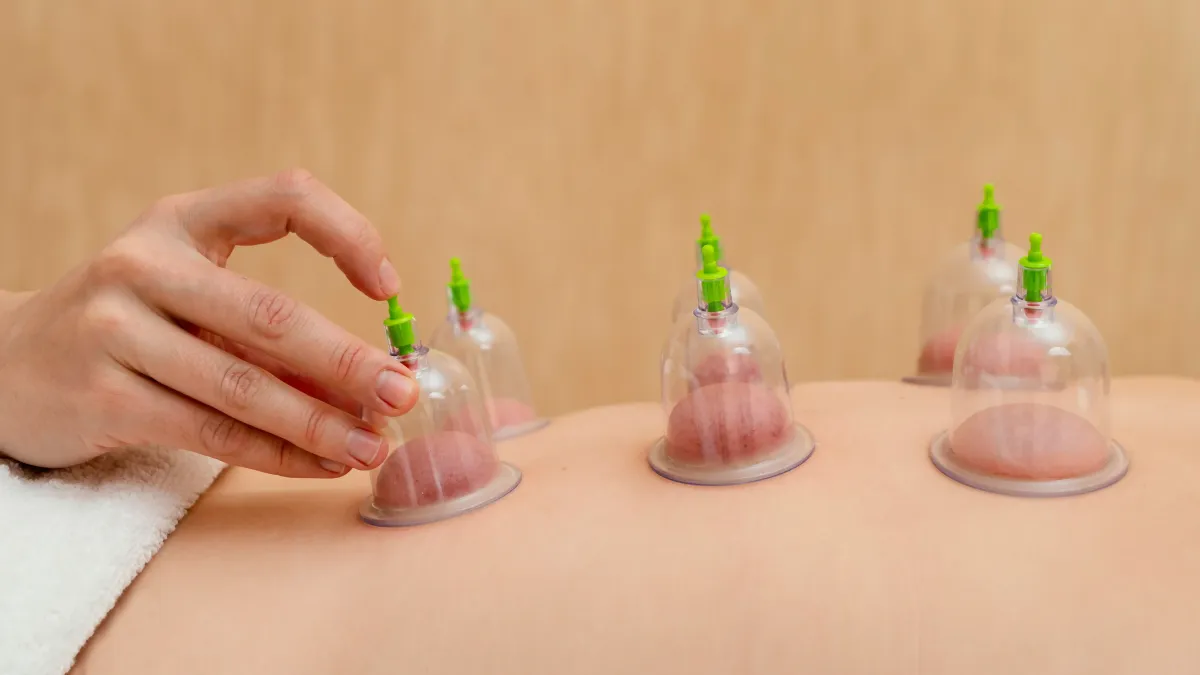
Cupping therapy is a soft tissue treatment that uses suction cups placed directly on the skin. The goal is to improve circulation, reduce muscle tension, and decrease sensitivity in painful areas.
During treatment, cups are commonly applied around the lower back, hips, or surrounding muscle groups that may be contributing to stress on the lumbar spine. The suction gently lifts the skin and superficial tissue upward, creating a decompression effect instead of the downward pressure used in traditional massage. Several cupping methods may be used depending on the patient's condition and tissue response:
Static cupping: Cups remain in one area for several minutes
Moving cupping: Cups glide across the skin after lotion or oil is applied
Dry cupping: Uses suction only without skin penetration
Wet cupping: A less commonly used approach involving superficial skin pricking before suction
Most physical therapy settings use dry cupping techniques because they are non-invasive and easier to integrate with rehabilitation exercises and manual therapy.
Researchers are still studying the exact physiological mechanisms behind cupping, but several consistent effects have been observed.
One of the main effects is increased local blood circulation. The suction draws blood toward the treated area, which may improve tissue oxygen delivery and temporarily reduce muscular tightness. Some studies also suggest that cupping may influence how the nervous system processes pain signals, helping reduce pain sensitivity in the short term.
The lifting action created by the cups may also help decrease stiffness within the fascia and superficial muscle layers. This can improve movement quality and reduce the feeling of restriction that many patients notice with chronic lower back pain.
What Research Says About Cupping for Back Pain Relief
Interest in cupping therapy for musculoskeletal pain has increased significantly over the last decade, especially for chronic lower back pain.
A systematic review published in 2024 analyzed 11 randomized controlled trials involving 921 participants with low back pain. Researchers found that cupping therapy produced statistically significant short-term pain improvement, particularly within a 2 to 8 week treatment window. The review reported:
Significant short-term pain reduction compared to usual care
Better pain outcomes in several studies when compared with medication-based treatment alone
Functional improvement in some patients during 1 to 6 month follow-up periods
Stronger results when cups were applied to targeted therapeutic points instead of only over generalized painful regions
One pooled analysis showed a large effect size for pain reduction during early follow-up, suggesting meaningful clinical improvement in many participants receiving treatment. However, the research also highlighted important limitations.
Not every study showed lasting benefits beyond the early treatment phase. Researchers also noted considerable differences between studies regarding treatment frequency, cupping technique, cup placement, and duration of care. Because of that variation, cupping should not be viewed as a guaranteed solution for every type of lower back pain.
What to Expect During a Cupping Session
A cupping session for lower back pain usually begins with a physical assessment rather than immediate treatment. Your physical therapist first evaluates how your back moves, where stiffness or tenderness is present, and which activities reproduce symptoms.
This evaluation matters because lower back pain does not always originate from the exact area where pain is felt. Tight hip muscles, limited spinal mobility, weakness in core stabilizers, or altered movement mechanics may all contribute to ongoing discomfort.
Once the treatment areas are identified, cups are placed strategically around the lumbar spine, gluteal muscles, or nearby soft tissues. Depending on the technique being used, the cups may stay in place for several minutes or glide gently across the skin.
Most sessions last between 10 and 20 minutes. Many patients describe the sensation as tight pressure or pulling rather than pain. After treatment, temporary circular marks can appear on the skin. These marks are common and usually fade within several days. Some patients notice immediate changes in muscle tightness or mobility after treatment. Others experience more gradual improvement over multiple sessions combined with strengthening and movement-based therapy.
Manual therapy
Therapeutic exercise
Core stabilization training
Stretching and mobility work
Postural correction
Movement retraining
Where Cups Are Usually Applied for Lower Back Pain
Cup placement depends on the movement restrictions and muscle tension patterns identified during the evaluation. There is no single placement pattern that works for every patient.
In many cases, therapists place cups along the muscles beside the lumbar spine because these areas commonly become tight and overworked from prolonged sitting, repetitive bending, or lifting. The muscles near the pelvis and sacroiliac region are also frequently treated when stiffness affects standing, walking, or transitional movements.
The gluteal muscles are another common focus area. Tightness in the hips and glutes can increase strain on the lower back, especially during walking, stair climbing, or exercise. Releasing tension in these areas may improve how the pelvis and lumbar spine move together.
Some patients also receive treatment around the thoracolumbar fascia, which is a large connective tissue structure that supports spinal movement and force transfer through the back and hips. Restrictions in this tissue can contribute to stiffness and reduced mobility.
What Patients Often Feel After Treatment
Most patients report a sense of reduced tightness or improved movement after cupping therapy. Some notice it immediately, while others experience gradual improvement over several sessions. Common responses after treatment may include:
A temporary feeling of looseness in the lower back
Easier bending or rotational movement
Reduced muscle tension around the spine or hips
Mild soreness similar to post-massage tenderness
Temporary circular discoloration on the skin
The marks left by the cups are caused by superficial blood vessel changes beneath the skin. They are not bruises from tissue injury and usually fade within several days to a week depending on skin sensitivity and suction intensity.
Who May Benefit From Cupping Therapy
Cupping therapy may help certain individuals with mechanical or muscle-related lower back pain, especially when symptoms involve stiffness, tightness, or movement restriction. This may include people who experience muscle tension or lower back discomfort during their menstrual period, particularly when the pain is accompanied by tightness in the surrounding muscles. Patients who may benefit include those with:
Chronic muscle tension in the lower back
Postural strain from desk work or prolonged sitting
Tightness related to repetitive lifting or physical labor
Reduced spinal or hip mobility
Sports-related muscular overload
Non-specific chronic lower back pain
It may also be helpful for individuals who feel temporary relief from massage or soft tissue work but continue to struggle with recurring tightness and restricted movement.
However, cupping is not appropriate for every condition. Lower back pain caused by fractures, infections, serious nerve compression, inflammatory disease, or certain medical conditions requires a different treatment approach. That is why a proper physical therapy evaluation is important before beginning treatment. Identifying the true source of symptoms helps determine whether cupping is likely to provide meaningful benefit.
Safety Considerations and Potential Risks
When performed by trained professionals, cupping therapy is generally considered safe and low risk. Most side effects are mild and temporary. The most common reactions include:
Skin discoloration
Mild tenderness
Temporary soreness
Minor skin sensitivity
These effects usually resolve without treatment.
More serious complications are uncommon but may occur if excessive suction, poor hygiene, or improper techniques are used. This is one reason treatment should always be performed by qualified healthcare professionals familiar with musculoskeletal conditions and patient safety guidelines. Cupping may not be recommended for individuals with:
Bleeding disorders
Severe skin conditions
Open wounds or infections
Certain circulatory disorders
Very fragile skin
Use of blood-thinning medications without medical clearance
Why Cupping Works Best Alongside Physical Therapy
Although cupping can help reduce pain and muscular tightness, lasting improvement usually depends on correcting the underlying factors contributing to the problem.
For example, if weak core muscles, poor lifting mechanics, reduced hip mobility, or prolonged sitting habits continue unchanged, symptoms often return even if short-term relief occurs.
That is why combining cupping with active rehabilitation tends to produce better long-term outcomes. Physical therapy may include:
Core stabilization exercises
Mobility training
Strength development
Movement correction
Postural education
Flexibility work
Functional retraining for daily activities
If you are looking for cupping therapy for lower back pain, a professional evaluation can help determine whether it fits your condition and recovery plan. Call Clifton Physical Therapy at (973)-241-1338 to schedule an appointment and discuss personalized treatment options for lower back pain.
What patients are saying
"I recently had ankle surgery and Clifton PT has been nothing short of amazing! My goal was to get back to playing soccer as quick as possible before the college season started and so far I'm right on track. Izzy, Bianca, Tiff, and John have gone above and beyond to make sure I'm back to 100%. Couldn't be more grateful to be treated by the best team ever!." - Nat Rufino

All the therapists at Clifton Physical Therapy are awesome, but I spend most of my time with Izzy and Bianca—and they’ve been amazing. They’re enthusiastic, knowledgeable, and always take the time to explain what I’m doing and what my issues are. Their positive energy and clear communication make a big difference in my recovery." - Bryan Tompkins
"Going Clifton physical therapy was one of the best thing that came out of my back pain! Every single staff member is amazing and cares for your recovery! I have been with them for the past couple of months and now continuing their workout program! I can’t recommend them enough! Tiffany, Izzy, Bianca and everyone else I have worked with there! Can’t rave about them enough!!." - Monica Mehta
"Clifton Physical Therapy has been a great place for me to heal my meniscus tear. The staff is very knowledgeable and friendly, and has been extremely helpful in guiding me through my recovery. I highly recommend their services.." - Kelly Bevando
Clifton Physical Therapy
✆ Phone (appointments): (973)-241-1338
Address: 1059 Bloomfield Ave, Clifton, NJ 07012
Clifton Physical Therapy | cliftonphysio.com


