Adductor Tendinopathy Treatment NJ
Clifton Physical Therapy
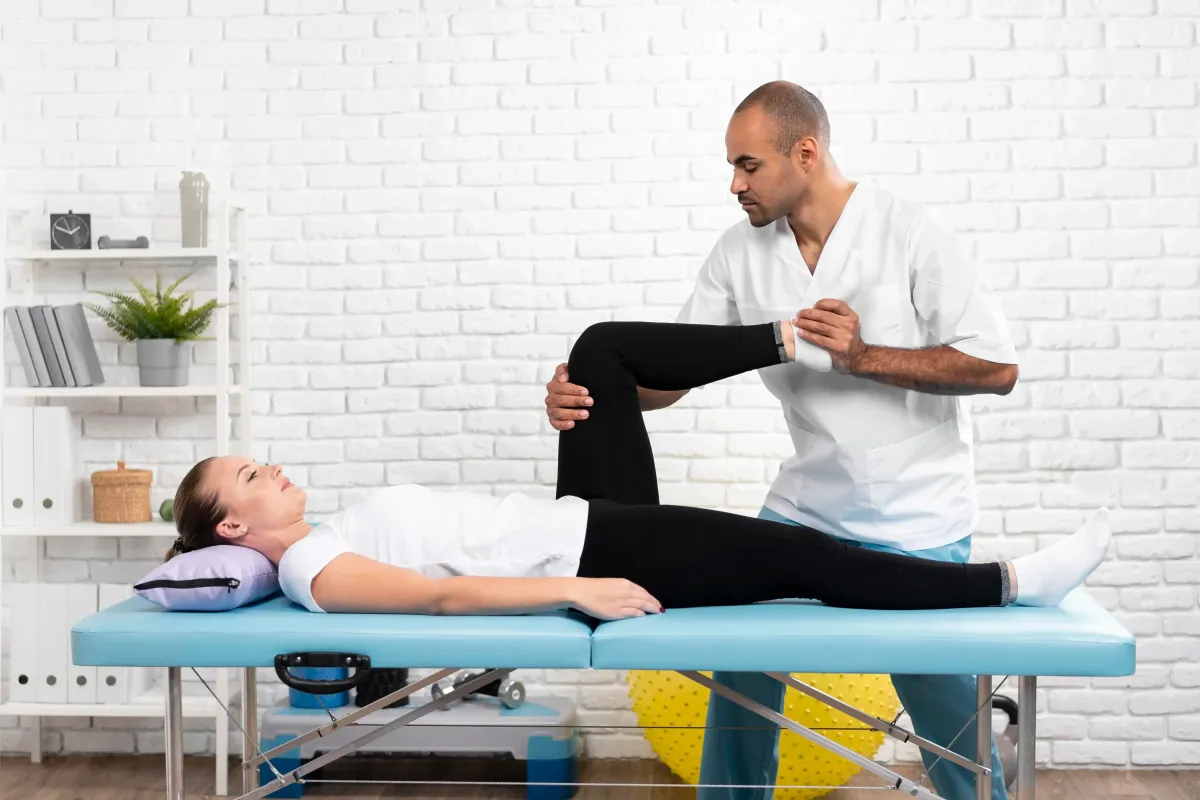
Groin pain that lingers, worsens with activity, or keeps returning can be frustrating and limiting. Adductor tendinopathy is a common but often misunderstood cause of inner thigh and groin pain, especially in active adults and athletes. With the right diagnosis and a structured physical therapy approach, most people can return to daily movement and sport without ongoing discomfort.
What Are the Adductor Muscles?
The adductor muscles are a group of muscles located along the inner thigh. The primary adductors include the adductor longus, adductor brevis, and adductor magnus, along with smaller supporting muscles. Their main role is to bring the legs toward the midline of the body, a movement known as adduction. Beyond that simple motion, these muscles play a critical role in:
Stabilizing the pelvis during walking and running
Controlling side-to-side movements
Assisting with hip flexion and extension
Absorbing and generating force during cutting, sprinting, and kicking
Because the adductors attach close to the pelvis, they are heavily loaded during athletic activity and even everyday movements such as climbing stairs, getting out of a car, or changing direction while walking.
What Is Adductor Tendinopathy?
Adductor tendinopathy is a condition affecting the tendon that connects the inner thigh muscles to the pelvis or upper thigh bone. While the term “tendinitis” is still commonly used, most long-standing groin pain is not caused by active inflammation.
Instead, research has shown that this condition is usually degenerative and load-related, meaning the tendon has difficulty repairing itself after repeated stress. For this reason, “tendinopathy” is a more accurate term than “tendinitis.”
The condition often develops gradually. Early on, pain may only appear during activity and settle with rest. Over time, without proper management, symptoms can become more persistent and interfere with exercise, work, and daily tasks. Clinically, tendon pain is often described along a continuum:
Reactive phase (first 3–6 weeks): The tendon becomes painful and sensitive after a sudden increase in load or activity
Disrepair phase: Repeated stress disrupts normal healing, leading to structural changes within the tendon
Degenerative phase: The tendon becomes weaker and less tolerant to load if not properly rehabilitated
Why Adductor Tendinopathy Develops
Adductor tendinopathy develops when the tendon is repeatedly loaded beyond its ability to recover. Every contraction of the inner thigh muscles places tension on the tendon near the pelvis. When recovery time is insufficient, microscopic tendon damage can accumulate.
Common contributing factors include:
Sudden Changes in Activity
Rapid increases in training volume, intensity, or frequency are a major trigger. This often occurs when returning to sport after time off, starting a new fitness routine, or increasing running speed or distance too quickly.
Repetitive Side-to-Side Movements
Sports that involve cutting, sprinting, kicking, or lateral movements—such as soccer, hockey, football, and basketball—place high demand on the adductors.
Strength and Mobility Imbalances
Weak inner thigh muscles, limited hip mobility, or poor core control can shift excessive stress onto the adductor tendons. Over time, the tendon becomes overloaded even during relatively normal activities.
Age-Related Tendon Changes
As tendons age, they naturally lose some elasticity and healing capacity. This makes them more vulnerable to injury, even without high-level athletic demands.
Incomplete Recovery From Previous Groin Injuries
A prior groin strain that was never fully rehabilitated can leave the tendon vulnerable to chronic overload and recurring pain.
Common Symptoms of Adductor Tendinopathy
Adductor tendinopathy most often presents as pain in the upper inner thigh or groin, close to where the tendon attaches to the pelvis. The discomfort may remain localized or spread toward the pubic area or down the inside of the leg. Common symptoms include:
Gradual onset of groin pain, often linked to changes in activity
Pain when squeezing the legs together or resisting inner thigh movement
Discomfort during running, sprinting, lateral movements, or kicking
Pain with everyday activities such as getting in and out of a car, climbing stairs, or putting on shoes
Morning stiffness or stiffness at the start of activity that eases slightly with movement
As the condition progresses, pain may linger after activity or even appear during walking and rest. Unlike an acute muscle strain, bruising and sudden sharp pain are uncommon. Instead, symptoms tend to build slowly and persist without proper treatment.
How Physical Therapy Treats Adductor Tendinopathy
Physical therapy is one of the most effective non-surgical approaches for adductor tendinopathy. The goal is not only to reduce pain, but to restore the tendon’s ability to tolerate load so symptoms do not keep returning.
Treatment begins with a thorough evaluation to identify why the tendon became overloaded. This often includes assessing:
Inner thigh strength
Hip and pelvic mobility
Core and gluteal muscle control
Movement patterns during walking, squatting, running, or sport-specific tasks
In the early phase, care focuses on calming symptoms while maintaining safe movement. Gentle hands-on techniques may be used to reduce surrounding muscle tension and improve comfort, but long-term improvement depends on progressive loading rather than passive care alone.
As pain becomes more manageable, structured strengthening is introduced. Research consistently shows that progressive tendon loading stimulates healthier tendon remodeling, improves strength, and reduces pain over time. Education is also central—patients learn how to adjust daily activities and exercise habits to prevent flare-ups while continuing to stay active.
Evidence-Based Exercise Progression for Recovery
Exercise selection, timing, and dosage matter in tendon recovery. Too much load too soon can delay healing, while complete rest weakens the tendon and increases reinjury risk.
Early-Stage Loading
Isometric exercises are often used first. These involve contracting the adductor muscles without visible movement, which helps reduce pain while safely loading the tendon. A common example is gently squeezing a ball or pillow between the knees in a pain-free range.
Mid-Stage Strengthening
As tolerance improves, exercises progress through greater ranges of motion. This may include controlled standing adduction, side-lying inner thigh lifts, banded exercises, and modified Copenhagen-style movements. Strengthening also expands to the hips, glutes, hamstrings, and core to reduce strain on the adductor tendon.
Late-Stage Rehabilitation
The final phase prepares the tendon for real-life demands. This includes a gradual return to running, direction changes, hopping, and sport-specific drills when appropriate. Progression is guided by symptom response rather than rigid timelines.
For most people, performing strengthening exercises two to three times per week for 8–12 weeks leads to meaningful improvement. Mild discomfort during exercise is acceptable as long as symptoms return to baseline within 24 hours.
What Recovery Looks Like With Proper Treatment
Adductor tendinopathy does not heal overnight. Tendons adapt slowly, and recovery often takes several months. In longer-standing cases, rehabilitation timelines of 6 to 12 months are not unusual—but steady improvement should be noticeable when treatment is consistent and properly progressed.
Effective recovery balances protection and loading. Activities that clearly worsen pain are temporarily reduced, but complete rest is avoided. As strength and movement control improve, the tendon becomes more resilient, pain decreases, and confidence in movement returns.
When to Seek Adductor Tendinopathy Treatment
Groin pain that lasts more than a few weeks, keeps returning, or begins interfering with walking, exercise, or daily tasks should not be ignored. Early intervention leads to better outcomes and reduces the risk of long-term tendon degeneration.
If inner thigh or groin pain is limiting your movement, a structured physical therapy program can help restore strength, improve tendon health, and get you back to activity safely.
Call (973)-241-1338 to schedule an evaluation and take the first step toward moving comfortably again in Clifton, NJ.
What patients are saying
"I recently had ankle surgery and Clifton PT has been nothing short of amazing! My goal was to get back to playing soccer as quick as possible before the college season started and so far I'm right on track. Izzy, Bianca, Tiff, and John have gone above and beyond to make sure I'm back to 100%. Couldn't be more grateful to be treated by the best team ever!." - Nat Rufino

All the therapists at Clifton Physical Therapy are awesome, but I spend most of my time with Izzy and Bianca—and they’ve been amazing. They’re enthusiastic, knowledgeable, and always take the time to explain what I’m doing and what my issues are. Their positive energy and clear communication make a big difference in my recovery." - Bryan Tompkins
"Going Clifton physical therapy was one of the best thing that came out of my back pain! Every single staff member is amazing and cares for your recovery! I have been with them for the past couple of months and now continuing their workout program! I can’t recommend them enough! Tiffany, Izzy, Bianca and everyone else I have worked with there! Can’t rave about them enough!!." - Monica Mehta
"Clifton Physical Therapy has been a great place for me to heal my meniscus tear. The staff is very knowledgeable and friendly, and has been extremely helpful in guiding me through my recovery. I highly recommend their services.." - Kelly Bevando
Clifton Physical Therapy
✆ Phone (appointments): (973)-241-1338
Address: 1059 Bloomfield Ave, Clifton, NJ 07012
Clifton Physical Therapy | cliftonphysio.com


