
Acupuncture for Tensor Fasciae Latae Pain in NJ
Clifton Physical Therapy
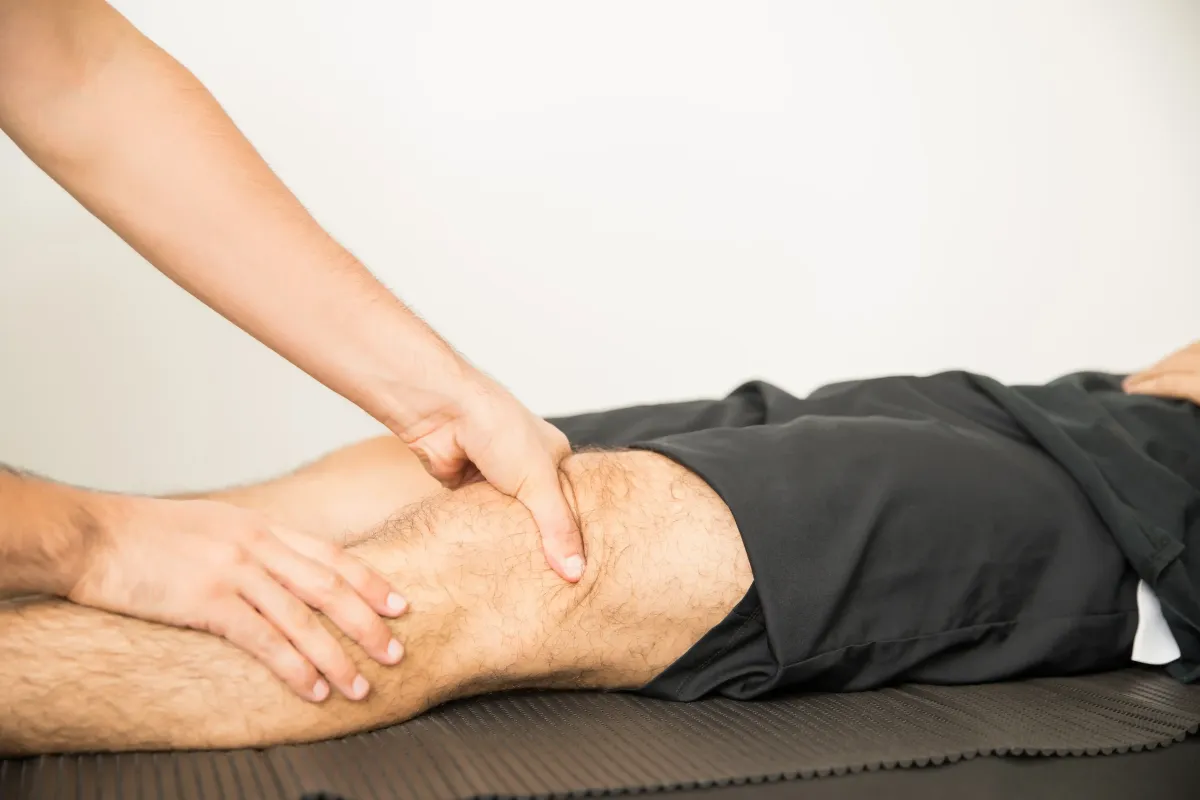
Pain on the outside of the hip or upper thigh can be surprisingly difficult to pinpoint. You may feel a deep ache when walking, discomfort when lying on one side, or a pulling sensation that seems to travel toward the outer knee. Sometimes the pain is blamed on the IT band, hip joint, or bursitis when the tensor fasciae latae (TFL) is actually contributing to the problem.
The TFL is a small muscle, but it has an important job. It helps control the position of the hip and pelvis during walking, running, stairs, and other weight-bearing activities. When it becomes overloaded or remains tense for too long, it can contribute to pain around the outer hip and thigh and increase stress through the iliotibial band (IT band).
Acupuncture may be useful when TFL pain is associated with muscle tension and myofascial trigger points. Research on acupuncture for myofascial pain is encouraging, although studies specifically focused on TFL pain are limited. A 2024 systematic review of 10 randomized controlled trials involving 852 people found that acupuncture produced a greater reduction in pain than control treatments, with a mean difference in visual analog pain scores of -1.29.
What Is the Tensor Fasciae Latae (TFL)?
The tensor fasciae latae is a small muscle located at the front and outer portion of the hip. It begins near the anterior superior iliac spine (ASIS) and blends into the iliotibial band, which continues down the outside of the thigh toward the upper tibia.
That connection gives the TFL influence over both the hip and knee. The muscle assists with hip flexion, abduction, and internal rotation while helping stabilize the pelvis during standing and walking. Anatomical research also shows that the TFL works closely with the gluteus medius and gluteus minimus as part of the hip's stabilizing system.
This matters because TFL pain is not always caused by a problem inside the TFL itself. For example, imagine someone who spends most of the day sitting and then suddenly increases their running mileage. If the gluteal muscles and other hip stabilizers are not controlling movement efficiently, the TFL may take on more of the workload. Repeating that pattern hundreds or thousands of times during walking or running can leave the muscle feeling tight, irritated, or painful. The result may be:
Pain or tenderness around the outer hip
A deep ache extending into the outer thigh
Discomfort that can travel toward the knee
Pain when lying on the affected side
Increased discomfort during walking, running, stairs, or hills
A feeling of tightness around the hip or IT band
Difficulty with prolonged sitting or certain hip positions
How TFL Pain Can Affect the IT Band and Outer Knee
The TFL and IT band are closely connected. The IT band is a dense band of connective tissue that receives contributions from the TFL and gluteus maximus and extends along the outside of the thigh to the tibia. It helps transmit forces and contributes to lateral stability around the hip and knee.
When the TFL remains highly active, tension can be transmitted through this connected system. That does not mean a "tight IT band" is always the primary problem. In fact, the IT band is connective tissue rather than a muscle that can simply be stretched or relaxed like the TFL.
This distinction can change how treatment is approached.
A runner, for example, may develop pain around the outside of the knee and assume the knee itself is the problem. But if excessive TFL activity, altered hip control, or weakness elsewhere is contributing to the movement pattern, repeatedly treating the painful area may not address the reason the symptoms developed.
TFL-related pain can also resemble other forms of lateral hip pain. Trigger points in the TFL may refer pain toward the greater trochanter and outer thigh, making symptoms difficult to distinguish from other hip conditions without a proper assessment.
Why Acupuncture May Help TFL Pain
Acupuncture may be particularly useful when TFL pain has a strong myofascial component, such as localized muscle tenderness, trigger points, or persistent muscle guarding.
During treatment, a practitioner may use needles around the painful muscle and other relevant areas based on the individual's symptoms and movement findings. The objective is to reduce abnormal muscle activity and pain sensitivity while making it easier to restore normal movement.
Research supports the use of acupuncture for myofascial pain, although the evidence should not be interpreted as proof that acupuncture will work for every person with TFL pain. A 2025 systematic review and meta-analysis of 13 randomized controlled trials found that trigger-point needling reduced visual analog pain scores more than other non-pharmacological treatments, with a mean difference of -1.32. The authors also noted the need for higher-quality research.
An earlier systematic review of manual acupuncture found that stimulating myofascial trigger points produced a significant improvement in pain compared with sham treatment. Across 10 randomized trials, the standardized mean difference was -0.90, although the researchers emphasized that more well-designed studies were needed. Acupuncture may help by:
Reducing sensitivity around painful trigger points
Decreasing excessive muscle tension
Modulating how the nervous system processes pain
Improving tolerance for movement
Making it easier to perform corrective strengthening and mobility exercises
What Causes TFL Pain and Trigger Points?
TFL pain often develops when the muscle is repeatedly asked to stabilize the hip without enough support from the surrounding muscles. Running, cycling, hill walking, prolonged sitting, sudden increases in exercise, and repetitive movements can all contribute. Other factors may include:
Weakness or poor activation of the gluteal muscles
Changes in walking or running mechanics
Poor hip and pelvic control
Prolonged sitting with the hip flexed
Excessive foot pronation or other lower-limb mechanics
Previous hip, knee, or lower-back injuries
How Acupuncture Targets TFL Trigger Points
During an acupuncture treatment, the practitioner first identifies the areas of muscle tenderness and evaluates how the hip and surrounding muscles are functioning. Needles may then be placed into appropriate acupuncture points or painful myofascial areas.
When a needle reaches a sensitive trigger point, a brief local twitch may occur. This is an involuntary response of the muscle and can be followed by a reduction in muscle tension and tenderness.
The treatment may also influence the nervous system's processing of pain. Research suggests acupuncture can activate endogenous pain-inhibitory mechanisms, which may help explain why some patients experience reduced pain following treatment.
The response varies from person to person. Some people notice improvement after one session, while others need a series of treatments, particularly when pain has been present for months.
What to Expect During Acupuncture for TFL Pain
A typical session begins with questions about your pain, activity level, previous injuries, and movements that make your symptoms better or worse. The hip and surrounding areas may also be assessed.
If acupuncture is appropriate, very thin sterile needles are inserted into selected points. Most people describe the sensation as mild, although a brief ache, tingling, heaviness, or twitch can occur around a sensitive muscle.
Needles may remain in place for approximately 15 to 30 minutes, depending on the treatment approach. Temporary soreness can occur afterward, particularly when trigger points have been treated. Mild bruising or tenderness is also possible. These effects are generally short-lived, but you should tell your practitioner if you experience unusual or persistent symptoms.
Is Acupuncture Enough to Treat TFL Pain?
Not always.
Acupuncture can be useful for reducing pain and muscle irritability, but recurring TFL problems usually require more than symptom relief. If the muscle keeps becoming overloaded because of poor hip control, weakness, training errors, or altered movement mechanics, the pain may return.
For this reason, acupuncture can work particularly well when paired with a broader rehabilitation plan. Depending on your evaluation, treatment may include:
Targeted strengthening
Movement retraining
Mobility work
Soft-tissue treatment
Acupuncture vs. Stretching and Foam Rolling for TFL Pain
Stretching and foam rolling can temporarily make a tight outer hip feel better, but relief does not necessarily mean the underlying problem has been corrected.
If the TFL is repeatedly compensating for inadequate gluteal control or another movement problem, repeatedly trying to "loosen" the muscle may provide only short-term results.
Acupuncture offers a different approach by targeting pain sensitivity and muscle activity. Exercise and movement retraining then address the factors that may be keeping the muscle overloaded. In practice, these approaches do not have to compete. The most useful treatment is often the one that combines short-term symptom control with strategies that improve how the hip functions.
When Should You Seek Treatment for TFL Pain?
Consider an evaluation if outer hip or thigh pain:
Persists despite reducing activity
Keeps returning when you resume exercise
Interferes with walking, stairs, running, or sleep
Extends toward the outer knee
Is accompanied by clicking, snapping, weakness, or instability
Has not improved with stretching or home treatment
Acupuncture for TFL Pain in NJ
TFL pain can make everyday activities feel harder than they should, particularly when walking, exercising, or sleeping on the affected side becomes uncomfortable. Acupuncture may help calm painful trigger points and reduce muscle tension, but lasting improvement depends on understanding why the TFL became overloaded.
At Clifton Physical Therapy, treatment can combine acupuncture with individualized exercises and movement-based care when appropriate. Call (973)-241-1338 to schedule an evaluation and learn whether acupuncture may be appropriate for your TFL pain.
Clifton Physical Therapy
✆ Phone (appointments): (973)-241-1338
Address: 1059 Bloomfield Ave, Clifton, NJ 07012
Clifton Physical Therapy | cliftonphysio.com


