Acupuncture for Groin Pain in NJ
Clifton Physical Therapy
Where Groin Pain Comes From and What It Means
Groin pain is felt where the lower abdomen connects to the inner thigh. It can show up suddenly after a movement or build gradually over time. For many people, it limits simple things like walking, bending, or getting up from a chair.
This area is made up of several overlapping structures. Muscles, tendons, nerves, and the hip joint all meet here. Because of that, pain in the groin is rarely a single diagnosis. It is usually a signal that something underneath is irritated or injured. Common sources include:
Muscle strain
Inner thigh (adductor) injuries
Hip flexor irritation
Tendon overload
Hip joint involvement
Nerve sensitivity
Research published in sports medicine journals suggests that groin injuries account for roughly 5% to 18% of all athletic injuries, depending on the sport. What makes them tricky is that symptoms often overlap. Pain might feel deep, vague, or hard to pinpoint, which is why proper evaluation matters.
Why Active People Deal With Groin Injuries More Often
If you run, lift weights, or play sports, your groin muscles are constantly working to stabilize your hips and control movement. These muscles are especially active during sprinting, kicking, and quick changes in direction.
Over time, repeated stress can lead to small micro-tears in the muscle fibers. Without enough recovery, those small issues can turn into persistent pain. Factors that increase risk include:
Sudden spikes in training intensity
Repetitive hip and leg movements
Poor flexibility in the hips or inner thighs
Muscle imbalances between the core and legs
Skipping proper recovery time
Studies on soccer and hockey players show that reduced hip strength and limited range of motion are strongly linked to groin injuries. In fact, athletes with weaker adductor muscles may have a significantly higher risk of strain, especially during high-speed movements.
Standard care usually starts with rest, guided exercise, and sometimes medication to control pain. That works for many people. But when symptoms linger or keep coming back, adding another layer of treatment can make a difference. This is where acupuncture fits in.
How Acupuncture Supports Pain Relief and Recovery
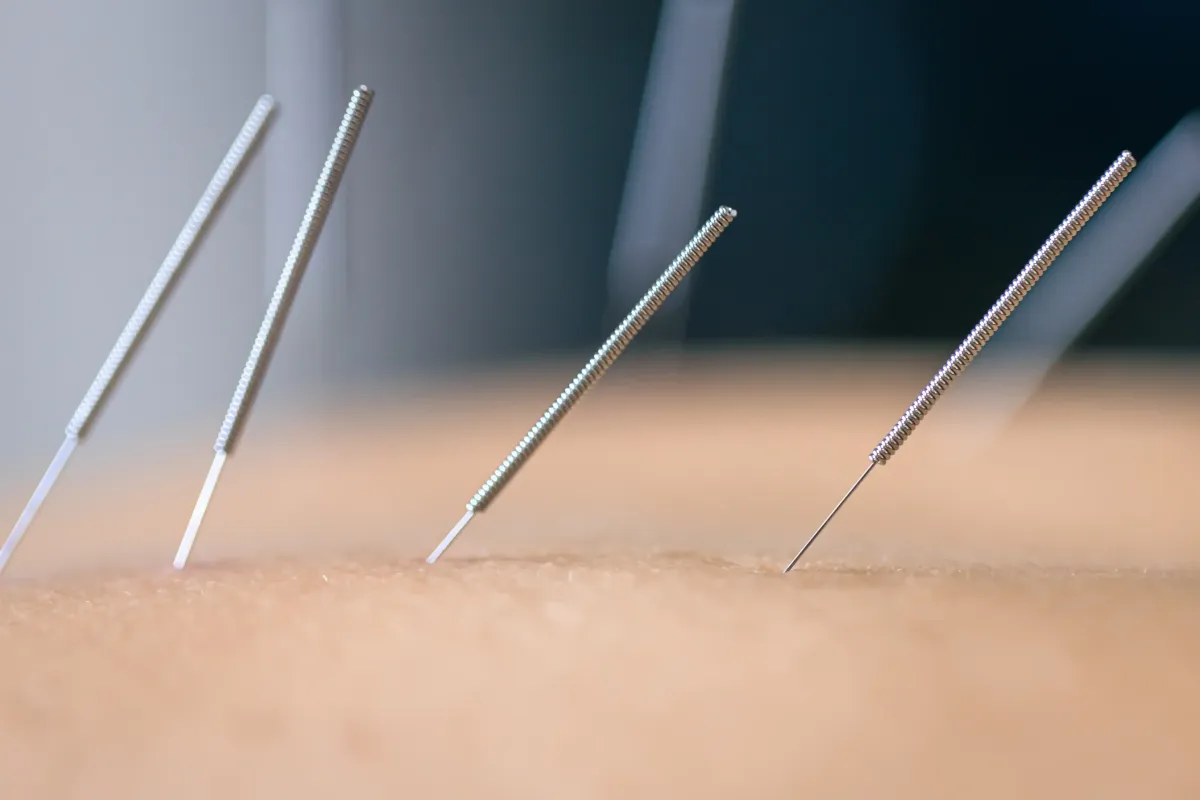
Acupuncture uses thin, sterile needles placed at specific points on the body. While it has traditional roots, modern research has shown measurable effects on the nervous system and circulation.
Instead of masking pain, acupuncture works by helping the body regulate how it responds to injury.
Here is what happens on a physiological level:
1. Pain modulation through the nervous system
Acupuncture stimulates sensory nerves, which can trigger the release of endorphins and other natural pain-relieving chemicals. Imaging studies have shown changes in brain regions involved in pain processing after treatment.
2. Improved local blood flow
Injured muscles and tendons need oxygen and nutrients to heal. Research using Doppler imaging has found that acupuncture can increase microcirculation in targeted areas, which may support tissue repair.
3. Reduced inflammatory activity
Some clinical studies suggest acupuncture can influence inflammatory markers, helping calm irritated tissues. This is especially useful in overuse injuries where low-grade inflammation lingers.
4. Muscle relaxation and trigger point release
Tight muscle bands, often called trigger points, are common in groin injuries. Needling these areas can reduce muscle tension and improve flexibility.
5. Effects on nerve sensitivity
When nerves are irritated, they can amplify pain signals. Acupuncture may help regulate this sensitivity, making movement more comfortable.
Systematic reviews published in journals like Pain Medicine and The Journal of Orthopaedic & Sports Physical Therapy have found that acupuncture can be effective for musculoskeletal pain conditions, particularly when combined with exercise-based rehab.
The Inner Thigh Muscles and Their Role in Pain
A large portion of groin injuries involve the adductor muscle group. These muscles run along the inner thigh and help bring the legs toward the midline while stabilizing the pelvis.
One muscle that often gets overlooked is the adductor magnus. It is the largest in the group and plays a major role in both movement and support. Its functions include:
Pulling the leg inward
Assisting with hip rotation
Helping extend the hip during movements like standing or climbing
Because it handles both stability and power, it is heavily involved in exercises like squats, lunges, sprinting, and cycling. That also makes it vulnerable to overload.
When this muscle becomes strained or develops tight areas, it can create referred pain. This means the discomfort is felt somewhere other than the exact source. Patients often report pain in:
The groin itself
The inner thigh
The lower pelvic region
Near the pubic bone
Trigger points in this muscle can produce a deep, aching sensation that is hard to locate. This is one reason groin pain is sometimes mistaken for a hip joint issue or even a lower back problem.
Targeted needling techniques, including acupuncture and dry needling, can help release these tight areas. By improving blood flow and reducing muscle tension, the goal is to restore normal function and reduce pain during movement.
Conditions That Often Lead to Groin Pain
Groin pain is not a single diagnosis. It can come from different tissues depending on how the injury happened. Understanding the source helps guide treatment and recovery.
Hip flexor strain
The hip flexors, including the iliopsoas and rectus femoris, are responsible for lifting the knee and bending the hip. These muscles are heavily used in sprinting, cycling, and kicking.
When overloaded, small tears can develop in the muscle fibers. Symptoms often include:
Pain in the front of the hip or groin
Tightness when moving
Discomfort when lifting the knee
Pain that increases with activity
Clinical studies on muscle strains show that early treatment focused on circulation and controlled movement can improve recovery time. Acupuncture may support this by reducing muscle tightness and improving local blood flow.
Adductor muscle strain
This is one of the most common groin injuries, especially in athletes. The adductors help stabilize the pelvis and control leg movement during cutting or side-to-side actions. Typical symptoms include:
Sharp pain during movement
Tenderness along the inner thigh
Weakness when bringing the legs together
Pain with running or sudden direction changes
Research in sports injury journals has found that adductor-related groin pain often becomes chronic if not managed properly early on. Combining strengthening exercises with treatments like acupuncture may help reduce recurrence.
Lower abdominal strain (sports hernia-related pain)
The lower portion of the abdominal muscles attaches near the pubic bone. Strain in this region can refer pain directly into the groin. This type of injury may develop from:
Repetitive twisting movements
Sudden force through the core
Heavy lifting
High-impact sports
What to Expect During an Acupuncture Visit
If you have never tried acupuncture before, the process is usually more straightforward than expected. The goal is to understand the root cause of pain and treat it in a targeted way. A typical session includes:
Initial evaluation
The practitioner reviews your symptoms, activity level, and injury history. Movement patterns, hip mobility, and muscle strength may also be assessed to identify contributing factors.
Point selection
Treatment points are chosen based on your specific condition. These may be located near the groin, inner thigh, lower abdomen, or even along pathways that influence the same muscles and nerves.
Needle application
Very fine, sterile needles are gently inserted into selected points. Most people feel little discomfort. Some may notice a mild tingling or a dull, heavy sensation, which is a normal response.
Rest period
The needles typically remain in place for about 15 to 20 minutes. During this time, the body begins to respond by increasing circulation and activating natural pain-relief mechanisms.
After the session
Many patients feel looser or more relaxed right away. Others notice gradual improvement over a few visits. It is also common to combine acupuncture with guided exercises for better results.
How Many Sessions Are Needed for Results
Recovery timelines vary based on how severe the injury is and how long symptoms have been present.
A general structure looks like this:
Early stage (pain control phase)
Sessions may be scheduled two to three times per week. The focus is on reducing pain, calming inflammation, and improving movement tolerance.
Mid stage (recovery phase)
As symptoms improve, visits often reduce to once per week. Treatment continues to support tissue healing and restore strength.
Later stage (maintenance or prevention)
For people with recurring groin issues or high activity levels, occasional sessions may help maintain muscle balance and reduce reinjury risk.
Research on acupuncture for musculoskeletal conditions suggests that consistent treatment over several weeks tends to produce better outcomes than sporadic sessions. Mild strains may improve quickly, while longer-standing pain may take more time.
Why Athletes and Active Individuals Often Add Acupuncture
For people who want to stay active, recovery is not just about reducing pain. It is also about getting back to full movement without limitations.
Acupuncture is often used alongside rehab programs because it can support several aspects of recovery:
Helps reduce muscle tension after intense activity
Supports faster recovery between training sessions
Improves flexibility and range of motion
May lower the risk of chronic tightness or recurring injuries
Some clinical reviews have noted that combining acupuncture with exercise-based therapy can lead to better functional outcomes than exercise alone, particularly in chronic soft tissue conditions.
When It Is Time to Get Professional Help
Not all groin pain goes away on its own. Ignoring symptoms or continuing activity through pain can make the injury worse.
It is worth getting evaluated if you notice:
Pain lasting more than a few days
Discomfort that increases with movement
Difficulty walking, running, or lifting the leg
Repeated groin injuries
Stiffness or weakness affecting performance
If you are dealing with ongoing groin pain in New Jersey, Clifton Physical Therapy offers a comprehensive approach that combines acupuncture with movement-based care. Call (973)-241-1338 to schedule an evaluation and start working toward lasting relief.
What patients are saying
"I recently had ankle surgery and Clifton PT has been nothing short of amazing! My goal was to get back to playing soccer as quick as possible before the college season started and so far I'm right on track. Izzy, Bianca, Tiff, and John have gone above and beyond to make sure I'm back to 100%. Couldn't be more grateful to be treated by the best team ever!." - Nat Rufino

All the therapists at Clifton Physical Therapy are awesome, but I spend most of my time with Izzy and Bianca—and they’ve been amazing. They’re enthusiastic, knowledgeable, and always take the time to explain what I’m doing and what my issues are. Their positive energy and clear communication make a big difference in my recovery." - Bryan Tompkins
"Going Clifton physical therapy was one of the best thing that came out of my back pain! Every single staff member is amazing and cares for your recovery! I have been with them for the past couple of months and now continuing their workout program! I can’t recommend them enough! Tiffany, Izzy, Bianca and everyone else I have worked with there! Can’t rave about them enough!!." - Monica Mehta
"Clifton Physical Therapy has been a great place for me to heal my meniscus tear. The staff is very knowledgeable and friendly, and has been extremely helpful in guiding me through my recovery. I highly recommend their services.." - Kelly Bevando
Clifton Physical Therapy
✆ Phone (appointments): (973)-241-1338
Address: 1059 Bloomfield Ave, Clifton, NJ 07012


