Acupuncture for Golfer’s Elbow in NJ
Clifton Physical Therapy
What Is Golfer’s Elbow and Why Does It Hurt?
Golfer’s elbow, medically known as medial epicondylitis, is a condition that causes pain on the inside of the elbow. Despite the name, most people who develop it have never picked up a golf club. It’s commonly seen in people who perform repetitive gripping, lifting, or wrist movements—whether at work, the gym, or during daily tasks.
The pain comes from irritation at the point where the forearm muscles attach to the inner elbow. These muscles are responsible for bending your wrist and helping you grip objects. Over time, repeated stress creates small tears in the tendon. Instead of fully healing, the tissue becomes sensitive and overloaded. You’ll usually notice:
Pain or tenderness on the inner elbow
Discomfort when gripping, lifting, or twisting
Weak grip strength
Stiffness that improves slightly with movement but returns after use
For some people, the pain travels down the forearm. If there’s tingling in the ring and pinky fingers, that may point to nerve involvement rather than just tendon irritation, and it should be evaluated properly.
What Causes Golfer’s Elbow in Everyday Life?
This condition is less about a single injury and more about repeated strain over time. The common pattern is doing the same movement often enough that the tendon never gets a chance to recover. Some of the most common causes include:
Repetitive gripping (tools, weights, sports equipment)
Frequent wrist flexion (lifting, curling, carrying)
Forearm rotation (turning a screwdriver, swinging a racket)
Poor technique or sudden increases in activity
Weakness or imbalance between forearm muscles
It’s also worth noting that this isn’t always a simple inflammation problem. In many cases, golfer’s elbow behaves like a tendinopathy. That means the tendon becomes sensitive and less able to handle load, rather than just swollen.
How Acupuncture Helps Relieve Golfer’s Elbow Pain
Acupuncture has become a practical option for people who want pain relief without relying heavily on medication or injections. It works by changing the conditions that keep the tendon irritated rather than trying to “force” healing.
Here’s what it actually does in the body:
Reduces pain sensitivity
Acupuncture helps regulate how your nervous system processes pain. Many patients notice that sharp or constant aching becomes more manageable after a few sessions.
Releases tight forearm muscles
One of the biggest drivers of golfer’s elbow is muscle tension in the forearm. These muscles stay tight as a protective response, which keeps pulling on the already irritated tendon. Targeted needling helps relax that tension.
Improves local circulation
Tendons don’t get as much blood flow as muscles. Acupuncture increases microcirculation in the area, supporting tissue repair and reducing buildup of inflammatory byproducts.
Restores movement and function
When pain and muscle guarding decrease, it becomes easier to grip, lift, and move normally. This creates the opportunity to start strengthening exercises without constant flare-ups.
What to Expect During Acupuncture Treatment
Your first session typically lasts about an hour. It starts with a detailed evaluation so the treatment targets the real cause of your symptoms, not just the pain location. You’ll be asked things like:
When did the pain start?
What movements make it worse?
What activities are part of your daily routine?
Have you noticed weakness, tingling, or changes in grip?
From there, treatment usually includes a combination of approaches:
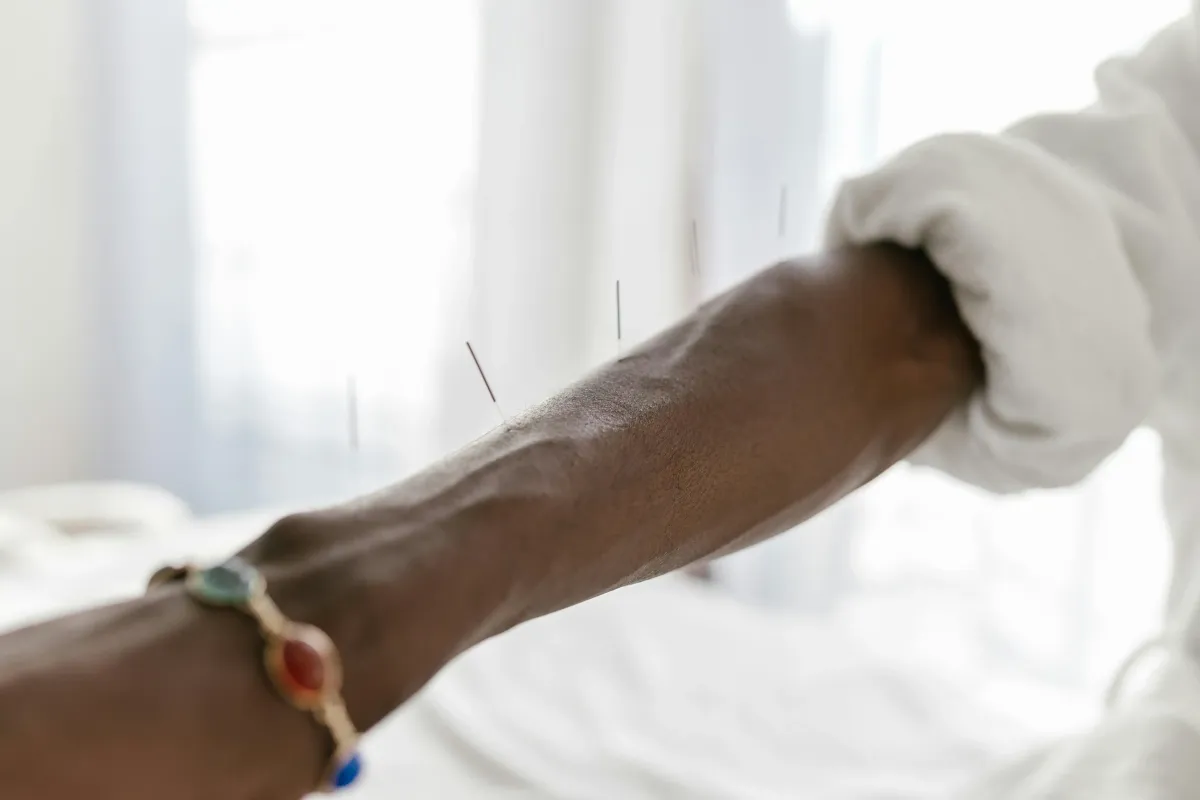
Local needling around the elbow
Targets the irritated tendon and reduces pain directly at the source.
Forearm muscle treatment
Focuses on releasing tight flexor muscles that keep stressing the tendon.
Distal or supportive points
Points in the hand, wrist, or even shoulder may be used to improve overall arm function and reduce strain on the elbow.
Some sessions may also include:
Electroacupuncture for deeper stimulation
Dry needling for trigger point release
Needle retention for 15–30 minutes to allow full effect
Most people feel minimal discomfort during treatment since the needles are extremely thin.
A typical plan involves a few sessions per week early on, then tapering as symptoms improve. Many patients notice meaningful relief within 3 to 6 visits, but full recovery depends on how well the tendon rebuilds over time.
What Does a Complete Treatment Plan Look Like?
Pain relief is only one part of recovery. The real goal is to help your tendon handle load again without flaring up every time you use your arm. A well-structured plan usually combines:
1. Pain control (early phase)
Acupuncture helps calm the irritated tissue and reduce muscle guarding. This makes everyday activities easier and sets the stage for rehab.
2. Load management
Instead of stopping everything, the focus is on reducing the specific movements that trigger pain. That might mean adjusting how you lift, grip, or work, not avoiding activity altogether.
3. Progressive strengthening
This is where long-term recovery happens. The tendon needs gradual loading to rebuild strength. Common approaches include:
Isometric exercises early on to reduce pain
Slow, controlled wrist flexor strengthening
Grip training that matches your daily or sport-specific needs
4. Movement and technique adjustments
Small changes can make a big difference. This could include:
Improving lifting mechanics
Adjusting your workstation setup
Modifying sports technique or equipment
Acupuncture makes this process smoother by lowering pain enough for you to actually follow through with rehab consistently.
How Long Does It Take to Recover?
Most people want a clear timeline, but recovery depends on how long the problem has been there and how much strain the elbow still goes through daily. Here’s a realistic breakdown:
Short term (1–2 weeks):
Pain starts to decrease. Daily tasks like gripping or lifting feel easier.
Mid phase (3–8 weeks):
Strength and endurance improve. Flare-ups become less frequent if activity is managed properly.
Long term (2–4 months):
The tendon regains capacity. You can return to full activity with a lower risk of recurrence.
Many patients feel noticeable relief within 3 to 6 acupuncture sessions, but that doesn’t mean the tendon is fully healed. Skipping the strengthening phase is one of the main reasons the pain comes back.
Can Acupuncture Prevent Surgery?
In many cases, yes. Most people with golfer’s elbow improve with conservative care when it’s done properly.
Acupuncture can:
Reduce pain enough to avoid repeated injections
Improve function so you can stay active
Support the healing environment of the tendon
Surgery is usually considered only when symptoms persist for several months despite consistent treatment. Even then, many patients find that combining acupuncture with targeted rehab helps them avoid that step altogether.
Who Is a Good Candidate for Acupuncture?
Acupuncture tends to work best if you’re dealing with:
Pain on the inside of the elbow during gripping or lifting
Tightness in the forearm muscles
Ongoing symptoms that haven’t fully resolved
Difficulty progressing with exercises due to pain
It’s also a solid option if you want to reduce reliance on medication or prefer a more natural approach to pain management. However, you should get a proper evaluation if you notice:
Numbness or tingling in the hand
Significant weakness or dropping objects
Swelling, redness, or severe pain
Symptoms after a sudden injury
These signs may point to something beyond standard golfer’s elbow.
Are There Any Side Effects?
Acupuncture is generally very safe when performed by a trained professional. Most side effects are mild and temporary, such as:
Slight soreness at needle sites
Minor bruising
Temporary fatigue after a session
These usually resolve within a day. Let your provider know if you have any medical conditions or are taking blood thinners so treatment can be adjusted safely.
Why Choose Acupuncture for Golfer’s Elbow?
If your elbow pain keeps returning or isn’t improving with basic care, acupuncture offers a different approach. It focuses on reducing pain, improving muscle balance, and creating the right conditions for healing.
At Clifton Physical Therapy, the focus is not just on short-term relief. Treatment is designed to help you move better, rebuild strength, and return to your normal routine without constant setbacks. Call us at (973)-241-1338 to schedule your evaluation and start a treatment plan.
What patients are saying
"I recently had ankle surgery and Clifton PT has been nothing short of amazing! My goal was to get back to playing soccer as quick as possible before the college season started and so far I'm right on track. Izzy, Bianca, Tiff, and John have gone above and beyond to make sure I'm back to 100%. Couldn't be more grateful to be treated by the best team ever!." - Nat Rufino

All the therapists at Clifton Physical Therapy are awesome, but I spend most of my time with Izzy and Bianca—and they’ve been amazing. They’re enthusiastic, knowledgeable, and always take the time to explain what I’m doing and what my issues are. Their positive energy and clear communication make a big difference in my recovery." - Bryan Tompkins
"Going Clifton physical therapy was one of the best thing that came out of my back pain! Every single staff member is amazing and cares for your recovery! I have been with them for the past couple of months and now continuing their workout program! I can’t recommend them enough! Tiffany, Izzy, Bianca and everyone else I have worked with there! Can’t rave about them enough!!." - Monica Mehta
"Clifton Physical Therapy has been a great place for me to heal my meniscus tear. The staff is very knowledgeable and friendly, and has been extremely helpful in guiding me through my recovery. I highly recommend their services.." - Kelly Bevando
Clifton Physical Therapy
✆ Phone (appointments): (973)-241-1338
Address: 1059 Bloomfield Ave, Clifton, NJ 07012


